
I was halfway through swapping a boxed copy of Halo at a friend’s apartment when he hesitated: “If you register it, do I lose the disc?” The silence felt louder than the disc clatter. That pause is what Microsoft is trying to fix — and what makes this new policy feel both helpful and unsettling.
I’ve been following Xbox policy moves for years, and I’ll walk you through what’s coming next week. You’ll get what the feature does, what it doesn’t say yet, and the practical trade-offs you should expect.
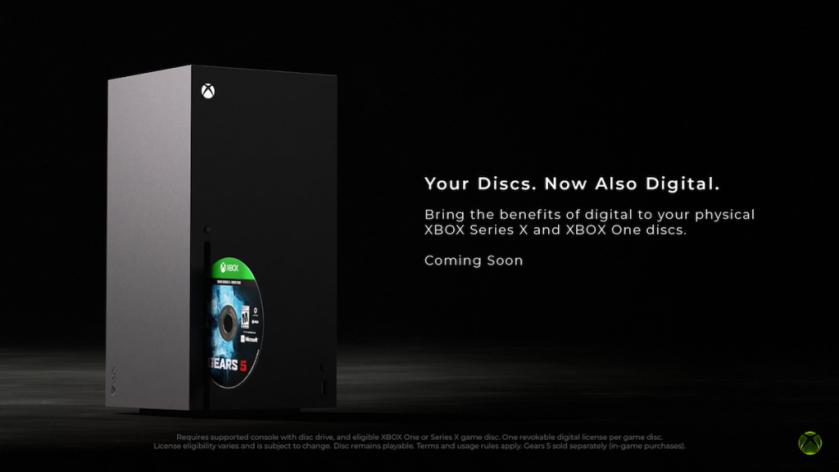
The disc sits in your console for a moment — what Microsoft is rolling out next week
Starting Aug. 31, Xbox will let players claim a digital entitlement for supported physical discs. It opens first to Xbox Insiders as a test, with Microsoft saying “thousands of titles” are included and that the list will expand.
Practically, you insert a supported Xbox One or Series X disc, launch the game, and the console will grant a digital licence to your account. Your physical disc still works the same way if you keep it, but once the entitlement is claimed the game appears in your digital library for Xbox Play Anywhere and Xbox Cloud Gaming where available.
How does Xbox’s digital entitlement work?
Think of the process as registering ownership: the console validates the disc and attaches a digital license to your Microsoft account. Xbox Cloud Gaming and Xbox Play Anywhere become options for the titles that support those services. The system is account-based, not disc-based — at least, that’s the phrasing Microsoft uses so far.
A collector stares at a shelf of boxed games — why preservation matters (and what this does)
Microsoft frames the program as part of a broader commitment to game preservation. If Xbox expands this to include Xbox 360 and original Xbox discs, we would be looking at meaningful rescue work for games that risk being lost to dead hardware.
This move is a library card for your disc collection: it makes physical purchases portable into the modern ecosystem while keeping the original media functional. For preservation advocates, digital entitlement can stop classic titles from vanishing as drives fail and consoles retire.
Which games are eligible for digital entitlement?
Most Xbox One and Xbox Series X disc-based games are supported at launch, Microsoft says. However, there are gaps: backward-compatible Xbox 360 and original Xbox titles weren’t listed as part of the initial rollout. Expect that to be the friction point — legacy licensing and publisher cooperation will determine how far this stretches.
A friend nervously holds a disc up to the light — the questions people will ask first
People are excited and suspicious in equal measure. You should be, too.
My first line of questioning is about transferability: can someone claim the digital entitlement, then lend or sell the disc and have the next person do the same? Microsoft’s current wording focuses on claiming an entitlement by inserting a supported disc and launching the game, but it does not yet clarify whether that entitlement will be single-use per disc, tied to a console ID, or fully account-bound in perpetuity.
Can I sell or lend my disc after claiming the digital license?
That’s the million-dollar practical question. If the digital licence remains with your Microsoft account after you hand the disc off, the disc retains its original functionality but its value as a transferable item could drop. If the entitlement ties to the physical disc serial or a one-time activation, that would limit resale and lending. Microsoft hasn’t provided the full technical details yet, so watch the Xbox Insider experiment for how activation tokens behave.
I’ll note that this is also a matter of platform policy and publisher agreements — Microsoft, Xbox Cloud Gaming, and studios will all influence the final rules. Phil Spencer’s team has said preservation is a goal, but publishers hold many of the keys.
The game shelf is slowly thinning — what this means for the all-digital future
Stores that once stocked discs are shifting, and console makers are moving toward digital-first models. Sony’s move away from physical discs is the most visible example.
This mechanism feels like a hinge between generations: it lets you carry forward purchases from physical media into cloud and digital ecosystems while signaling that discs are becoming optional. That’s convenient for gamers who prefer digital access, but it nudges collectors and resellers toward new norms.
Tools and platforms that matter here: Xbox Insiders will test the feature; Xbox Cloud Gaming and Xbox Play Anywhere are the immediate benefits; Microsoft and publishing partners will decide legacy coverage. I’ll be watching thread discussions on Reddit, feedback in the Xbox Insider Hub, and any technical notes published on Xbox’s support pages for the fine print.
For now, the program is a clear step in favor of player convenience and preservation — but the real test will be how Microsoft handles transfer rules, legacy support, and publisher cooperation. Do you keep the disc as a backup, or does claiming the license change what your disc is worth?