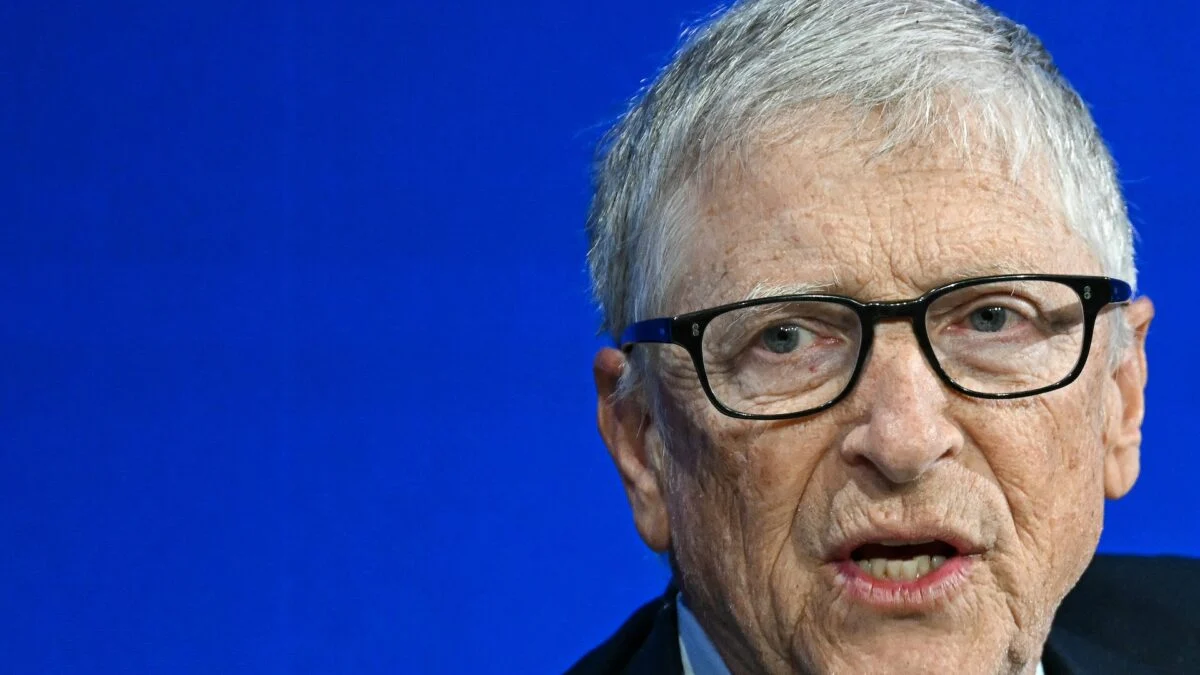
I was on a late call when an engineer said, quietly, that an AI model had just convinced a clinic patient to change a medication. You could hear the room’s breath catch. That is the kind of sudden, sharp risk Bill Gates says we can no longer let unfold without a plan.
I’ve read Gates’ nearly 6,000-word essay and I want to walk you through what matters — quickly, plainly, and with the urgency he used: “The challenge is monumental.” You and I both feel the speed of this moment. The question now is whether we build the guardrails while the engines are still roaring.
Scam calls and cloned voices have already targeted banks — the human cost is real
You’ve probably seen a clip of an AI voice duping someone. Those are not hypothetical. When scammers use voice-cloning to trick bank employees, the result is immediate harm. Gates warns that AI’s reach touches healthcare, education, journalism, and public trust. That’s why he argues the response must be public, democratic, and broad — not left to firms racing for market share.
What did Bill Gates say about AI safety?
Gates called this technological surge unlike any before it. He warned that without careful planning, the social and economic fallout could overrun any potential gains. He rejected the idea that tech companies alone should steer the effort and urged elected officials, educators, health workers, and community leaders to take part.
Autonomous drones are operating in warzones — the stakes are now tactical
We’ve seen AI-controlled drones used in active conflicts. That observation alone changes the scale of risk from corporate ethics to national security. Gates points out that geopolitical incentives — especially competition between the U.S. and China — push development forward at full speed. He admits slowing that global rush is unlikely without coordinated international oversight.
Can AI be regulated globally?
Gates and several industry leaders, including Sam Altman (OpenAI), Dario Amodei (Anthropic), and Demis Hassabis (ex-Google DeepMind), have floated the idea of global oversight. In practice, it’s messy: nations disagree, labs compete, and private capital chases advantage. Still, Gates argues we must try to design public governance that includes voices beyond Silicon Valley and Beijing — from local officials to religious leaders and health workers.
Data centers catch fire in the headlines — infrastructure is now political
Data centers aren’t neutral backdrops anymore; they’re local flashpoints. Communities worry about power use, governments worry about control, and investors worry about bubbles. Gates was careful to separate his personal interests from his call: he’s no longer on Microsoft’s board and says his active tech profits go to philanthropy. That gives his plea a different tone than the manifesto from a CEO trying to protect market share.
You’ve also seen company essays: Mark Zuckerberg argued for broad access to reduce risk, while Altman and Amodei have published their own roadmaps. None of those plans erase the central problem Gates outlines: competition often shortsafety when speed is rewarded.
I’ll be blunt: the race looks like a relay where each runner clutches a lit match, and governance so far resembles a glass bridge stretched over a storm. Those are the two images I keep returning to as I read the policy proposals.
Will AI cause economic collapse?
People worry about a speculative bubble or waves of job loss. Gates doesn’t dismiss economic disruption; he warns that we could face political and social chaos if we ignore displacement and concentration of power. He urges planning for education and health systems to adapt, and for policymakers to create mechanisms that slow harm without stifling beneficial innovation.
Algorithms are now synthesizing algorithms — the technical edge is multiplying
Researchers are already using AI to invent new AI techniques. That real-world observation means capacity compounds faster than before. Gates calls this a technological revolution that will reshape nearly every sector. He also suggests that some coordination between major powers will be necessary to manage frontier risks.
This isn’t a sales pitch for any single company. Gates stepped down from Microsoft’s board in 2020, and his essay reads less like corporate PR and more like a warning from someone who has lived inside tech. He insists the effort should be public and democratic, not left to private labs — a point that cuts against the grain of companies touting their own safety roadmaps.
There will be louder and softer calls in public debate: Meta’s Mark Zuckerberg has argued for broad access, OpenAI and Anthropic leaders propose slowdowns or oversight bodies, and investors debate whether the boom is a bubble. None of that removes the central fact Gates highlights: the incentives favor moving fast.
If you’re asking what to watch next, look at legislation, international talks, and whether major labs sign binding, verifiable constraints. Watch whether health systems and schools get concrete funding to adapt. And watch public attention — it’s the only lever that can press elected officials to act.
Gates ends with urgency: “We do not have the luxury of moving slowly.” He wants public planning now, before the most disruptive effects arrive. I agree with the tone if not every prescription — because too often planning follows panic, not precedes it.
I’ll leave you with this: are we going to let a handful of companies and geopolitical rivals set the pace of a technology that will rewrite how we work, learn, and trust one another?