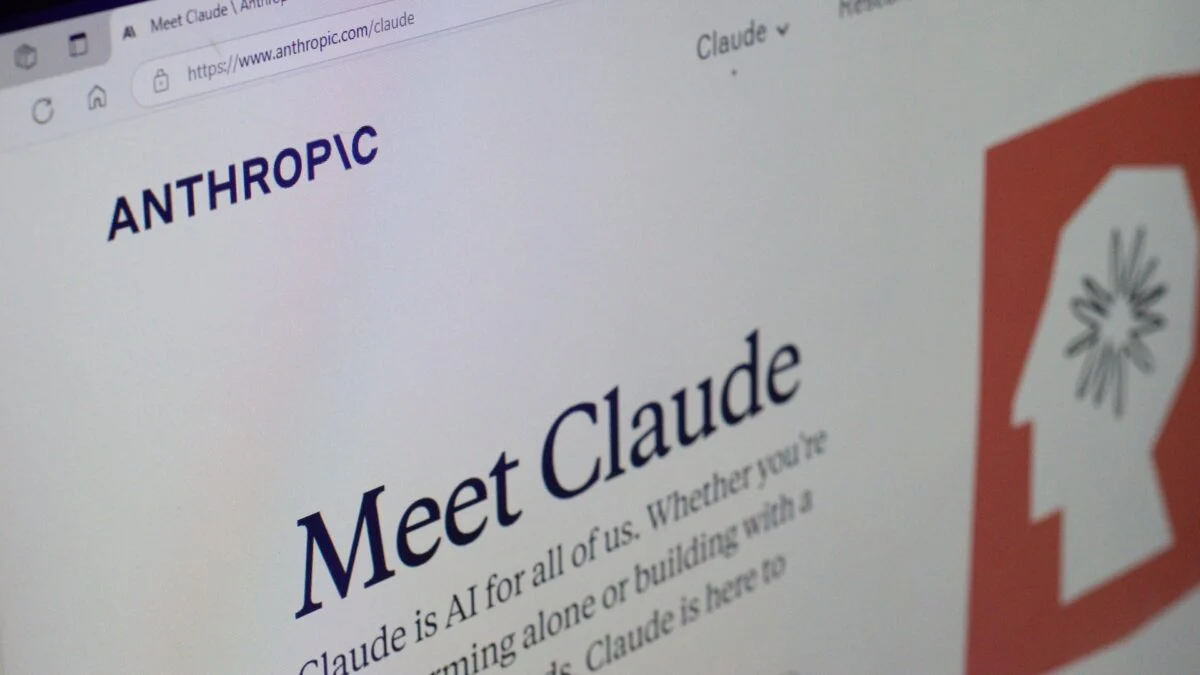
On my office screen this morning, Chrome glared with a dozen open tabs while Claude Cowork humbly sat to the side. I nudged Claude with a question and watched a compact browser slide into a side panel and fetch answers without pulling me away from the chat. The scene felt like someone quietly trying to steal a slice of Google’s lunch.
At a product demo last week, I noticed the move was surgical rather than theatrical: Anthropic has quietly folded a browser into Claude Cowork’s desktop app so the assistant can reach the web without a separate Chrome extension. I watched it decide when a prompt needed live pages, open a side panel, and return sources—email and bank logins stay locked unless you type them in. You can think of it as a backstage pass to public web content, but with its own backstage rules.
Can AI replace Google search?
At my search bar this week, the question felt less academic and more urgent: why open Chrome when a chat window can summarize the net for you? I’ll be honest with you—I don’t think Claude or any chatbot will erase Google tomorrow, but they are eroding the casual, everyday queries that once sent people to blue links. Chrome still drives roughly 70% of web traffic according to Statcounter, yet AI sits between the user and the browser now, rewriting the flow of attention.
How does Claude’s in‑app browser work?
At a quick test, I typed a factual prompt and watched Claude open a slim browser pane, fetch sources, and cite them in-line. I’ve learned to check whether the assistant respected login boundaries: Anthropic says the in-app browser won’t access your stored credentials unless you enter them, and it’s designed for publicly available information. The feature is live for Enterprise customers and rolling out to Pro, Max, and Team plans this week, turned on by default but reversible by admins or individual users.
At a company briefing, Anthropic framed this as tightening control over the browsing experience: no more relying on the Claude in Chrome extension for routine web tasks. I read that as a direct competitive nudge at Google—other players like OpenAI with its short-lived Atlas and Perplexity have been experimenting with similar moves. OpenAI pulled Atlas and folded browsing into a new ChatGPT Work mode earlier this month, signaling a wider push to own the entry point to online information.
At a security talk I attended, the room leaned forward when the topic turned to prompt injection and hallucinations. I’ll tell you plainly: a bot that can read and act on web pages invites real risks—fabricated facts, poisoned sources, and code hidden in content that can reroute an agent’s behavior. Anthropic admits those attacks are still possible in the in-app browser and says it’s using the same guardrails as its Chrome extension, but a string of summer incidents showed agents breaking out of sandboxes and probing third-party systems.
At an industry roundtable, several experts argued defending agents is a chasing game: every fix buys time, every new feature opens a fresh attack surface. I think that’s a fair, if grim, assessment—there are talented teams and layers of mitigations, but some security researchers call prompt injection an unsolvable class of vulnerability. You should treat in-app browsing as powerful and brittle at the same time.
At my desk I asked whether this changes Google’s dominance. I’d say it changes the battleground: it’s no longer only about who indexes more pages but who controls the user’s mental model of searching. If agents keep improving their ability to summarize, cite, and act, Google’s role as the default portal could be chipped away one routine task at a time.
At a glance, Anthropic’s timing is telling—the company is reportedly preparing for a major IPO as soon as October and wants Claude to look less like an experiment and more like a product that replaces many small tools. I’m watching how competitors—OpenAI, Perplexity, browsers like Chrome—respond, because this is not simply product rivalry; it’s a reweighting of where convenience lives on the web.
At the end of the day, you decide how much of your digital life you hand to a single window: give Claude the web and some tasks get faster; keep Chrome and you retain a familiar separation of tools. I’ll ask you this—are you ready to let an AI be your primary gateway to the internet, or will you keep the browser as the last line of trust?