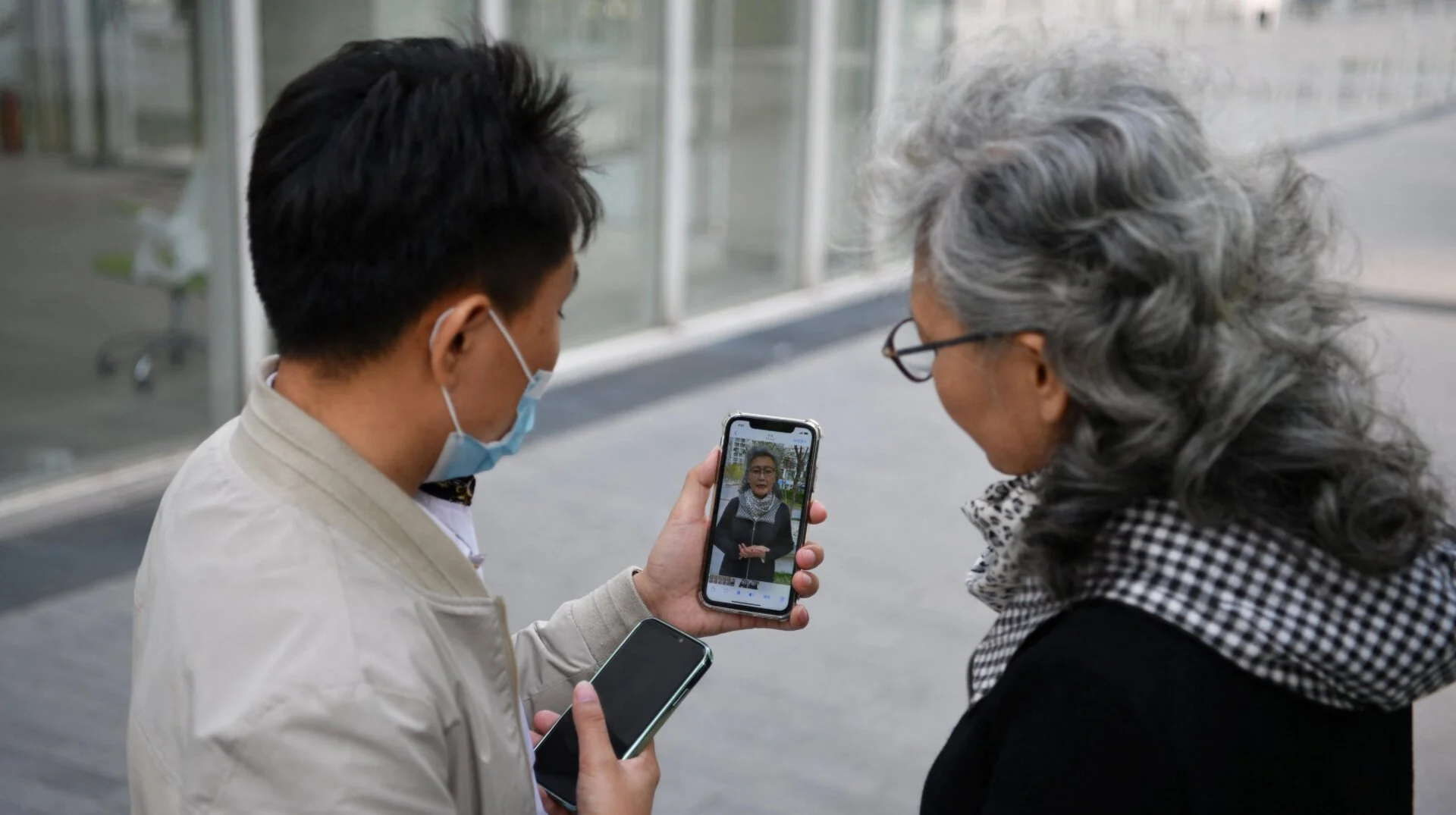
I was on a crowded Los Angeles bus when a stranger beside me kept tapping “next” on a subtitled short drama until the battery warning flashed. The scenes were grainy, the actors unfamiliar and oddly consistent in their oddness. I felt like I’d caught a live experiment in the act.
I’ve followed a few of these threads for years — Tyler Cowen praised the Tilly Norwood stunt, improv comedian Eline Van Der Velden chased notoriety with it — but what’s playing out in China feels less like a stunt and more like a quiet takeover. You and I both like to believe stars sell; the evidence says attention sells, and AI can manufacture just enough imagery to stop you mid-scroll.
I checked Douyin’s top 100 and the thumbnails began to blend — the platform is leaning into AI-made animation
DataEye’s audit, cited by the Financial Times, found 89 of the top 100 animations in May were AI-generated. That’s not a trick of sampling — it’s a pattern. ByteDance’s tools, including SeeDance, make it cheap to iterate scenes that hit the same emotional beats over and over.
Terrence Chang’s YouTube demos using SeeDance show what I call the production line ethic: rapid prompts, GPU churn, rinse and repeat. It’s an assembly line that sells suspense one cliffhanger at a time.
Are AI actors replacing real actors?
Short answer: sometimes, and often quietly. The FT reported actors being asked to have their likenesses or “essences” distilled for reuse. I’ve heard from people near Hengdian World Studios who say background work has evaporated. That’s not just displacement; it’s a new commodity model where a performer’s output can be captured once and sold forever.
NHK filmed a tiny Wuhan office and the scene looked unglamorous — seven to eight people, a pile of GPUs, and a flood of microdramas
NHK shadowed Manghe and saw what they claim are huge efficiency gains: an AI drama costing about one third of a filmed equivalent and taking roughly one fifth the time. Zeelin, another producer cited by FT, says its cost can drop to 10 percent of live-action production and that it pumped out some 8,000 minutes of content in May alone.
That math matters: if a studio can spend $1,000 (≈€930) on cloud GPUs and generate hours of paywalled clips, the margin for scale becomes intoxicating. You don’t need a marquee name; you need repeatable hooks that make viewers pay the small fee to see the next episode.
Like a vending machine for melodrama, these systems dispense short, cheap narratives designed to be consumed in sequence.
How widespread are AI microdramas on Douyin?
Very. Beyond the top-100 animation stat, the China Netcasting Services Association told reporters that 95 percent of the 128,000 microdramas produced in Q1 2026 were AI-generated. That’s industrial-scale content farming, and it shows up not just in urban feeds but on phones with Spanish or regional subtitles in distant cities.
I stood near Hengdian and heard performers describe vanished gigs — people who once filled background shots now find fewer bookings
Vox-pop interviews in NHK’s piece recorded actors saying they “lost almost all of my work.” That’s the human cost you feel more than you see in the numbers. Producers promise efficiency; workers face income holes.
The Tilly Norwood idea flipped the value chain: rather than a producer paying to insert a viral AI persona, producers are now extracting human likenesses to feed their models. Eline Van Der Velden’s gambit hinted at that fantasy—Cowen’s essay admired the idea—but the market has tuned the model to utility, not celebrity.
This shift feels like a fast-moving paper cut: small individually, but multiplying across an industry.
I watched clips that weren’t vertical and still pulled viewers — format isn’t sacred, attention is
Chang’s demos and many showcases on YouTube prove a point: you don’t need perfect app-native formatting for this content to hook someone. What matters is rhythm, cheap cliffhangers, and distribution. Douyin, ByteDance, SeeDance, DataEye, Manghe, Zeelin — these are the tools and names shaping the pipeline.
That pipeline raises legal and ethical questions: consent for likeness capture, residuals when an actor’s performance is synthesized, and platform liability when AI slips into misinformation. Regulators and creative unions will snipe at those edges, but enforcement lags creative inertia.
I’m not saying every short drama is hollow garbage, and you’ll still spot brilliant human work. But when a six‑person office can produce a flood of microdramas that outcompete filmed scenes on cost and speed, the playing field tilts fast. So what do we do when attention can be manufactured at scale and authenticity becomes a premium — do we try to legislate scarcity or pay humans to perform artificiality on our behalf?