
The courtroom held its breath. I remember the hush — a theaterful of people caught between laughter and grief — when Road Runner stepped up and said what no one expected. You could feel the story shift under your feet.
I’ve watched courtroom dramas and cartoon tragedies, and I’m telling you: Coyote vs. Acme is doing something rarer than a studio release—it’s making a moral question feel personal. You’ll read reactions here from director Dave Green and stars Will Forte, Lana Condor, John Cena, and Erica Bauza, and I’ll show you why the film’s loss for Wile E. still lands as a win for the characters and the audience.

Observation: Studios shelved films all the time — some come back
That fact anchors the film’s real-world drama: Coyote vs. Acme was sitting on the shelf as a tax write-off before Ketchup Entertainment and fan pressure pushed it into theaters. I watched social campaigns on TikTok and Reddit behave like a chorus, and that chorus forced an industry conversation. The film opened to a surprising $15 million (€14 million) weekend, a reminder that audiences still decide which stories matter.
Dave Green told me the movie is about Wile E.’s want — that relentless urge to chase the Road Runner. “His want is to chase,” he said. “There’s a beautiful, inspiring simplicity in his passion, drive, and desire.” That simplicity is the engine of the film and the reason you feel for him even when the law doesn’t.
Observation: Jury rooms and corporate boardrooms rarely share the same language
The courtroom drama gives you that collision directly: Acme reimagined as a tech oligarchy, Foghorn Leghorn as CEO, and a legal fight where stand-ins for modern corporate tactics get argued in animated form. I remember nodding when Bugs Bunny’s whistleblower scenes pushed the plot forward — they put real-world whistleblower narratives next to classic cartoon slapstick.
Why did Acme win in Coyote vs. Acme?
The short answer: stacked systems. You can feel the film’s thesis in the courtroom choreography — Acme uses narrative control, legal resources (hello, John Cena’s character), and PR theater. Foghorn’s self-flagellation in court reframes pain as spectacle, and that rhetorical move sways the decision. The verdict is painful because it mirrors how corporations often survive scandals intact; it’s a bitter, familiar truth.
Still, that loss isn’t a hollow ending. Will Forte’s Kevin Avery and his niece Paige (Lana Condor) catalyze a cascade: once Wile E. sues, other Looney Tunes characters file claims, turning one defeat into a strategic erosion of Acme’s power. Think of the final act as a mosaic: a company can win a single trial and still lose its moral monopoly.
Observation: Audiences still crave emotional payoffs more than legal strictness
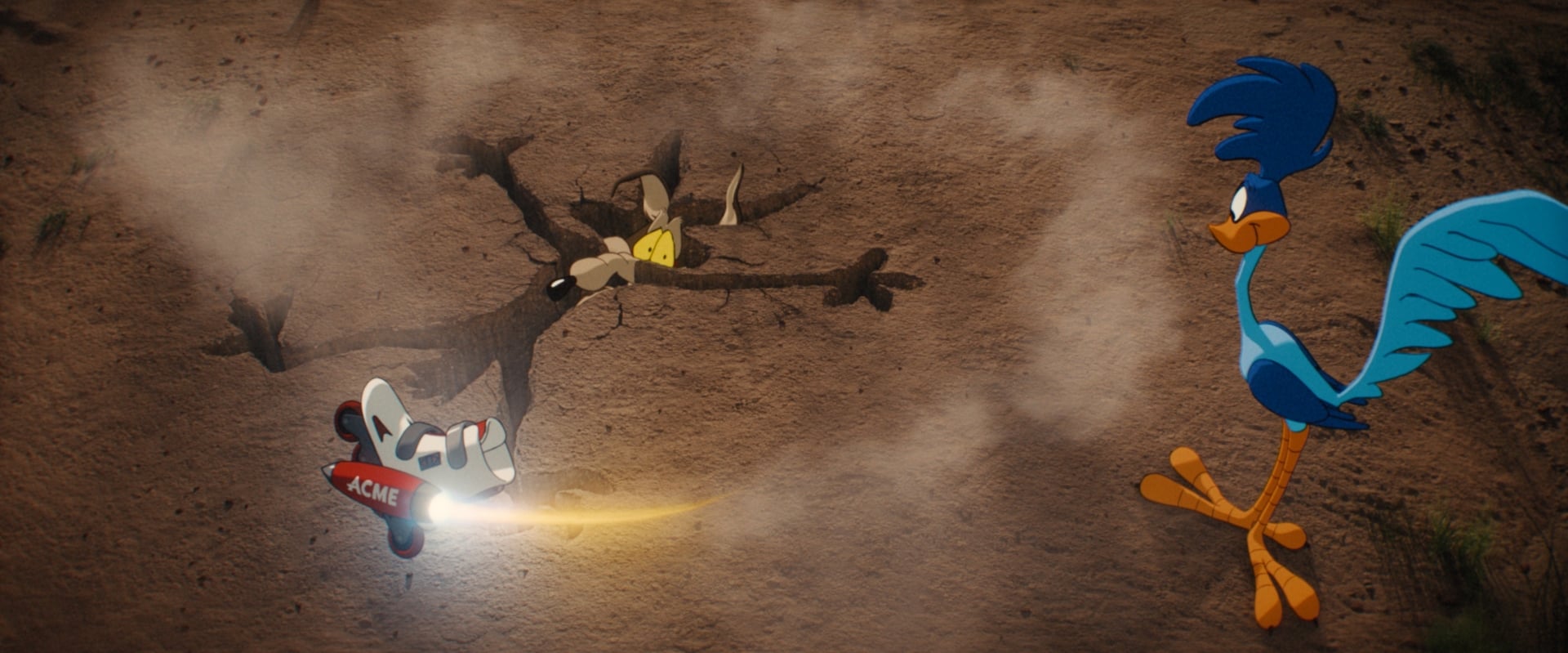
The theater reaction that night proved it. When Road Runner walked into court and meeped for Wile E., a swell of emotion moved the room. You felt the relationship reset itself in that moment; the film chooses compassion over a tidy legal victory.
Erica Bauza summed it up with a theatrical shrug: the show must go on, and the film wraps its characters in a way that refuses to return them to the stale status quo. Lana Condor connected the theme to perseverance. “There’s a quote where he says, ‘Or maybe tomorrow,’” she told me. “The film inspires people to get up and try again.” Her words are the movie’s heartbeat: the fight matters even when the ruling does not.
What did the cast say about the verdict?
John Cena leaned into the film’s spirit: Never Give Up — a wrestling catchphrase made cinematic context. Will Forte framed Avery as a counsel who calls Wile E. out and still believes in him. The actors treated the loss as a narrative pivot, not a moral failure; you hear that in every interview and feel it in every beat of the courtroom scenes.

Observation: Movies that borrow from games and pop culture often widen their audience
The film winked at other cultural touchstones — Ace Attorney energy in objections, Bugs Bunny as whistleblower, and nods to the broader Looney Tunes archive. I saw the crew use those references to build trust with fans and to position the movie inside a larger conversation about corporate accountability.
Green described Wile E. as a personified want: single-minded and inspiring. That focus gives the film its spine. The verdict may land like a gut-punch, but the aftermath shows movement — lawsuits multiplying, public sentiment shifting, characters reclaiming agency. The artful choice was to leave the legal ledger unsettled while ratcheting up the cultural cost to Acme.
If you want to read this film as a courtroom story, it’s sharp; if you want it as a character study, it’s tender. Ketchup Entertainment’s rescue, fan campaigns on TikTok and Reddit, and an opening weekend behind titles like Spider-Man: Brand New Day and The Odyssey all feed into the movie’s odd life-cycle: shelved, revived, and now discussed.
I’m asking you to watch it and feel the contradiction: a public defeat that seeds private victories. After you leave the theater, who do you side with — the rules that saved Acme or the compassion that nearly toppled it?