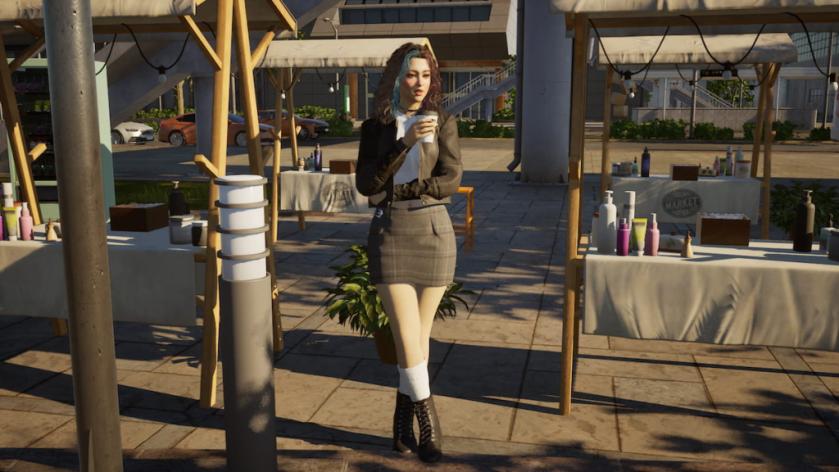
I was standing in a crowded virtual flea market when a stranger, a Zoi with pink and blue hair, handed me a coffee and refused to tell me their backstory. The moment felt smaller and stranger than any family drama I’d micromanaged in The Sims. You can feel the rules shifting under your feet.
I’ve followed life sims long enough to see when a design choice matters. You should care about what Hyungjin Kim and the Inzoi team are trying with Canvastown—because it changes who you are in the game, not just what you manage.
At the flea market, a single player took the stage before the crowd reacted
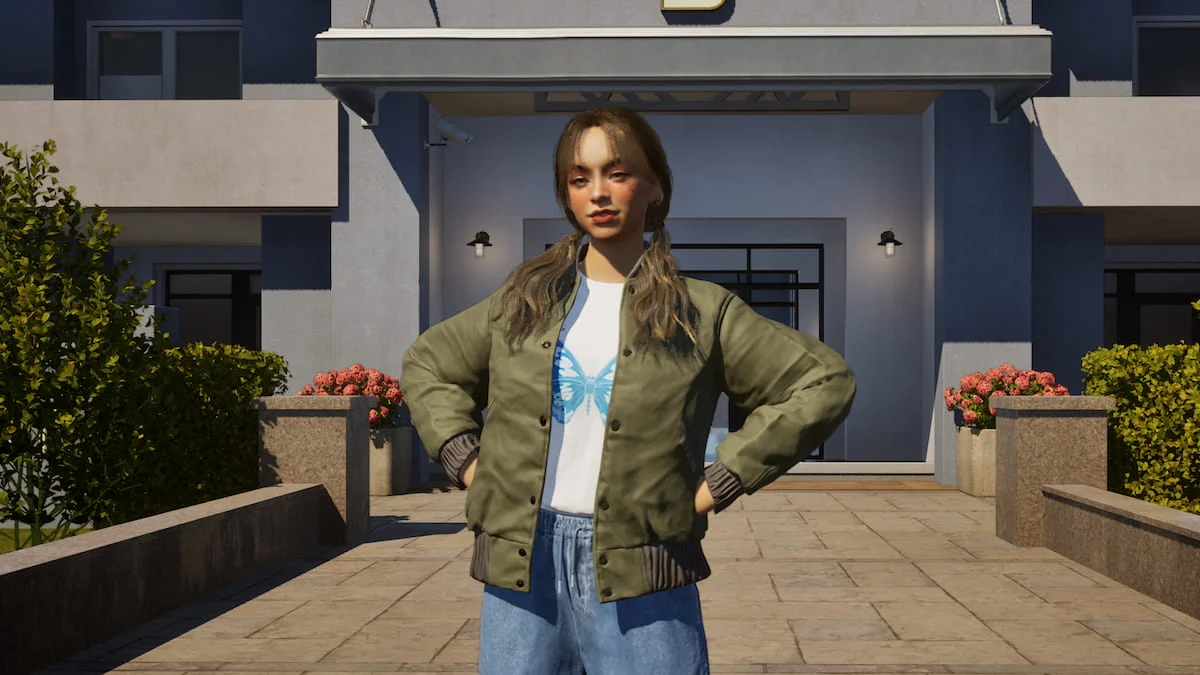
That scene is the point of Canvastown: you control one custom Zoi instead of juggling a household. Hyungjin Kim framed it bluntly on Inzoi’s Steam event page and in comments spotted by PC Gamer—this isn’t The Sims’ household simulator reshuffled. It’s focused, personal, and designed for roleplay.
The new mode routes players into an AR Company server where up to 50 people can inhabit the same space. NPCs arrive with preset roles, but you and other players can edit scenarios “like a movie director,” crafting scenes and rules together. The ambition is social theatre: Canvastown is a stage where players act instead of puppeteering a cast.
How is Inzoi’s Canvastown different from The Sims?
I’ll be blunt: The Sims lets you manage a social ecosystem; Canvastown asks you to be a person inside one. The design flips priorities. Where The Sims rewards juggling needs and relationships across multiple sims, Inzoi narrows the lens. That shift changes the type of stories players tell—smaller, stranger, and often more immediate.
On the Steam event page, the language reads like a developer’s promise to players
You’ve probably read product pages that promise big social systems and deliver shallow interaction. Hyungjin Kim’s pitch is different: he said the joy of RP isn’t ‘clearing’ a game but coexisting with others. That’s a user-centric argument: the game is built around shared moments rather than solo completion.
Technically, the mode is early and rough—Kim admits a small team has been iterating it. That matters because early social spaces shape community norms. If the tools let players create scenes and tweak NPCs, the server becomes a sandbox for collaborative storytelling rather than a repetitive grind or a single-author narrative.
Can you play Inzoi as a single character in multiplayer?
Yes. The core mechanic is single-character control in a shared space. You create one Zoi, join an AR Company channel, and interact with others. The promise is role consent and choreographed scenarios—if players agree, they can stage everything from a flea market negotiation to a scripted mystery.
At conventions and forums, players ask whether this will feel like an MMO or a sandbox
That is the tension Canvastown is trying to solve: scale versus intimacy. Massively multiplayer spaces often stretch interaction thin; small shared instances can feel claustrophobic. Inzoi is aiming for a middle ground by capping channels and emphasizing curated scenario design.
Think of it as social software with a director’s toolkit. The traditional life-sim cast was a jigsaw puzzle; Inzoi strips it down to a single shard and asks what new fits emerge.
Will Canvastown support 50 players on one server?
According to the Steam event notes, around 50 people can converse and interact in the same channel under mutual consent. That cap is deliberate: it keeps conversations legible while allowing emergent group dynamics. The multiplayer feel will owe as much to community moderation and scenario tooling as to raw server capacity.
I’ve watched multiplayer experiments before—some succeed because creators shepherd the culture, others fail because the tools lure toxicity. If Inzoi gives players director-like controls for NPCs and scenarios, it hands communities the vocabulary to keep play constructive. Platforms like Steam and coverage from outlets such as PC Gamer will amplify norms early, so early adopters matter.
For you, the question becomes practical: do you want to micromanage a household or play a single life inside a crowd? If you like improvisational storycraft, Canvastown will be worth testing when that small team expands the mode and opens it to more players.
I’ll keep watching how Hyungjin Kim and the Inzoi team iterate Canvastown, and I’ll test the social toolkit as it appears on Steam—will the mode become a vibrant cooperative stage or another crowded lobby with no script?