I watched a roomful of diplomats and aides trade quick glances as President Trump announced he wanted to stop diesel shipments. You could feel the pause: an off-the-cuff promise landing like a pebble in a pond. I want to walk you through why that pebble might trigger a tidal wave.
I’ve followed fuel politics for years, and you need plain answers. You want lower pump prices; I want you to understand what a ban would actually do to markets, farmers, and the people who fill the tank every morning.
At a New York UN meeting, Trump said he’s told aides to stop diesel exports
He spoke at a table with Ukraine’s Volodymyr Zelenskyy and Treasury Secretary Scott Bessent, who quickly added that the administration is still “studying” the idea. Trump insisted he’d raised the option earlier—a claim that hasn’t been verified—but vowed a fast decision.
That moment mattered because it set expectations for something concrete: Americans hearing a president suggest an immediate fix for record-high diesel. You saw the appeal—cheap, fast relief—so let’s test whether it stands up to reality.
Would a U.S. diesel export ban lower domestic prices?
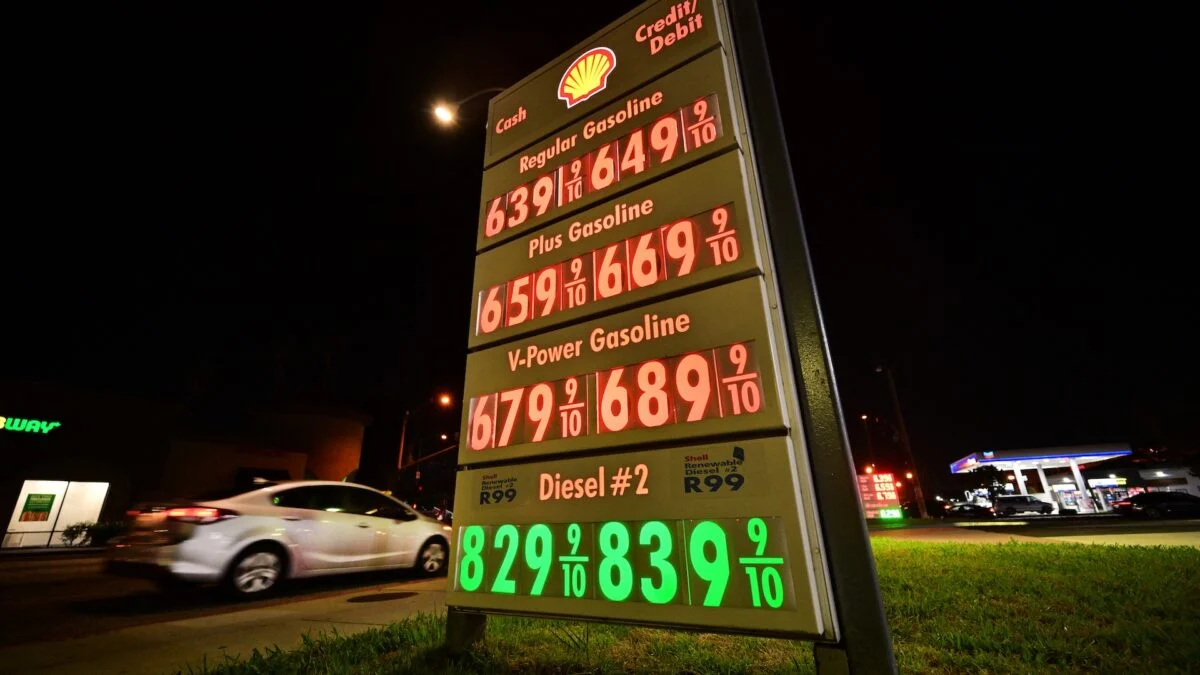
Short answer: possibly, for a little while. Long answer: not without dangerous side effects. Diesel in the U.S. is averaging about $6.52 (€6.00) a gallon, according to AAA, up from $3.68 (€3.39) a year ago. Gasoline averages $4.47 (€4.11), up from $2.98 (€2.74) before the war with Iran intensified.
API president Mike Sommers warned on X that restricting exports would “exacerbate refining challenges and ultimately hurt consumers.” The American Petroleum Institute notes the U.S. accounts for roughly 20% of the ~8 million barrels of diesel shipped by sea each day; removing that supply would be like closing a major channel in a global supply network.
At local pumps across Iowa, farmers are yelling about diesel costs
“High diesel prices ARE KILLING FARMERS INCOME,” Sen. Chuck Grassley wrote on X after seeing pumps near $6.57 (€6.04) in Iowa. For many farmers, diesel is not an abstract cost—it’s the fuel for tractors, combines, and the grain trains that move crops.
You can see the political math: senators and representatives in tight races—Ashley Hinson, Mike Rogers, Dan Sullivan—are betting support for a ban will win votes. But effective policy needs more than a political snapshot; it needs durable market mechanics.
How long would savings last under an export ban?
Experts say a ban could push U.S. prices down for a few weeks or months while overseas buyers scramble to replace U.S. barrels. But refiners would respond to lost export markets by cutting output of diesel and gasoline, shrinking domestic supply and sending prices back up. You get temporary relief, then rebound pain.
At API and refinery desks, executives warn of a chaotic ripple
The American Petroleum Institute has called a diesel export ban “catastrophic” for global supply, arguing it would erode trust among international buyers. I translate that into plain terms: refineries optimize output to match global demand; change the market suddenly, and their playbook changes.
Treasury’s Scott Bessent said they’re weighing whether a full or partial ban is “feasible” given refining capacity. That’s a technical way of saying supply chains and contracts could snap if you close off the market too quickly. The oil industry sees a ban as a self-inflicted market shock that could raise prices worldwide.
At kitchen tables, voters blame the Iran War and political timing
People online—on TikTok and X—notice that Iran subsidies its own fuel, and they compare low local prices there to sky-high costs here. The war has warped markets: U.S. security efforts in the Strait of Hormuz cost about $3 billion (€2.76B) monthly; the war’s total U.S. tab is roughly $43.6 billion (€40.11B) so far.
That money and the geopolitical risk feed through to fuel premiums and insurance costs for tankers. When you add an export ban to that mix, you risk making a brittle system snap—like a dam shutting and then overflowing elsewhere, or a mirror cracking and scattering the same image in a dozen directions.
At the ballot box, timing looks suspiciously convenient
With 42 days until the election, a temporary ban could be attractive as a rapid headline and a short-lived price drop. You should read that as strategic timing: short-term relief that could help polling before long-term pain returns.
Remember that political gestures can create market distrust. International buyers might stop relying on U.S. supply, refiners would recalibrate, and the net effect could be higher prices globally—and at home—after the applause fades.
At the policy table, the choice is not just economic
There are trade-offs you cannot ignore. A ban might help farmers for a season, but it risks burning bridges with trade partners and destabilizing refining economics. It could also leave consumers worse off when refiners lower output.
Tools you should watch: AAA price tracking, API market statements, X posts from officials, and reporting from the Wall Street Journal and New York Times. Platforms like TikTok are amplifying public anger, and media coverage has turned a technical policy debate into a political firestorm.
I want you to leave with one clear thought: an export ban can look like a quick fix, but markets rarely forgive sudden, politicized disruptions. If you were advising a policymaker, would you bet on a temporary applause line or on a durable plan that steadies prices without blowing up global supply?
Trump endorses a ban on diesel exports: “I’ve called for that too. I’ve said, let’s not send out the diesel.” (Trump has in fact called for other nations to buy energy from the US!)
— Aaron Rupar (@atrupar.com) September 22, 2026 at 10:56 AM