
I watched live chopper footage over my coffee and felt the city tilt a few degrees toward fiction. You could read the moment two ways: an audacious ad, or the start of an all-out marketing invasion. If you were standing on I-95, that gigantic logo would have made you look up and ask who owns Miami now.
I’m writing this so you know what’s happening before the rest of the feeds normalize it. You’ve seen Rockstar and Take-Two build mystique for years; this time they’re testing how far they can push a single image across a real skyline.
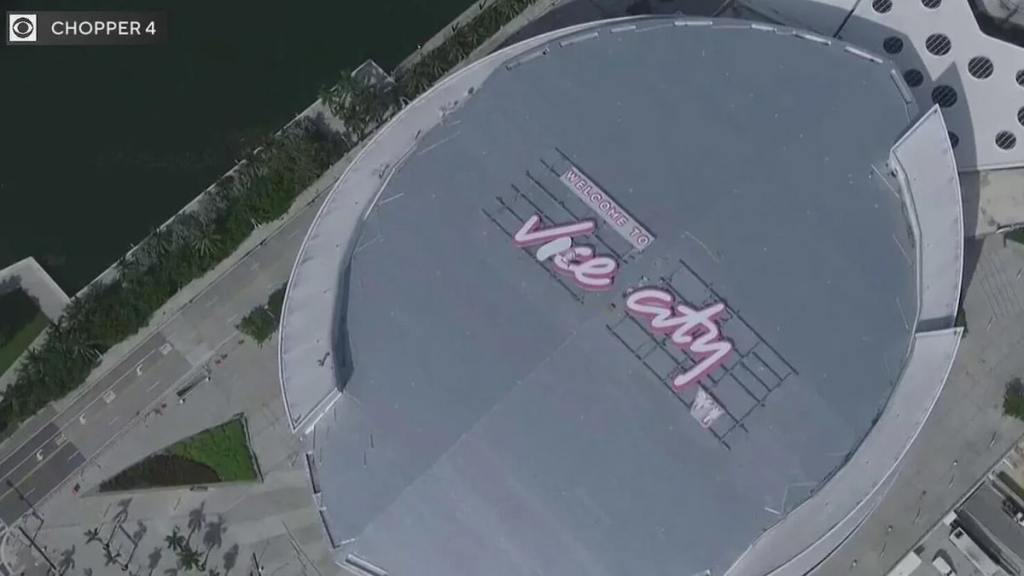
Workers were on the Kaseya Center roof while a CBS chopper circled.
The image on the arena’s roof isn’t subtle. The roof of the Kaseya Center — home to the NBA’s Miami Heat and a near-20,000 capacity venue for concerts and events — now hosts a giant Welcome to Vice City installation. The sign dominates one section of the rooftop; from television and highway vantage points it reads like a command rather than an advertisement.
Rockstar and Take-Two are behind the play. CBS Miami filmed the setup, which means local broadcast and national clip plays are already amplifying the stunt. In marketing terms, this is paid-outdoor meets earned-media. The sign functions as a neon lighthouse for Rockstar’s marketing ship.
City officials voted to allow banners larger than normally permitted.
Miami commissioners didn’t just shrug and sign a pass — they voted to allow private entities to display oversized banners. That’s the bureaucracy-level consent that makes a stunt visible at scale. You should assume a permit cost and logistics fee were paid; reports suggest a six-figure tab in municipal fees and production costs, perhaps $250,000 — €230,000.
That money buys more than metal and vinyl. It buys permission to alter the city’s skyline and national TV cut-ins. For a franchise with Rockstar’s track record, this isn’t need; it’s strategy.
How big is the Vice City sign on the Miami Heat arena?
The sign takes a large roof quadrant and is legible from adjacent highways and helicopters. The Kaseya Center’s capacity and downtown placement mean the image will be seen by NBA crowds, concert-goers, commuters, and courier drivers — then replayed across TikTok, X (Twitter), Instagram, YouTube, and Twitch clips. That cross-platform echo is the real multiplier.
The stunt moved from permit rooms to social feeds in hours.
CBS’s coverage did the obvious work: it turned an installation into a national news moment. When a local affiliate runs footage and outlets like Moyens I/O screenshot and redistribute, the noise level spikes. You and I both know the timeline: a rooftop shot, then clips on TikTok and YouTube, then reaction threads on Reddit and X.
Expect coordinated social content from Rockstar and Take-Two. They’re experts at cadence: trailers, timed drops, influencer pushes. Platforms such as Twitch and YouTube will carry reaction streams; creators will monetize clips; brands will mimic the aesthetic. The campaign has weight — it’s a freight train barreling through Miami.
Will this affect local businesses or brands mentioned in the game?
There are already jokes about Sprunk cans appearing in 7-Elevens or Cluckin’ Bell popping up where KFCs stand. Practical brand takeovers require licensing and partnership; a full swap of fast-food signage would need local permits and corporate buy-in. But temporary activations, themed pop-ups, and product placements are low-friction and likely.
For legacy brands like KFC or Burger King, the question isn’t legal risk so much as public relations. A clever, official collab can flip parody into paid placement; a guerrilla stunt can spark viral attention that neither company controls.
The countdown to release compresses the window for more stunts.
GTA 6 launches on Nov. 19. That gives Rockstar just under two months to saturate headlines, social timelines, and urban sightlines. You should expect more city-level activations — night-time projections, billboard takeovers, and branded events timed around influencers and sports schedules.
Rockstar doesn’t need to prove demand; pre-orders and hype already point to massive sales. What they’re buying with this campaign is cultural ownership of the moment — a way to make Vice City feel like a shared, public event rather than just another release calendar item.
When does GTA 6 release and how does this stunt tie to launch?
The official release date is Nov. 19. Big physical activations function as anchor points in a larger omnichannel plan: trailers on YouTube, countdowns on X, exclusive streams on Twitch, and content drops on TikTok and Instagram. The roof sign is a geographic anchor that turns all those digital channels into a live, local spectacle.
I’ve covered launches and stunts that fizzled and others that became cultural stampings. This one has the scale, the permissive city vote, and the media echo to be discussed for months. What will you remember when the game ships — the logo on a roof, or the way the city went momentarily fictional?