
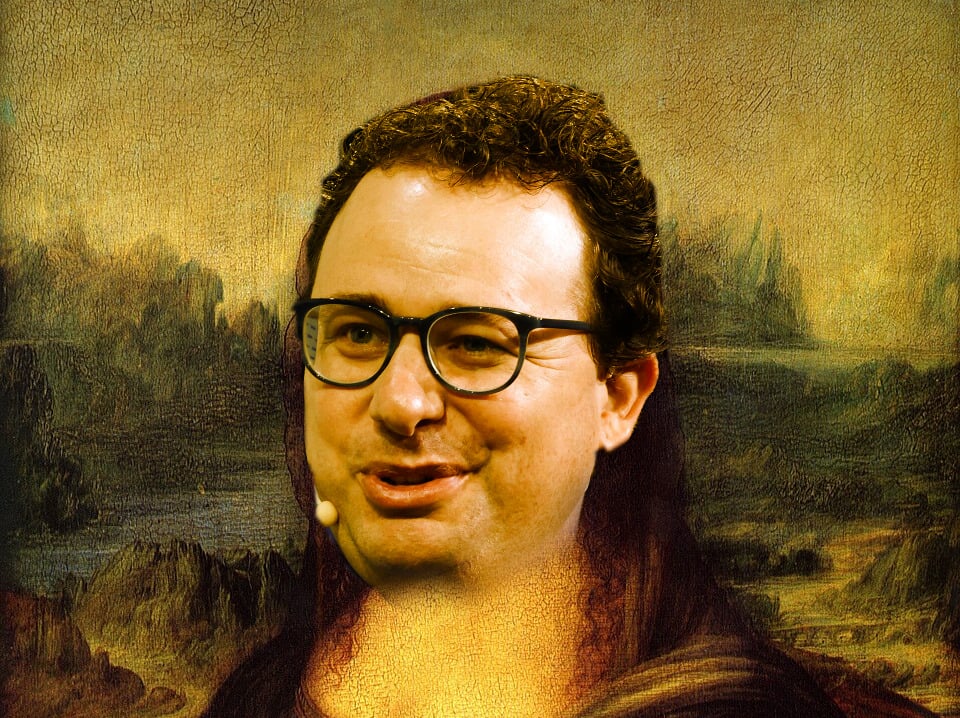
I clicked download and felt that small, stupid thrill—then a split second of worry. The app launched, and within a minute I had pasted Dario Amodei’s face onto the Mona Lisa. My cursor froze, then kept going.
I’m Brandon Thomas-adjacent in curiosity if not in name: I tinker, I break things, I test the limits of free software so you don’t have to. You will want to know what works, what breaks, and whether this is a threat or a novelty.
I opened Photocraft and within a minute made a horrible mashup. What I tried first
I grabbed the lasso, feathered the edge, pasted Amodei onto the Mona Lisa and adjusted the color. The tools were where my muscle memory expected them to be. Free Transform behaved like a temperamental old friend—sometimes it cooperated, sometimes it undid itself, and once it refused to quit until I forced it. Short sessions felt productive; long ones tested patience.
I read the README and then skimmed the code. How it was built
Brandon Thomas wrote the suite in Rust, used Claude Opus 5.5 to help, and dumped the whole thing on GitHub under the Artcraft umbrella. The repos—Photocraft, Vectorcraft, Filmcraft, Lightcraft, Printcraft, Effectcraft, Designcraft—are public and hungry for contributors. Thomas calls it an early alpha and promises bug bounties; he also tells Hacker News the apps are “not anywhere close to ready.”
The project reads like a sprint: pragmatic, imperfect, and generous. The code isn’t a polished cathedral; it’s a garage band that can still hit a chorus.
Is Photocraft safe to download?
You should be cautious. The builds are public on GitHub and the author posts on Reddit and Hacker News, but this is community software in alpha. If you run it locally, scan binaries, inspect repos, and prefer running from source when feasible. The thrill of free software doesn’t erase basic hygiene.
I compared it to the tools I actually use. How it feels to replace paid subscriptions
I use Photopea in-browser and GIMP for the painful, occasional heavy lifting. Photocraft felt closer to real Photoshop than those alternatives—at least for basic compositing and adjustments. The interface and workflows matched my instincts, which is the single best way to make people stop hunting menus.
That matters because creatives resent the monthly drain of Adobe’s SaaS model. The company agreed to a $150 million settlement with the Justice Department earlier this year to resolve allegations it trapped customers in disadvantageous subscriptions (roughly €138 million), and the public argument about subscriptions versus ownership is already loud.
How does Photocraft compare to Photoshop?
For routine edits—selections, layers, color tweaks—Photocraft is a legitimate competitor in moments. Advanced features, stability, and performance under heavy loads are where it falls short. You’ll hit bugs: Free Transform misbehaves, some filters wobble, and export workflows are not yet seamless. But for the occasional user who opens Photoshop twice a year, it may be enough.
I scanned community reaction and found raw excitement and blunt warnings. How the internet reacted
Reddit posts from Thomas admit this was a vibe-coded sprint; Hacker News threads flagged the alpha status and invited devs. Some folks celebrated the ethos: code over subscriptions. Others pointed to legal and security questions. Adobe is unlikely to cheer, but the bigger question is user adoption: will enough people tolerate jank to switch?
Will Adobe respond legally or competitively?
Adobe has reason to worry. The company faces consumer pressure after the settlement and has long been the standard-bearer for creative suites. A free, open-source alternative—especially one built in Rust and shaped by AI helpers like Claude Opus—changes dynamics. That said, legal fights are expensive and messy; Adobe might instead lean on product improvements, pricing adjustments, or cloud integrations to keep customers.
I tried to install it on a throwaway machine. What you should know before trying it
Do not run unfamiliar binaries on critical systems. Clone the repo, read issues, and use a VM if you can. If you want a quick taste, Photocraft’s GitHub releases let you test a build, but stability varies between versions. Thomas’s experience with payment rails and robotics suggests competence, not perfection; expect quirks and welcome fixes.
There are two other threads to watch: one technical, one cultural. Technically, Rust plus AI-assisted coding is becoming a favored toolchain among developers who want speed and safety. Culturally, the idea that users will “code their own SaaS” circulated on Wall Street as the SaaSpocalypse—Thomas’s project is the most tangible example so far.
If you work in media or design, you owe it to your wallet and your workflow to try it and file issues. If you’re a developer, consider contributing; Thomas says he’ll pay for real bug bounties. If you’re Adobe, pay attention.
The codebase has rough edges, but it also has momentum—are you ready to try a janky free alternative or will you stick with the comfort of paid guarantees?