
You stand in a crowd that snakes around Webster Hall, clutching a flyer while a montage of tech CEOs draws boos. I was on that stage when Ilana Glazer asked Zohran Mamdani to make a simple pledge to Gov. Kathy Hochul — and his answer was a flat, unhesitating yes. The room shifted; something that had felt like talk became a policy push overnight.
The line outside Webster Hall wrapped around the block. Nighttime in Manhattan suddenly felt like a town meeting.
You could read the crowd as a mood: wary, energized, and not easily comforted by promises from distant regulators. Students held “no data center” signs. Parents whispered about futures where AI makes decisions they used to make. Tech workers handed out leaflets to people who might be their neighbors or their bosses.
I watched Mamdani stand beside Ilana Glazer and say he would urge Gov. Hochul to sign the Responsible Data Center Development Act into law. That matters because Hochul’s executive order already froze projects above 50 megawatts while the state studies environmental impacts. The bill Mamdani backs widens that pause to projects above 20 megawatts and ties smaller facilities to renewable-energy and labor standards, placing the pressure squarely on companies like AWS, Google Cloud, and Microsoft Azure.
Onstage, Ilana Glazer asked the mayor to pressure the governor. The ask landed in a room full of people who had been waiting to be heard.
I told you I would be blunt: this is local power flexing in a moment when federal leadership has stepped back. Mamdani framed the issue as a response to what he called a “complete abdication of federal law.” He’s not promising to stop innovation — he’s promising to slow projects that burn massive amounts of electricity without clear public benefit or labor protections.
What does the Responsible Data Center Development Act do?
The bill lowers the project threshold for the moratorium from 50 megawatts to 20 megawatts, and requires data centers using more than 5 megawatts to meet renewable-energy and labor standards. It asks the New York State Department of Public Service to finish an environmental review before large projects resume, creating a pause that could reshape where hyperscale builders site new facilities.
The governor already issued a moratorium by executive order. But that order can be reversed; a law is harder to touch.
Supporters fear a future administration could modify or rescind Hochul’s order. Passing a statute would lock in rules, rather than leaving policy to the goodwill of whoever holds the chair in Albany. That’s the argument supporters made at Webster Hall: law brings permanence, and permanence brings predictable accountability for companies that run datacenters and build AI models.
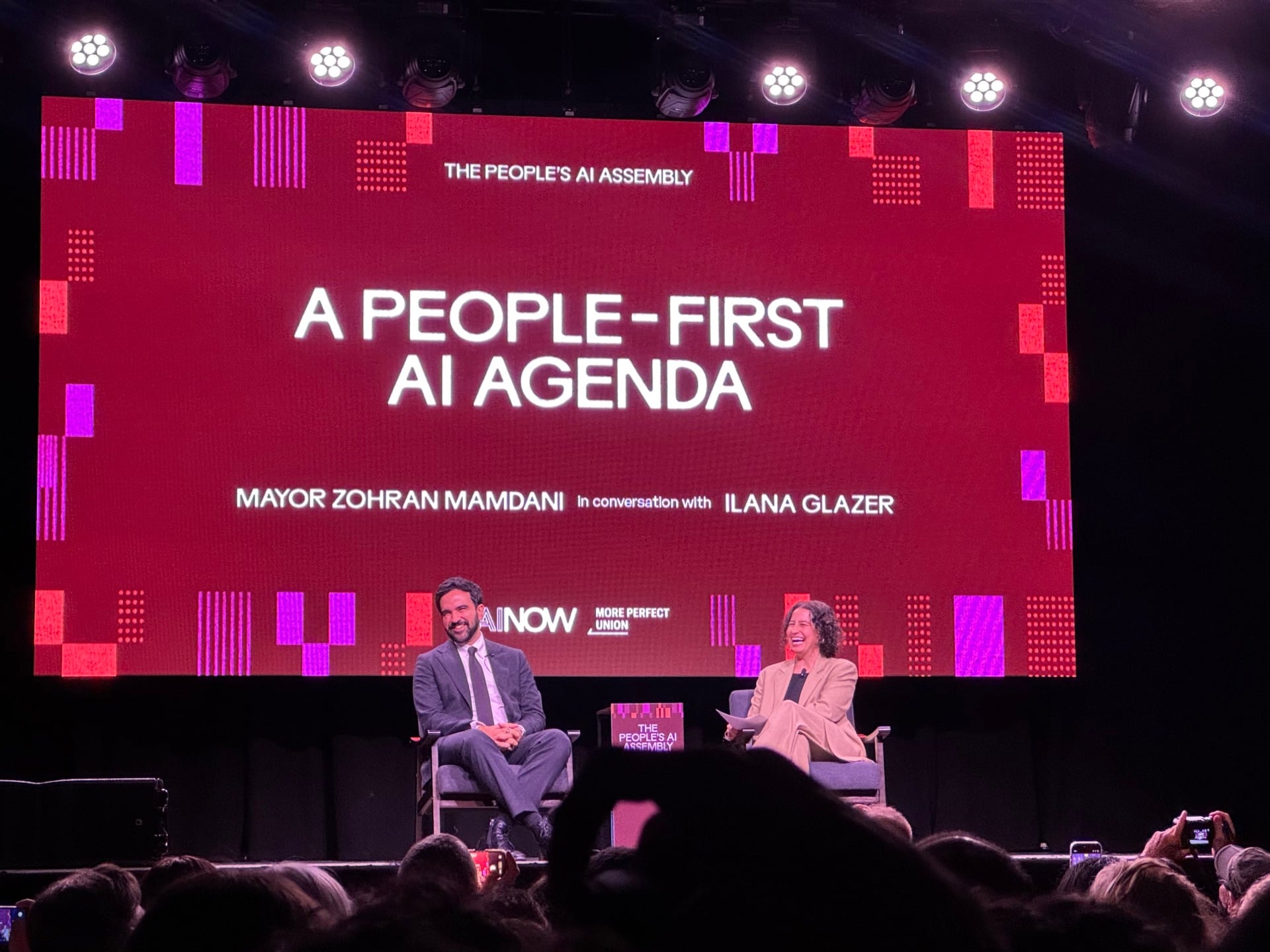
Boos greeted a video of big tech CEOs. Public anger is now a visible part of the policy debate.
The crowd’s reaction—loudest at Elon Musk—was a sign that anti-AI and anti-data-center sentiment has spread across political lines. Polls have shown rising anxiety about AI, and activists have turned that anxiety into protests and local pressure campaigns. You could call it a cultural shift: citizens are less willing to accept decisions that shape communities without a seat at the table.
Mamdani framed local measures like the moratorium and a school ban on generative AI for grades K–8 as practical attempts to assert control where the federal government has not. He pointed to pilot programs for older students modeled on Norway’s restrictions and argued that AI fluency under teacher supervision can help students—including ENL students and those with special needs—use tools responsibly.
Will a moratorium hurt U.S. AI competitiveness?
That’s the claim from some corners, including President Trump’s post on Truth Social that called slowdown measures a “sick conspiracy” that would leave the U.S. trailing China. Critics say delays will favor overseas competitors. Mamdani pushes back: competition should not erase labor rules, environmental safeguards, or democratic control over local infrastructure.
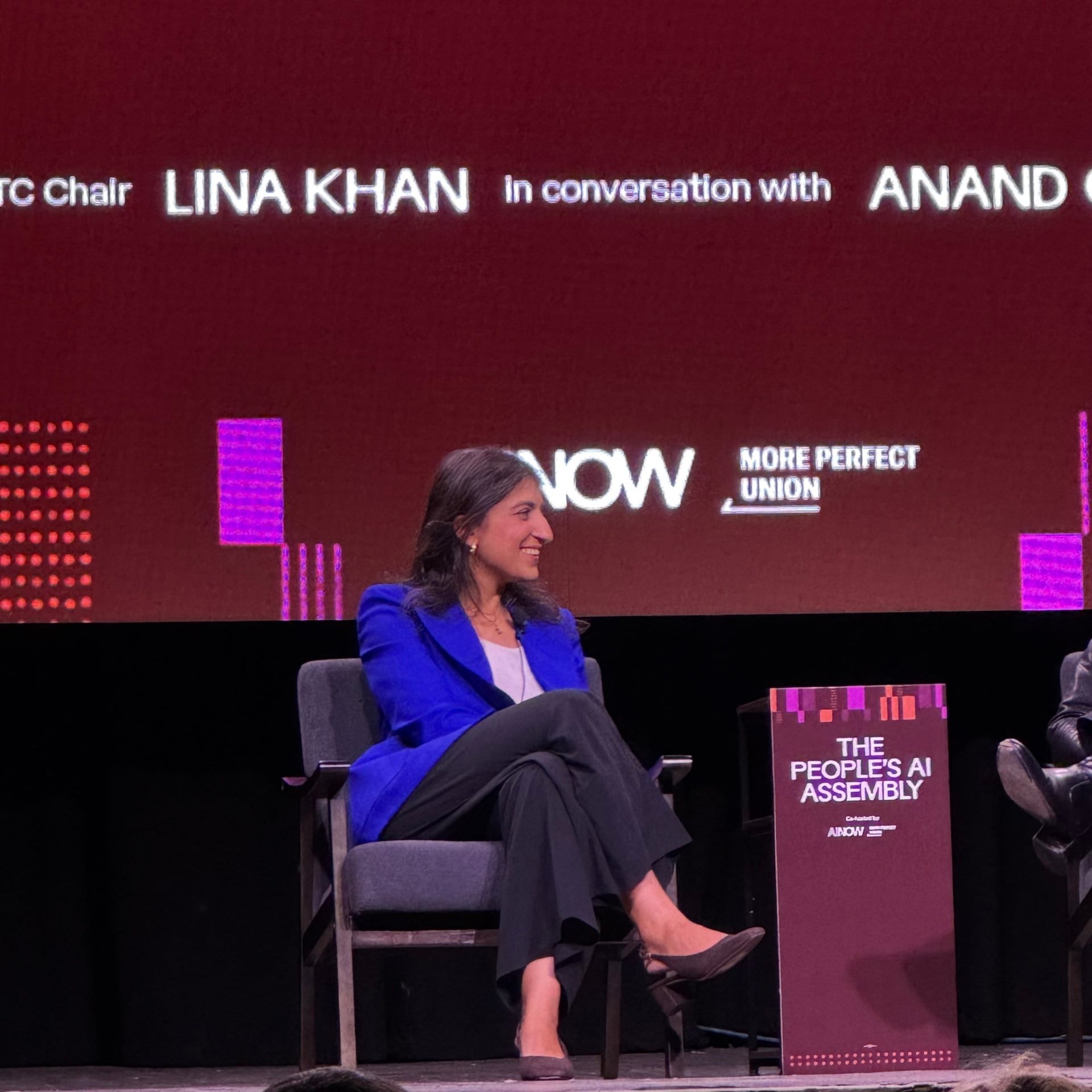
Lina Khan spoke at the event and will join Mamdani’s economic team. That’s not symbolic; it changes how the city plans deals.
Khan, known for tight FTC oversight, told the crowd that tech firms don’t need antitrust exemptions to secure governments — and that rolling out models with known harms while chasing profit is unacceptable. You heard a clear message: private technology can be regulated under existing law, and the consequences of inaction are already visible in everyday harms.
Mamdani’s measures show how cities can wield procurement, labor standards, and school rules to shape AI’s rollout. Think of the moratorium as a circuit breaker: a pause meant to prevent overload. The broader debate around AI has become a tinderbox of labor, environment, and civic control, and New York just lit a match.
The stakes are local but the conversation is national. You’re watching federal absence become municipal action.
If you follow cloud contracts and energy plans, you can see why developers push back: data centers are expensive, lucrative, and tied to AI capacity. If you follow parents and community organizers, you see a different urgency — schools, air quality, power use, and lost local control. Mamdani’s approach bets that law and public pressure can tilt decisions toward community interests without stopping innovation altogether.
So what happens next? The bill must reach Gov. Hochul’s desk. If she signs it, New York would codify a tougher pause than her executive order. If she doesn’t, activists worry the temporary order could be reversed. You can argue about global competitiveness or national strategy, but the immediate fight will be decided on Albany’s calendar and at Webster Hall’s successor events.
Are you ready to take a side in a debate that asks whether cities will act when the federal government will not?