
I remember loading Andromeda for the first time and feeling the room tilt—screens full of promise and a jarring hiccup of animation. You could hear the fandom sigh and then argue in the same breath. That wobble has, curiously, softened into something closer to affection.
I’ve followed BioWare and EA for years, and I’ll tell you straight: Mass Effect: Andromeda arrived bruised, but it didn’t stay that way. I want to walk you through why time has been kinder, why the game’s rough edges now read like personality, and what that means for the series’ legacy. Read this as the view from someone who watches game launches the way you watch storms—waiting to see what they leave behind.
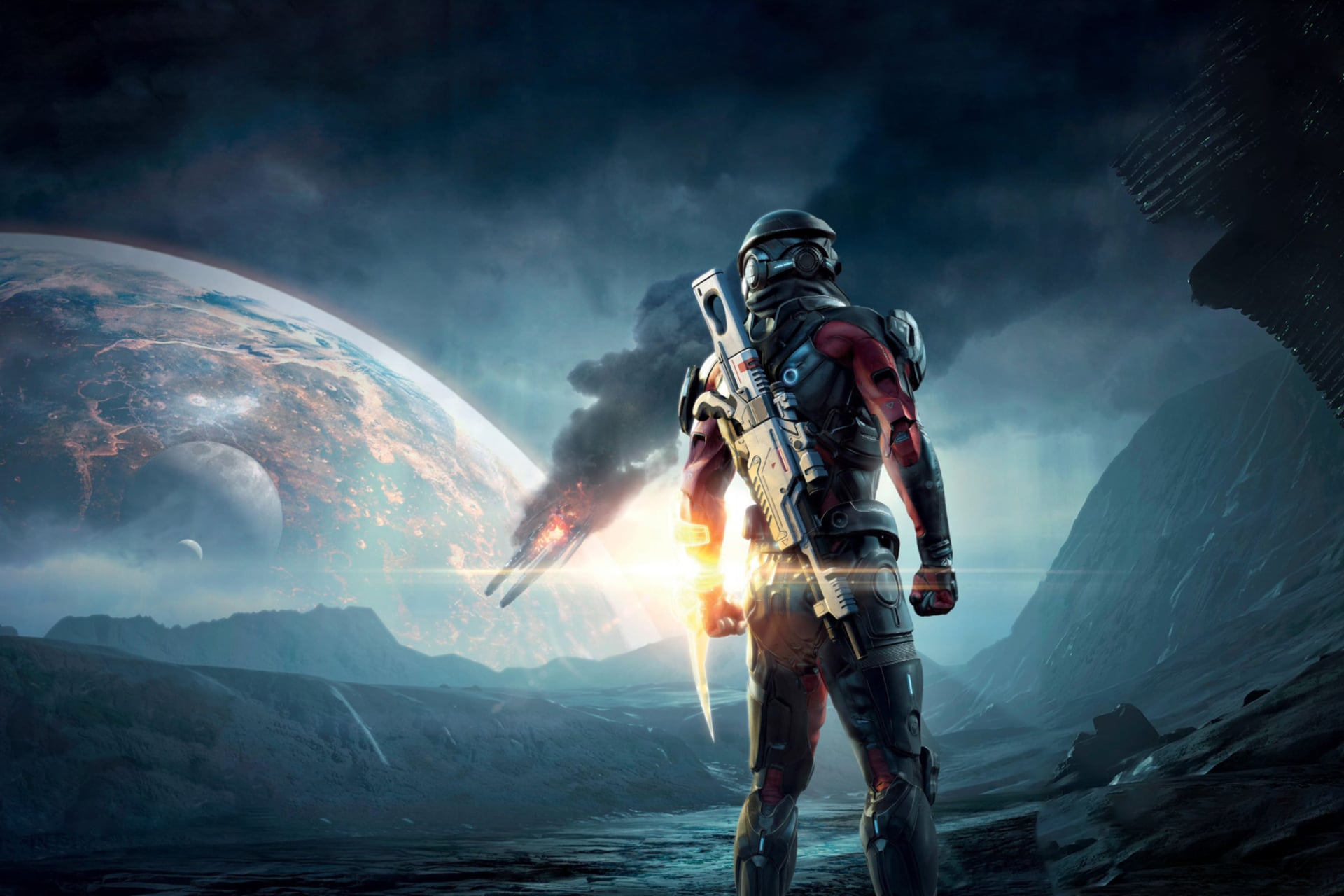
When Andromeda launched in March 2017, social feeds filled with reaction gifs.
That first week felt like a crucible: patch notes, outraged clips on YouTube, and long-form Kotaku reporting about a fractious production. You remember the headlines. Players compared it, loudly, to Breath of the Wild and Horizon Zero Dawn, two contemporaries that redefined open-world expectations. That comparison hurt Andromeda because those games landed with near-flawless polish while BioWare’s title arrived with visible seams.
But polish and ambition aren’t the same thing. I think of Andromeda like a compass with a cracked needle: its aim was true even if the hardware wobbled. The game tried to re-center what made the first Mass Effect sing—exploration, modular RPG systems, discovery—while shedding the weight of Shepard’s finished saga.
Is Mass Effect: Andromeda worth playing now?
Yes, but with context. If you play on PC, PlayStation, or Xbox, patches over the years smoothed many of the technical jags and restored a steadier experience. The combat—BioWare’s most defensible choice—still lands. The Profile system replaces classes with flexible bonuses, and the jetpack-backed fights feel alive in a way that rewards experimentation.
If you’re after the narrative highs of the original trilogy, temper expectations: this isn’t Shepard’s moral anchor. It’s lighter, more curious, and more interested in planetary mystery than existential dread. If you want a sci-fi adventure that lets you roam, hunt secrets in Remnant vaults, and watch a party gradually bond, Andromeda now delivers that in a workable form.
At launch, the “Ryder” story read as abrupt to many players.
I remember arguing with forum regulars about Ryder’s arc and why the writers made certain design calls. BioWare gave Ryder a Pathfinder role after an early family loss, which created a different kind of weight than Shepard’s fate-driven crusade. That choice made the game lighter and, at times, awkward—the studio tried to avoid a human-centric imperialism while also having human Pathfinders solve problems other species found baffling.
The result is messy but often honest. When it hits, Andromeda feels like a crew of people trying to make the best of a new life—both in story and in the real-world production. You can sense the fingerprints of creators who wanted to experiment but were under time pressure from EA and the market.
What went wrong with Mass Effect: Andromeda?
Several things colliding: a compressed schedule, shifting leadership, and the pressure cooker of a triple-A budget under EA’s watch. Reports from outlets like Kotaku and interviews on YouTube painted a picture of a studio juggling tech debt, a partially rebuilt engine, and changing creative goals. When tech and story aren’t aligned, moods shift and deadlines start dictating design.
There were also harsh comparisons. Two other open-world RPGs that year rewired player expectations, and Andromeda showed where BioWare’s pipeline had been eroded by layoffs and corporate moves. The result often felt like a scratched record—familiar melodies repeating with a new, rasping texture.
Years later, the same systems read differently in player communities and on Steam pages.
Patch notes and player mods softened rough edges. I’ve watched threads where players who once left after a few hours returned and wrote about discoveries they missed the first time. Combat combos click better the second time you try them, and Ryder’s dialog options—recast as “emotional” or “casual”—let you play tone more than strict morality.
The remastered Shepard trilogy helped, too: by restoring faith in the brand, it created room for forgiveness. Concept art and leaked materials—covered by IGN and Kotaku—later suggested that BioWare saw value in elements of Andromeda, even if the next project, Mass Effect: Universe, was shelved. That cancellation, and later studio changes, made the game’s survival more bittersweet than triumphant.
Will Andromeda get a sequel?
Short answer: not likely in the way fans once hoped. BioWare’s recent restructuring and EA’s shifting priorities mean the team that could have expanded Ryder’s story isn’t intact. Concept art teased by outlets hinted at directions, but corporate realities—studio closures, layoffs, and canceled projects—changed the calculus. You can still find signs of ambition in those designs, but ambition without runway rarely gets finished.
At the end of the day, the game’s heartbeat is human decisions made under pressure.
I’ve covered studios where crunch and goodwill sit on opposite sides of a ledger, and you can read that ledger in Andromeda—its best moments are people trying to do right with limited means. The Tempest crew, the Angara, the conflicted Kett: these are places where the studio’s empathy shows through the roughness.
Play it now and you’ll find a game that learned to be itself after the storm. It’s not blameless, but it’s not a dead end. So what does that teach us about sequels, about corporate stewardship, about giving creative teams time? I think it asks a sharper question: if a studio can make this much with constraints, what might they have made with trust and runway?