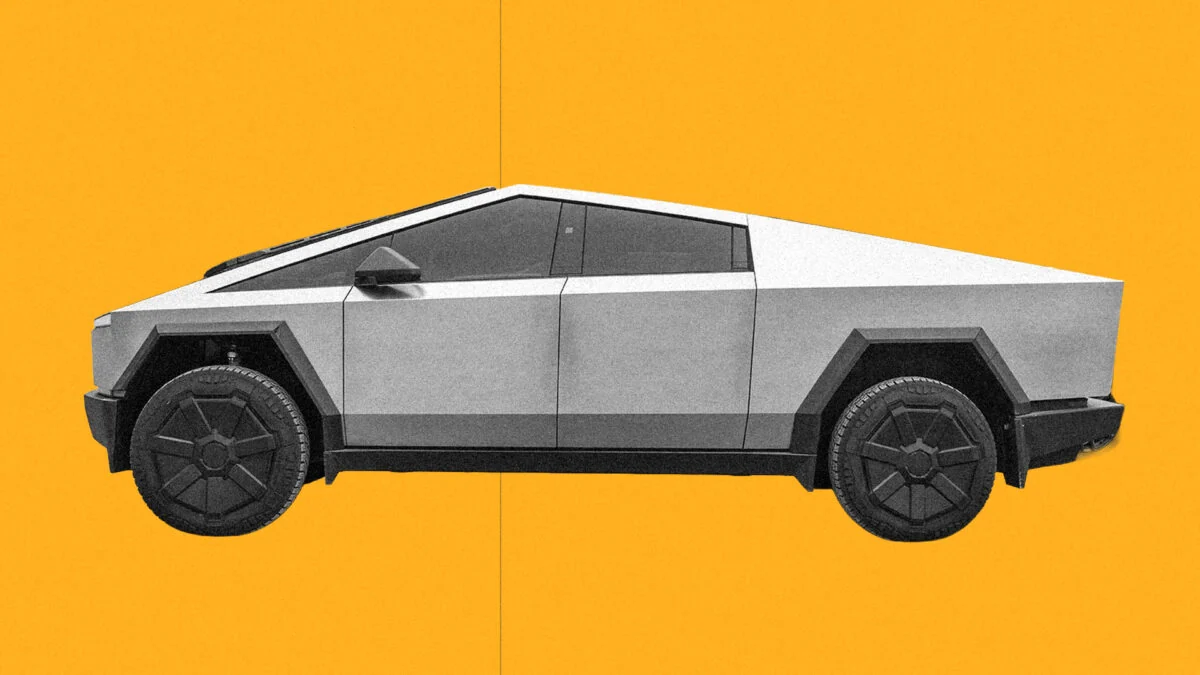
I was watching a Cybertruck being winched off a beach while someone laughed and called it a boat. You could feel the disbelief in the crowd, like a punchline that keeps landing. I want to walk you through how a hyped EV became a magnet for ridicule, wreckage, and worse.
I’ve covered cars and tech for years; you learn to read what a machine says about its maker and its moment. If you own a Cybertruck, this is not an obituary so much as a forensic report—with a few lessons for anyone who builds bold promises on brittle realities. You’ll see how design, PR, politics, and human error combined until the vehicle simply couldn’t survive public life.
The glass cracked on stage — and the launch never recovered
At the 2019 reveal, a steel ball shattered the Cybertruck’s “armored glass” in front of a stunned audience. That single moment became a symbol: spectacle that undercut claims of invincibility. From there, recalls and odd failures kept piling up, each one eroding trust faster than preorders could arrive.
Franz von Holzhausen’s tossed steel ball did more damage than the broken window; it punctured a narrative. I watched press rooms pivot from curiosity to Schadenfreude. Tesla’s design choices—sharp angles, stainless-steel skin, inconsistent panel gaps—became talking points in auto forums and late-night monologues.
Musk drove a prototype through Malibu and hit a sign
Video caught Elon Musk making an illegal left in front of Nobu as paparazzi circled; the prototype clipped a “right turn only” sign. It reads as a micro-lesson: when the CEO is the product’s PR engine, every misstep amplifies. You don’t need me to tell you that optics matter—especially when the product depends on swagger.
That celebrity moment framed the truck as a personality prop rather than a serious work vehicle. Ed Norton’s cameo and the tabloids amplified the image; X and YouTube turned it into a looping clip. The more the truck acted like a stunt, the less it behaved like a dependable purchase.
Why did Tesla discontinue the Cybertruck?
Short answer: waning demand and shifting priorities. Musk cited “opportunity cost” and staffing constraints while Tesla refocused on a self-certified two-seater autonomous taxi project. Analysts at Cox Automotive and outlets like Electrek tracked U.S. registration numbers dropping sharply—interest that started as curiosity thinned into indifference and operational headaches.
A man drove a Cybertruck into a lake to test a boast
Elon once promised the truck could “serve briefly as a boat.” A Texas owner tried to prove him right and wound up arrested, with Grapevine PD releasing the soaked photos. That plunge didn’t just damage the vehicle; it collapsed a credibility claim in one viral image.

Other attempts to ford water—on beaches, rivers, and harbors—produced embarrassments and tow trucks. Owners trying to launch jet skis or race on sand found the truck outmatched by simple conditions. Those clips landed on YouTube and X and became part of a narrative no PR team could paper over.
Was the Cybertruck waterproof?
Short answer: not in practical terms. Musk’s colorful phrasing invited literal tests, and the results were messy. The vehicle’s manual even warned that driving into uncertain water could void warranties—advice that undercuts any “boat” claim you heard on social feeds.
The attempt to be bulletproof produced weird videos and gaps
People tested the truck’s “armored” panels with bows, arrows, and guns; one streamer found a round lodged in the seam between doors. Those were showy stunts, but they exposed real engineering inconsistencies. When a gap accepts a projectile, optics become a safety concern.
YouTube hosts and streamers like Joe Rogan and Adin Ross turned tests into entertainment. The result: a cascade of clips that framed the vehicle as untested theater rather than engineered refuge. You don’t get back credibility once your armoring is a punchline on millions of feeds.
Is the Cybertruck bulletproof?
Short answer: not reliably. The panels might resist certain impacts, but inconsistent seals and gaps defeat the promise. Tests on social platforms showed that a round finding a seam could penetrate—proof that bold marketing doesn’t equal battlefield-grade design.
Owners trapped fingers and cars that didn’t like water or car washes
One YouTuber used his own finger and suffered a broken bone when testing the frunk; another owner bricked theirs after a car wash. These micro-accidents spread fast and did more to scare potential buyers than any specs page could reassure. When routine tasks look risky, buyers rethink ownership.
Car-wash mode voided warranties in some service centers, and electronics reacted badly to shallow puddles. Those problems lived at the intersection of hardware choices and software policy—territory where Tesla has excelled in some products and struggled in others.
The truck became political collateral
After Musk’s embrace of partisan causes and a visible pivot in public life, the Cybertruck gathered a new set of associations. Protest, vandalism, and even arson followed as the vehicle became shorthand for a polarizing decade. One January attack in Las Vegas used a Cybertruck as the device’s shell; the image was gruesome and would haunt the model’s reputation.

That event killed the driver and wounded others. It was tragic and criminal, not a product defect—but imagery matters. When a vehicle becomes the focal point of a terror attack, public appetite for that vehicle evaporates.
Musk swapped Cybertruck lines for a Cybercab two-seater
Tesla announced a shift: production capacity repurposed for a self-certified autonomous taxi aimed at geofenced fleets in Texas and Florida. That strategic pivot told you everything—Tesla would chase a service model rather than defend a consumer pickup. I’ve watched companies pivot like this before; sometimes it’s smart, sometimes it’s admission.
The Cybercab play looks more like Waymo’s geofenced approach than the mass-market promise originally sold to reservation holders. If you were a buyer expecting a truck for garage and driveway, the shift felt like a bait-and-switch. Musk’s talent shortages and “opportunity cost” rhetoric read as shorthand for a company trimming what it can’t scale reliably.
The truck’s cultural nicknames—Swasticar, Incel Camino, Starship Pooper—were cruel but revealing. Vehicles don’t die on spec sheets; they die in public opinion. For the Cybertruck, that death was social as much as mechanical—a steel coffin that never found its audience. It was like a jewel box turned into a casket, and sales evaporated like a puddle in the sun.
So where does that leave you, the buyer, critic, or product builder? If you’re designing for spectacle over usability, expect the marketplace and platforms like YouTube and X to act as brutal referees. If you’re building hardware tied to a founder’s persona, remember that optics can shred technical claims faster than engineering can fix them.
RIP Cybertruck. Was it a failed product, a PR casualty, or a political lightning rod—what do you think?