
The demo opens on a single trombone note and a cigarette-smoke halo around a tiny fedora. I thought it would be a gimmick; five minutes later I was neck-deep in a mystery I wanted to finish. By the time the credits rolled I knew I’d been conned—into loving a cartoon mouse with a revolver.
I’m going to be blunt: I’ve played enough preview demos, press builds, and hyped blockbusters to sniff out hype. You and I both want two things from a review—honesty and a clear answer about whether your next 30 bucks is well spent. So let me walk you through why MOUSE: P.I. For Hire isn’t a joke, why it hooks like a jazz riff, and where it quietly stumbles.
The Name is Jack Pepper: Private Eye for Hire
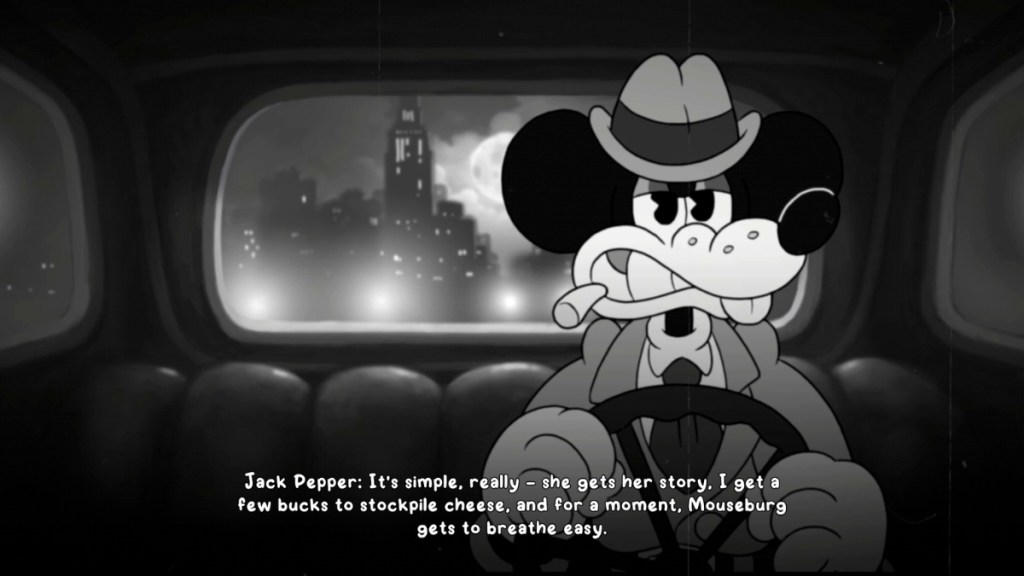
I first met Jack Pepper during a trade-show demo where a chase spilled straight into a punchline. The game plants you immediately in the driver’s seat of a noir chase and refuses to babysit you with a 20-minute tutorial.
Jack is an ex-cop and war vet scraping by as a gumshoe in Mouseburg, a city so rotten it makes Gotham look like a spa. Troy Baker’s gravelly delivery sells every line—he doesn’t narrate, he inhabits. You won’t skip his dialogue; I didn’t, and that’s saying something.
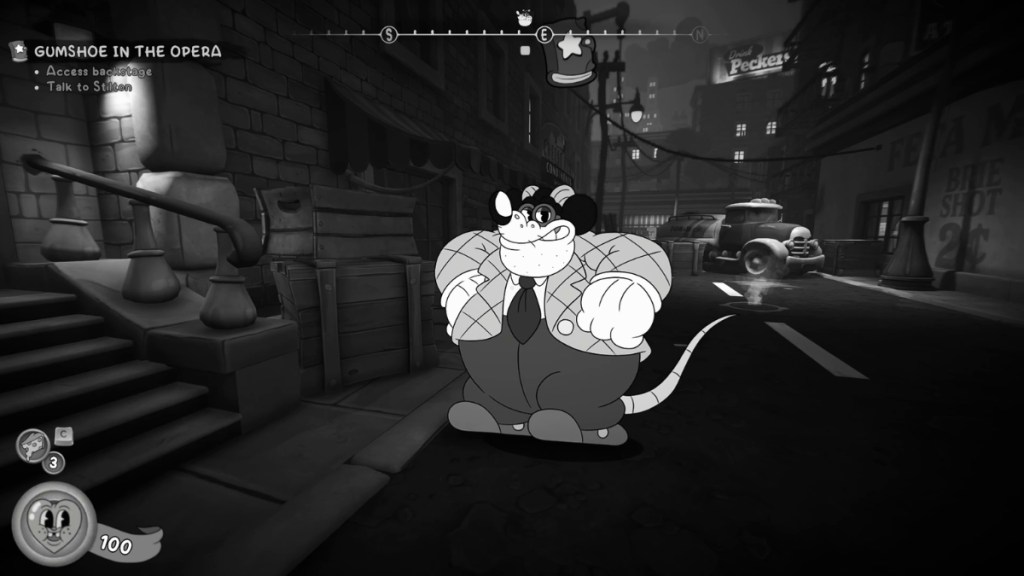
Supporting cast bits—Tammy Tumbler the weapons nerd, Wanda Fuller the procedural straight shooter, and Cornelius Stilton the politician-war-pal—are written in a way that sparks suspicion or sympathy on a dime. The cases stack like dominoes: a vanished magician here, a muffled murder there, and a clue board that turns your progress into a readable trail instead of a guessing game. It’s detective work designed to make you feel clever without rewarding grind.
A Visually Stunning Rubber Hose World Built Frame by Frame
I saw the devs present the technique in a small panel: they drew tens of thousands of frames by hand and stitched them into 3D scenes. That painstaking method shows—every district has its own cadence and visual joke.
The world breathes with rubber-hose animation; characters wobble, ragdoll theatrically, and environmental gags land with timing only hand-drawn art can deliver. The aesthetic isn’t a skin slapped over an engine. It’s a living, tactile city where a torn poster or a frozen skeleton tells a joke or a tragedy in a heartbeat. One metaphor: the city moves like a scratched jazz record—off-kilter, soulful, and impossible to ignore.
Even The Guns Have Personality Not to Be F**ked With
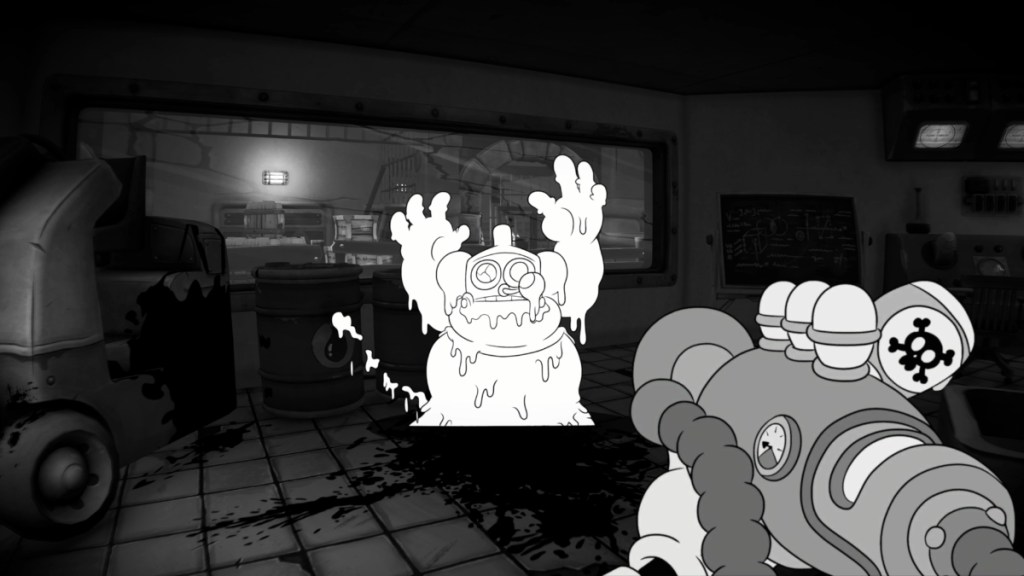
I tested weapons in every encounter room and on every enemy type I could find. Each gun feels like a character, not a stat block.
The Micer pistol, the Devarnisher turpentine sprayer, the James Gun (tommy-gun energy) and the Boomstick shotgun all carry unique sound design and cartoon physics that make each kill feel like performance art. Enemies don’t die; they react: ash, googly eyes, bones that rattle like a xylophone. Even the melee mitts matter—fists are a legit option when ammo is tight.
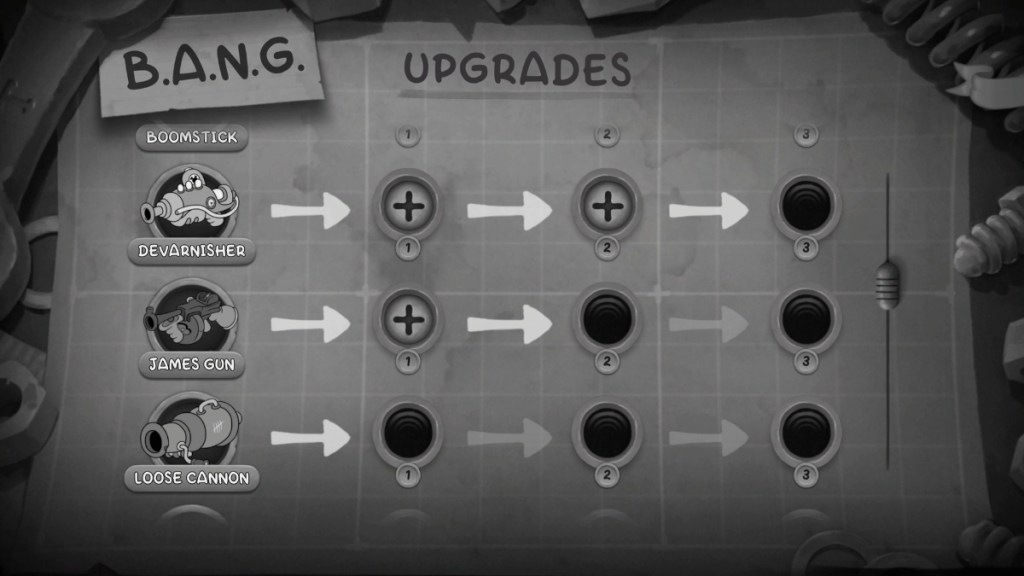
Upgrades live in Tammy’s B.A.N.G workshop and require schematics you’ll hunt for. The system is small but meaningful—finding a schematic to improve a favorite weapon feels like a reward rather than a checkbox.
Is MOUSE: P.I. For Hire worth buying?
Short answer: yes—if you want something smart, funny, and artful that plays like a confident indie but delivers AAA-level craft. At $30 (€28) it’s priced to tempt you away from a single microtransaction or a half-hearted DLC buy. You’ll get 15–25 hours of main story plus side cases flavored with personality.
A Richly Detailed World That Feels Alive Beneath Its Cartoon Surface
I found myself pausing in nearly every room to read a scrap of dialogue or an item note. The detail isn’t accidental; it’s curated.
Level design uses cartoon logic without cheating the player: vents launch you, warp pipes move you through vertical space, and shootable targets reveal hidden platforms. Tinsel Studios—ambitious and occasionally maze-like—can trip you up, but most maps are tight and satisfyingly looped. One sequence chases a magician through a fever dream and it’s a visual high that reminded me why games can still surprise.
How long is MOUSE: P.I. For Hire?
Expect roughly 15 hours for the main campaign and 20–25 hours if you hunt side cases and schematics. Your mileage will vary depending on how much you savor the detective bits and secret rooms.
Performance: Smooth, Stable, and Clean as a Mouse With Nothing to Hide
I ran the PC build at a press event and later on my own rig; it holds surprisingly steady across hardware. That polish isn’t accidental.
On my test PC (Intel i7-14700K, Gigabyte RTX 4060 Ti 16GB, DLSS Quality, 1440p @ 160Hz) the game sat locked at high frame rates with minimal load times. Fumi Games has tuned the engine for consoles and handhelds—Steam Deck, Nintendo Switch 2, PS5, Xbox—so you get a comparable experience across devices. Optimization is part craft, part restraint; here it pays off.
My Setup:
CPU: Intel i7 14700K 3.40 GHz
GPU: Gigabyte RTX 4060 Ti 16GB
RAM: Crucial (2x16GB) 5200MHz DDR5
SSD: Kingston 3 TB NVMe SSD
Monitor: 1440p @ 160Hz
What platforms is MOUSE: P.I. For Hire on?
Fumi ships the game on PC, PS5, Xbox Series X|S, Nintendo Switch 2, and Steam Deck. That cross-platform focus shows in the control polish and accessibility options.
A Hesitant Moral Core Keeps It From True Greatness
I noticed a pattern as I played through late-game beats: the script bends toward comfort rather than bite. That choice shapes the entire mood.
Jack is a genuinely decent protagonist. He fights corruption, and most decisions push toward the morally right option. For a noir story that trades in moral ambiguity, MOUSE arrives wearing a shiny coat. There’s no singular antagonist who gets personal in the way a Moriarty or Joker would; enemies are entertaining but rarely soul-crushing. It’s a tonal choice that makes the game more palatable but less corrosive than classic noir fans might expect.
Verdict: A $30 Game That Deserves to Be in Every Video Game Library
I bought into one of those press demos expecting a parody and walked away with a favorite of the year. That’s not marketing hyperbole—that’s the actual play experience.
MOUSE: P.I. For Hire is a passion project that reads like a love letter to cartoon animation and detective fiction. It pairs 40,000 hand-drawn frames with tight FPS mechanics, a satisfying upgrade loop, and a world stuffed with personality. For $30 (€28) it outshines more expensive, hollow spectacles because it offers character and craft instead of checklist features.
It’s proof that a small team with a clear vision—Fumi Games, helped along by voice work from Troy Baker and solid engineering around DLSS and modern GPUs—can deliver something memorable without a blockbuster budget. One last metaphor: it’s like finding a well-wound pocket watch in a junk drawer—surprising, precise, and oddly warm in your palm.
If you want an original FPS that plays with genre expectations, has real mechanical care, and costs less than two takeout dinners, this is that rare follow-through. Will Jack Pepper become an icon, or is he the best surprise of the year who quietly slips back into indie lore—what do you think?