
I was testing a water column in a cramped Sulfur Cave when the ground beside me hissed and shoved me ten blocks into the air. For a full second I was a spectator to my own panic—then I laughed, because that shove was the exact tool I wanted. You can build that same surprise for friends, or turn it into the quickest elevator on the server.
I’ve been building traversal toys in Minecraft since the redstone days, and I’ll walk you through every step so you spend minutes gathering, not hours guessing. Read this once, and you’ll know the exact setup that gives you predictable launches, traps, and scenic chimneys.
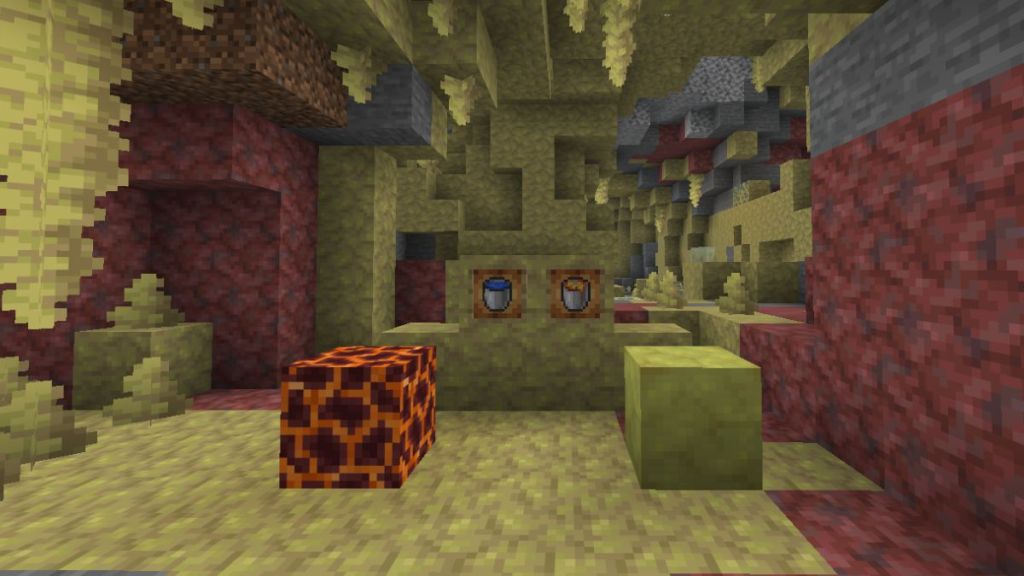
Items Required to Make a Geyser in Minecraft
Observation: After a few Nether runs you learn which blocks are worth hauling home, and which you can forget about. Below are the items that matter for geysers—simple, renewable, and easy to store.
Geysers are powered by the Potent Sulfur block from Sulfur Caves, introduced in Minecraft 26.2 by Mojang. You’ll pair that with a heat source (magma block or lava) and water to create eruptions that can fling players, mobs, or items. If you play on Java or Bedrock the mechanics are the same in 26.2+; community videos on YouTube and builds shared on Reddit are already optimizing height and timing.
| Item | Amount | Where to Get |
|---|---|---|
| Magma Blocks | 1x | Found in the Nether, near ruined Nether portals, or underwater ruins |
| Potent Sulfur Block | 1x | Found in Sulfur Caves or crafted from sulfur blocks |
| Lava Bucket | 1x | Collect from any lava source (surface pools or underground) |
| Water Bucket | >1 | Collect from any water source |
| Building blocks (optional) | >1 | Any solid block for framing or camouflage |
How to Make a Geyser in Minecraft
Observation: Simple physics often makes the best tools—pressure, heat, and a single trigger block can produce spectacular motion. Below are two reliable builds: one that trades convenience for control, and one that is minimal and quick.
There’s a specific block arrangement required; random stacking won’t cut it. Use one of these methods depending on whether you want continuous thrust or a periodic blast.
Method 1: Using Magma or Lava and Potent Sulfur Block
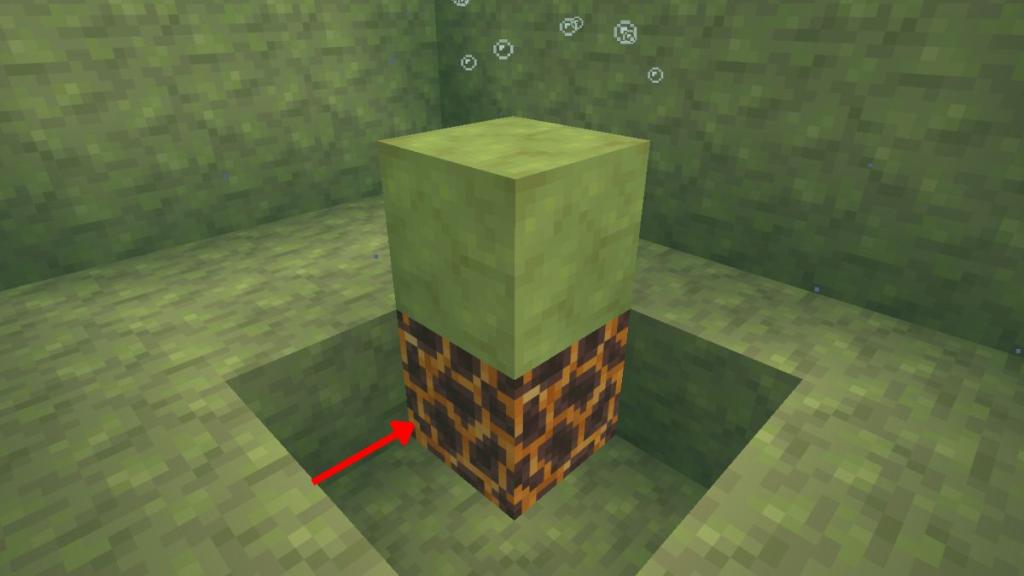
- Dig or build a square pit at least 3 blocks deep.
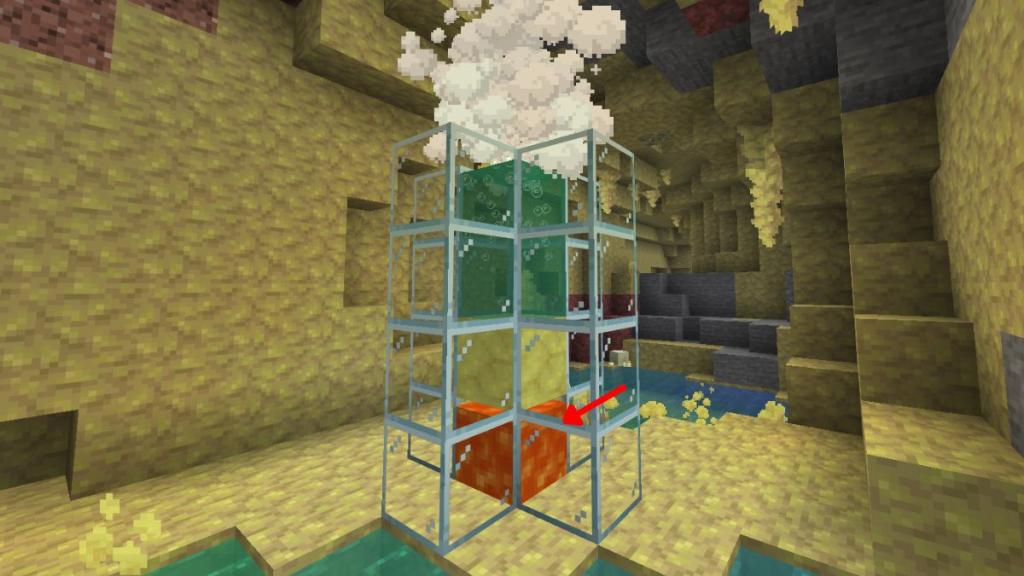
- Place a magma block in the bottom center, or pour a lava bucket into that spot.
- Put a Potent Sulfur block directly above the magma or lava.
- If using lava, cap the four sides around it with solid blocks so the water won’t touch the lava and form stone or obsidian.
- Fill the pit with water so it becomes a full water source. The water will tint green when it becomes acidic from Sulfur Caves.
- Wait: if you used magma the geyser will pulse. If you used lava and keep it supplied, it can run continuously.
Method 2: Using Only a Potent Sulfur Block
Dig a pit at least 2–5 blocks deep. Place the Potent Sulfur block in the center of the base and fill the pit with water so every block is a water source. The Potent Sulfur must sit 1–4 blocks below the water surface. Stand on it and wait: the geyser will periodically blast you skyward.
How Does a Geyser Work in Minecraft
Observation: Steam engines and pressure pipes taught me that height is a simple function of stored energy; Minecraft’s geyser follows the same idea. The Potent Sulfur acts as a trigger while water depth scales the blast.
The Potent Sulfur generates pressurized particles that push upward through the water. Those particles pass through non-collidable blocks like glass or copper grates, but stop if there’s a solid block above. Want predictable arcs? Give the geyser vertical clearance—eruptions can reach up to 20 blocks high depending on depth.
Height of Geyser = 5 x Height of water
| Water Height | Dormant Duration (in seconds) | Eruption Duration (in seconds) | Geyser Height |
|---|---|---|---|
| 1 block | 15-30 | 1-2 | 5 blocks |
| 2 blocks | 25-40 | 2-3 | 10 blocks |
| 3 blocks | 35-50 | 3-4 | 15 blocks |
| 4 blocks | 45-60 | 4-5 | 20 blocks |
Can geysers work without potent sulfur in Minecraft?
No. Potent Sulfur is the trigger block that converts heat or magma activity into the upward particle force that makes geysers function. Without it you won’t get eruptions—so think of it as the valve in the system.
Can geysers damage players?
The geyser’s gas and water don’t directly deal damage, but the consequences can hurt: fall damage after a high launch will injure or kill an unarmored player. If you want safer launches, use water landing pads or slow-fall potions; if you want to trap players, combine a geyser with an obsidian box at the apex.
What is the maximum height of a geyser in Minecraft?
In standard play the practical maximum is 20 blocks, produced with a 4-block water depth. Community builders on YouTube and Reddit are experimenting with taller effects using stacked geyser tunnels and timed lava supply.
All Uses of a Geyser in Minecraft
Observation: In survival servers, a single clever mechanic often becomes the community’s favorite prank or tool. Geysers are already filling that role—both useful and mischievous.
- Natural Water Elevators: Build a glass shaft and place a Potent Sulfur at the base. The unpredictable timing makes these elevators feel alive—good for bases that want character rather than rigid timing.
- Elytra Launcher: Launch yourself from a geyser while wearing an Elytra to snap open your wings and start a glide. Works great near cliff faces or large bases.
- Geyser Traps: Camouflage a geyser under grass or carpet and lure visitors. Add an obsidian box at the top to trap players for a laugh or a raid.
- Decorative Smoke: Put a geyser inside a train engine or factory build to simulate a chimney. It’s a visual trick—like a staged fountain—perfect for roleplay villages.
Building these feels a little like wiring a miniature steam plant and a little like setting a spring under the floor—one is technical, the other is pure theater. Use redstone devices or dispensers if you want automated lava supply; community tools like WorldEdit speed testing in creative, and video guides on YouTube speed up iteration.
Geysers are one of those new mechanics that reward small experiments. Are you going to build a prank, a launcher, or a scenic chimney first?