
I watched a delivery van clip a lamp post and an NPC fold over the hood. The street held its breath while the engine decided whether the crash would look convincing. That half-second told me GTA 6 had been rebuilt from the ground up.
I’ve tracked game engines for years; you’ll get the clean version here — what changed, why it matters, and which systems will shape how you play. Read this as if I’m standing beside you at a console, pointing out the switches.
A delivery van clipped a lamp post and the crowd reacted — What Is the RAGE Engine in GTA 6?
That scene is the RAGE Engine in action: Rockstar Advanced Game Engine is the studio’s in-house framework that ties graphics, animation, physics, AI, sound, streaming, and tools into a single experience. I’ll spare the buzzwords: RAGE is the plumbing and the pulse.
You should know why Rockstar kept RAGE instead of moving to Unreal Engine or Unity: owning the whole stack gives them surgical control over how a fistfight, a rainstorm, or a car chase behaves at a systemic level. Euphoria’s physics work and years of RAGE iterations — from RenderWare roots through Rockstar San Diego’s early experiments — are the reason the series has a specific feel.
What is the RAGE Engine in GTA 6?
Short answer: the engine that decides whether a punch looks canned or organic, whether puddles reflect neon correctly, and whether crowds react with believable variety. Digital Foundry and Bloomberg have already been parsing trailers; I’ll focus on what you’ll feel when you play.
The bartender’s glass trembled under a thunderstorm — RAGE Engine in GTA 6: What Makes It Different
I noticed, in the extended footage, how seemingly minor details interacted: hair, sweat, water on skin, and glass reflections all responding to a single gust. That coherence is the new priority.
The RAGE Engine is a conductor, turning chaos into rhythm. Instead of treating lighting, physics, and animation as separate instruments, Rockstar has them read from the same score. The result is scenes that feel authored rather than patched together.
An NPC slid across wet pavement and didn’t repeat the same ragdoll — GTA 6 RAGE Engine Improved Physics
I replayed a clip where a pedestrian is struck near a curb; every hit produced a subtly different tumble. Those differences matter more than you think.
Rockstar’s use of Euphoria-style systems has been refined. Ragdoll reactions now interleave driven animation with real-time physics, so a collision’s direction, force, and the victim’s body type change the outcome. That reduces repetition and raises immersion.
Movement systems have also been reworked to factor body mass, momentum, and local geometry. If you and I play the same sequence as different characters, animations can vary because the underlying rules treat our avatars differently. Vehicle handling follows the same logic: damage, weight distribution, and even upgrades should alter behavior in meaningful ways.
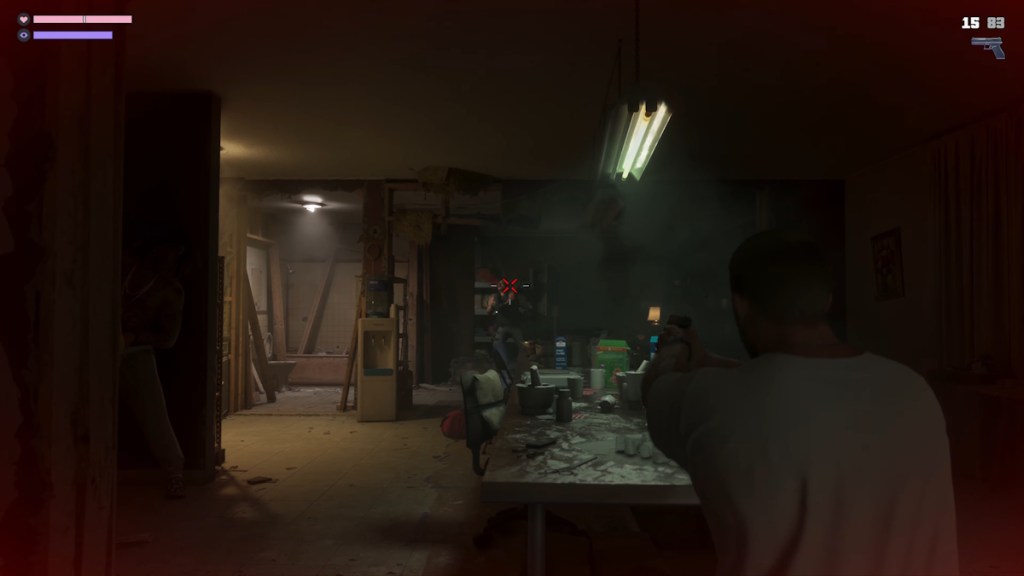
Will GTA 6 have realistic water physics and vehicle damage?
Rockstar’s footage already hints at upgraded water and more nuanced crash deformation. If the studio integrates weather, vehicle mass, and material properties into the same physics pipeline, then collisions and sea travel will feel mechanically informative rather than purely cosmetic.
A kayak cut through foam and the wake told a story — Water Dynamics in GTA 6 RAGE Engine
I paused a trailer frame where a kayak left a narrow trail; the splash behaved differently at every angle. Water is no longer a background shader element.
Water in GTA 6 is a polished mirror shattered into motion. That means wave shapes, wakes, and splash interactions are treated as interactive phenomena tied to wind, boats, and weather systems. Rockstar has signaled a fresh weather system; if wind fields feed wave generation and if rain alters surface tension or driving traction, water will influence gameplay rather than merely decorate it.
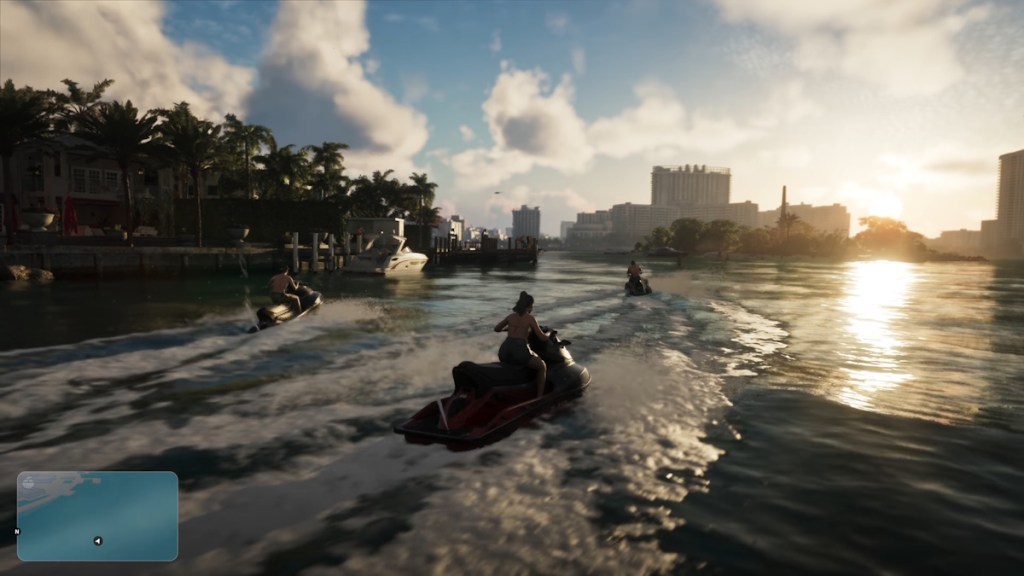
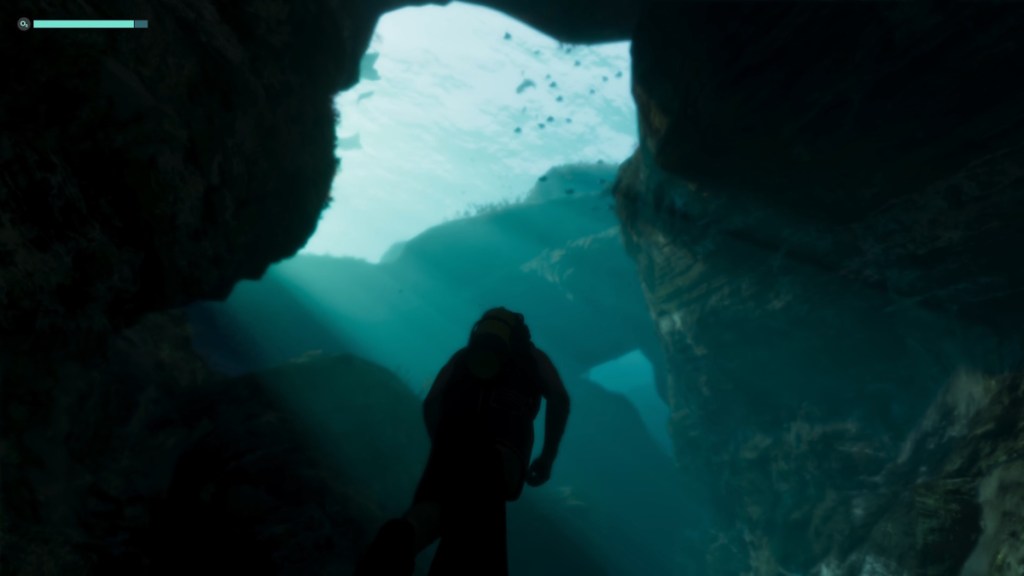
Trailer scenes show convincing refraction, reflections, and underwater light shafts. Those surface and subsurface effects demand performance, so Rockstar will balance fidelity on PlayStation 5 and Xbox Series X|S using streaming and level-of-detail tricks.
Sunlight struck a chrome bumper and refused to lie — RAGE Engine Graphics, Lighting, and Ray Tracing in GTA 6
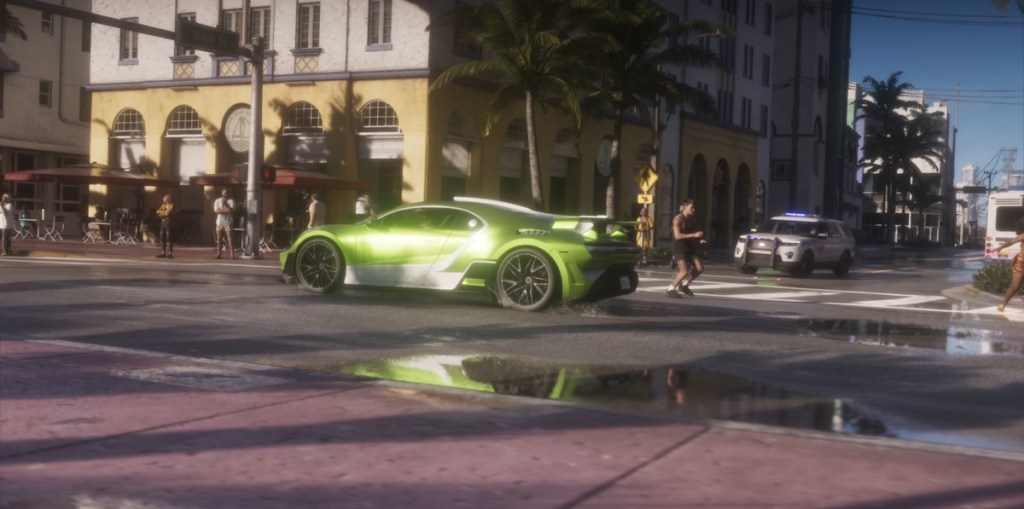
I froze a frame where a storefront’s neon reflected into a puddle and stayed consistent as the camera moved. That continuity is the new visual baseline.
Rockstar is using ray-traced reflections and improved global illumination in targeted places. You’ll see HDR reflections on cars, accurate bounce lighting indoors, and materials that respond to wetness. NVIDIA’s RTX features and console hardware ray tracing horsepower will be part of how those systems scale.
Textures, hair physics, and material systems have been polished too. You’ll notice sweat that beads and runs during exertion, clothes that respond to motion, and hair that has believable inertia. These systems are computationally demanding, which is why Rockstar will trade off between resolution, ray tracing, and frame rate.

A beach crowded at noon, and traffic flowed without collapsing — A More Detailed and Reactive Open World in GTA 6
I counted pedestrians in a single plaza and they behaved differently when chaos began. That variety is the new goal.
Rockstar is pushing NPC individuality: different reactions to gunfire, phone distractions that interrupt walking, and context-sensitive responses when you interact. To manage scale, RAGE uses level-of-detail AI, visibility checks, and streaming so distant crowds and nearby characters get the right attention at the right time.

Will Rockstar use the GTA 6 RAGE Engine for future games?
Phil Hooker told Bloomberg that the tools and team developed during GTA 6 will accelerate future projects. That means investments in RAGE aren’t single-use; they’re platform work that will affect Rockstar’s next decade of releases.
I watched the trailer at 30 FPS and wondered about performance — Did RAGE Engine Optimize GTA 6 for 60 FPS?
I ran a freeze-frame and saw an internal rendering resolution Digital Foundry estimated at around 1440p upscaled to 4K. That feeds the question every player asks: fidelity or frame rate?
Rockstar has said the game plays best on PlayStation 5, but a stable 30 FPS presentation with rich simulation remains the probable baseline. Reaching a locked 60 FPS while preserving all physics, ray tracing, and dense NPC behavior is expensive on CPU and GPU. Expect options and trade-offs rather than a single magic setting.
Rockstar has spent years iterating the RAGE Engine. The studio’s decision to control its stack, to retool animation and physics, and to invest in environmental simulation answers the old complaint that GTA felt staged. Now, scenes can behave as if they were live. Which of these changes will destroy the franchise and which will redefine it?