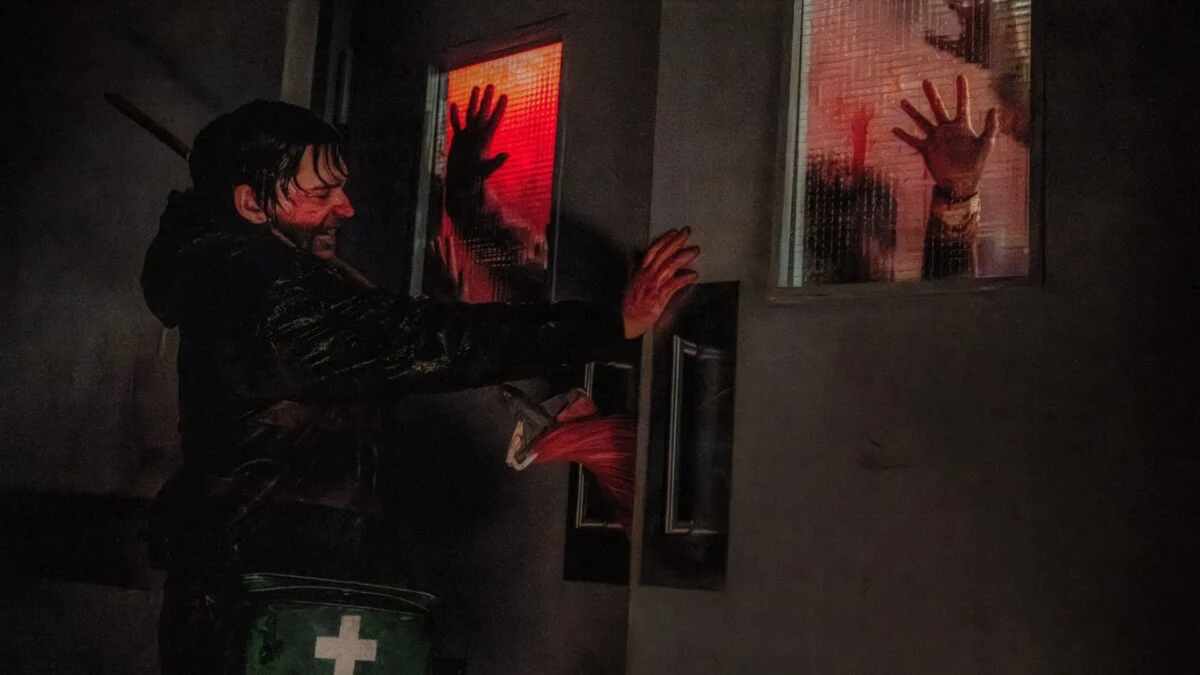
The lights in the interview room flicker once, twice, and Zach Cregger keeps talking as if the power outage were a planned beat. You feel the air tighten—an ordinary pause that says more about tone than any plot description. For a moment you know this film is trying to do something other films only promise.
I’ve followed directors who remake fear into a language you can hear, and I’m telling you: Cregger isn’t pitching set pieces. You, the viewer, are the experiment subject. Trust me when I say that if he protects the sensation of dread, the rest—lore, action, callbacks—will land where it matters.
The trailer played to a crowded, restless press room. What that silence after the last frame taught me about his choices
You watched the first trailer and felt a familiar unease: it barely resembles any single Resident Evil game. That was intentional. Cregger framed the film as an “all-new story” centered on Bryan (Austin Abrams), a medical courier plunged into a single horrifying night. Sony and Capcom lent the franchise weight; Cregger brought a scalpel.
He’s not trying to recreate a level or a boss fight. He wants the emotional logic behind those moments—the dread that makes you pause between rooms—captured on film. If the trailer felt like a controlled experiment, that’s because it was: the film appears to be testing how long an audience will sit with unease before release the safety valve.
The production list read like a streaming-era credits crawl. Why those names matter to the tone
Zach Cherry’s dry cadence, Kali Reis’s intensity, Paul Walter Hauser’s awkward magnetism—casting matters here. You can see the line from Cregger’s previous films, Barbarian and Weapons, to this project: he favors actors who can carry dread without theatrics.
I’ve watched Austin Abrams take ordinary beats and tilt them until the room feels off. That’s where threat lives. You’ll also spot echoes of platforms and shows that shaped expectations—Apple TV+’s Severance sensibilities in pacing, HBO-level tonal patience from True Detective: Night Country. When a director borrows tools from television’s slow-burn playbook, you should expect an emphasis on atmosphere rather than constant action.
The set looked clinical in the interview footage. How production design signals Umbrella’s shadow
The interviewer filmed Cregger against a sterile backdrop that read like an Umbrella press briefing. That was a hint. You don’t need to see a logo to feel corporate menace; sterile design plus controlled lighting equals threat.
He seems to be using environment the way a game uses fog: to limit what you can see and turn fear into a mechanic. I’ll say this plainly—if Umbrella is the long arm here, it will mostly be felt rather than named. The effect is like a pressure cooker about to hiss: it’s the silence between the ticks that counts.
Is Zach Cregger’s Resident Evil a game adaptation?
Short answer: not in the classic sense. Sony calls it an “all-new story.” Capcom’s DNA is present in concept and tone, but Cregger is crafting a film that stands on its own. If you expect a scene-for-scene translation of a beloved title, you’ll be disappointed. If you want the core emotional experience—dread, moral compromise, sudden violence—you might be in for something rarer.
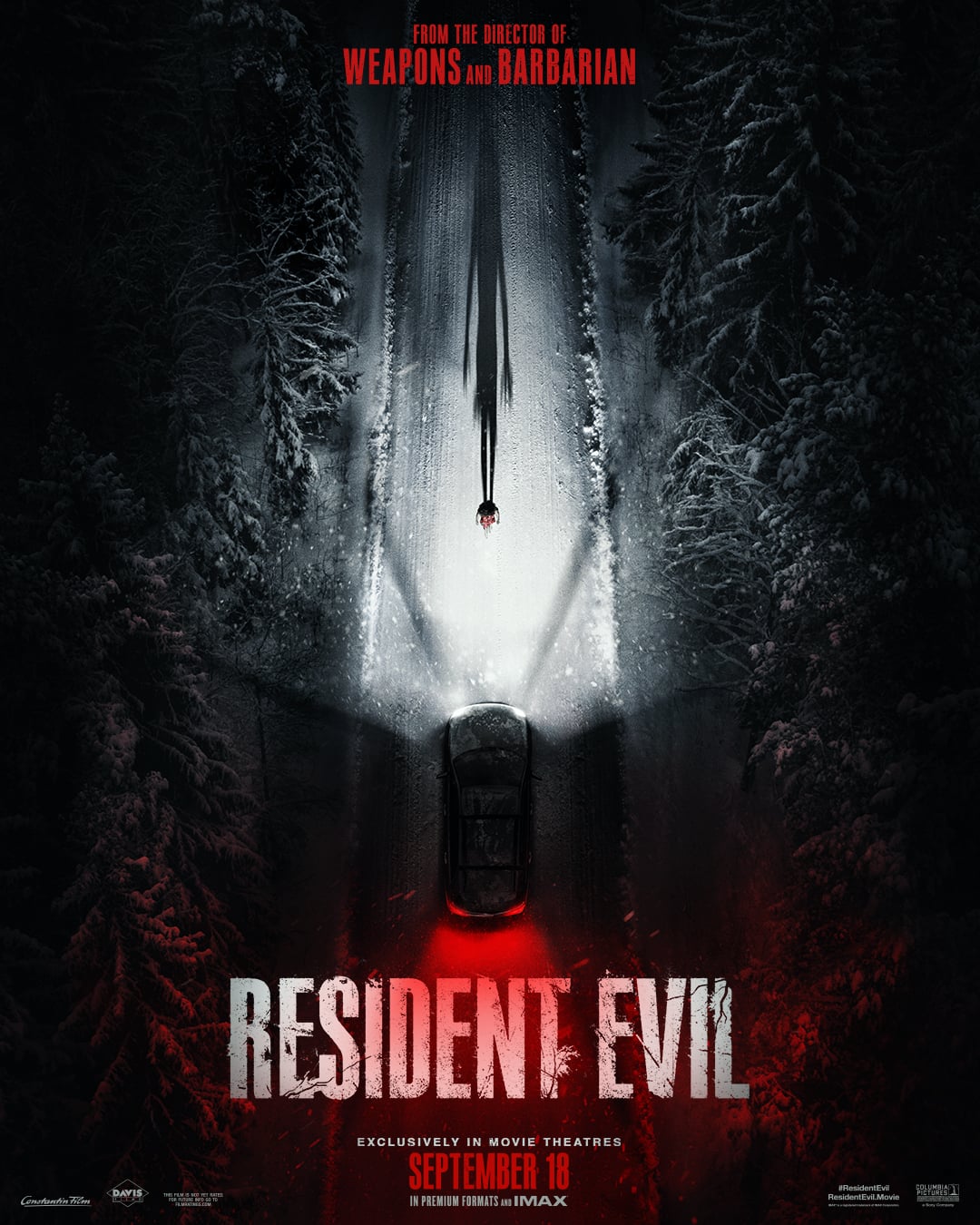
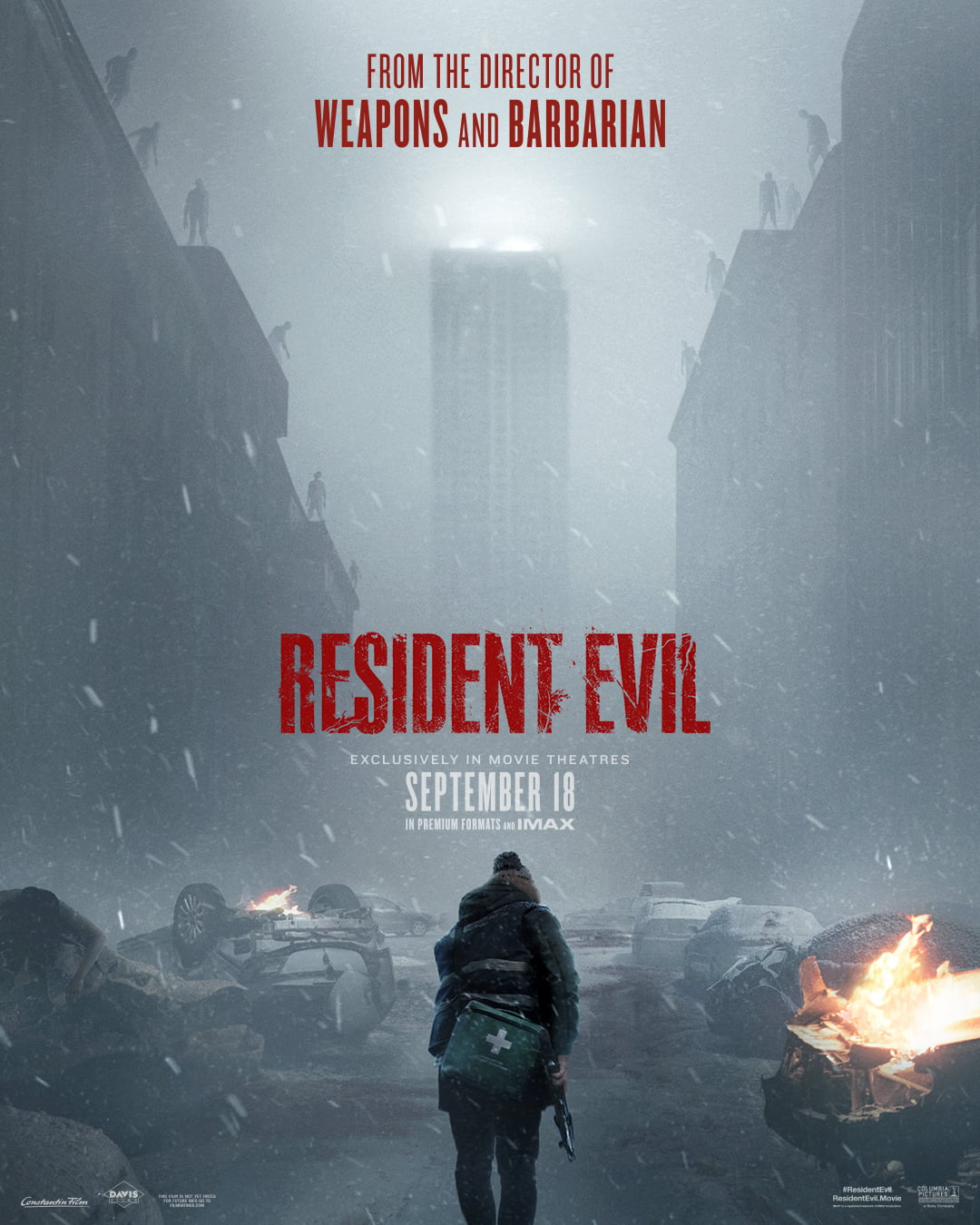
The marketing dropped two moody posters this week. What posters can tell us about pacing
The posters are spare and ominous; they refuse to give away set pieces. That’s a signal. Marketing that withholds usually has confidence in slow burn beats.
Sony’s choice to release minimalist imagery instead of action-packed stills suggests the film will trade spectacle for suspense. The strategy mirrors how indie horror films tease atmosphere on YouTube trailers and Twitter/X threads rather than blasting reveals.
How faithful is the new Resident Evil to the games?
Faithful in spirit, not in storyboard. Cregger’s priorities are emotion and dread; Capcom’s narrative threads and Umbrella lore will be used like seasoning, not a recipe. If you track fidelity like a checklist, expect surprises. If you value tone, you may find this film more faithful than many literal adaptations.
Here are the practical facts: the film stars Austin Abrams, Zach Cherry, Kali Reis, and Paul Walter Hauser, and it arrives in theaters on September 18. Trailer, interviews, and posters live on Sony’s channels and YouTube, and early reactions will filter through IMDb and Rotten Tomatoes quickly; watch those feeds if you want to follow the debate as reviews drop.
I want you to remember two things I saw in Cregger’s comments: he values dread as a measurable ingredient, and he’s willing to rearrange lore to preserve that feeling. If that works, the movie will be less about hitting franchise checkboxes and more about making you put the controller down for real.
If Cregger pulls off mood over mimicry, this film could feel like a map with frayed edges—recognizable landmarks, but surprising detours. Are you prepared to defend a Resident Evil that makes you afraid of your own shadow?