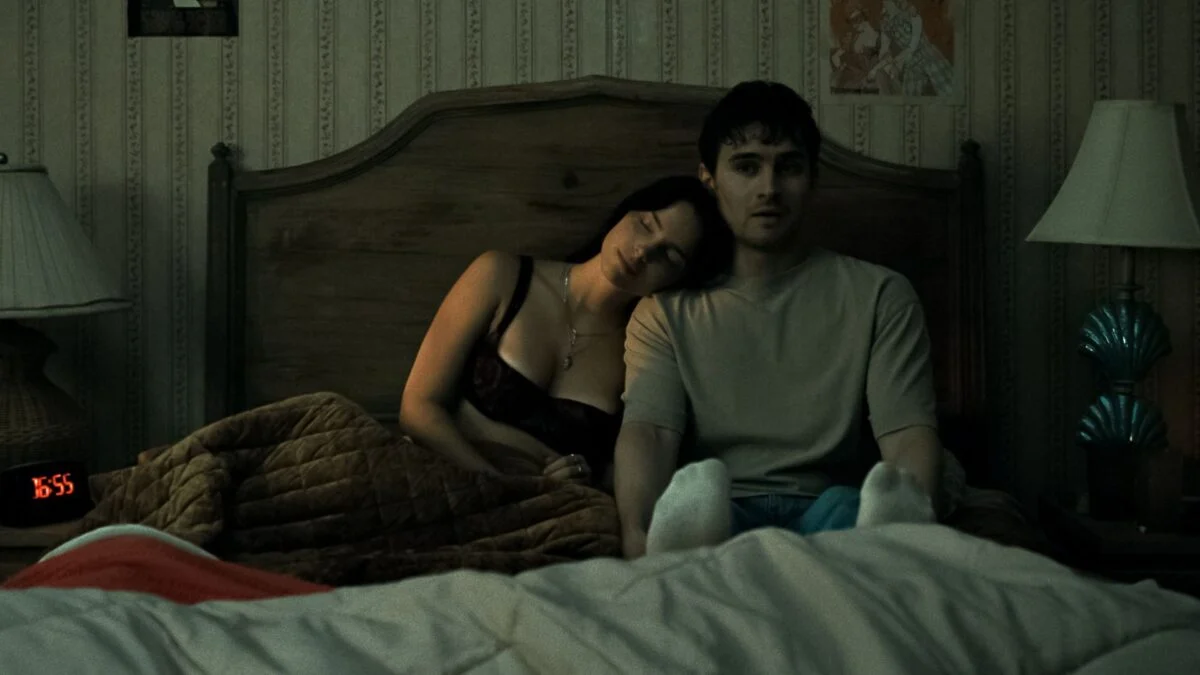
I walked into a packed theater on Saturday and felt the room tilt. People were still arguing in the lobby an hour after the lights went down. By the time I left, the box office numbers made a quiet, inconvenient point.
I’ve covered movies long enough to know bent trends when I see them, and you’ll want to hear this: Obsession didn’t follow the usual script. You’ve probably seen the headlines—the film climbed from an already solid opening to an even bigger second weekend—and that climb tells a story about audience momentum, modern buzz, and a different kind of risk paying off.
The Saturday line was longer than the Friday line. The numbers backed up what I saw.
Last weekend Obsession made $24 million (€22.1 million) after opening at roughly $17 million (€15.6 million). That second-weekend increase is a rarity in today’s market. Most releases peak out of the gate and fall every week after; studios train their marketing to blow every cent on opening weekend. A hold, or a small drop, is celebrated. A jump is treated like a headline.
To put it in context: the last film to pull this off was 2023’s Sound of Freedom, which rose in both its second and third weekends amid questions about organized block buys reported by Forbes. That case and Obsession show two different engines of growth—one fueled by coordinated purchases, the other by organic chatter and critical love.
Why did Obsession increase at the box office in its second weekend?
I’ll answer bluntly: word-of-mouth amplified by social platforms and high critical scores. Obsession sits at about 95% on Rotten Tomatoes, and social feeds are full of heated takes, breakdowns, and repeat viewings. When viewers hunt for something to talk about, they bring friends.
My phone filled with screenshots and video clips. The social feed became the second marketing team.
Reviews and conversation spread faster than trailers used to. io9 covered the film from review to release, and interviews with writer-director Curry Barker and stars Michael Johnston and Inde Navarrette fed the narrative further. Platforms—Rotten Tomatoes, TikTok, X—did the heavy lifting. The result: a film with roughly $1 million (€0.9 million) in production cost that Focus Features picked up for about $15 million (€13.8 million) now looks poised to clear $100 million (€92 million).
The math changes how you read the numbers. A modest budget plus sustained box-office legs equals a massive return on investment, and that fact attracts attention from studios and streamers looking for reliable profit centers.
How rare is a second-weekend increase for a movie?
It’s an exception, not the rule. Most modern wide releases register their peak on opening weekend. Industry trackers—Box Office Mojo, Comscore, Variety, Deadline—treat second-weekend growth as a signal movie theatres and distributors should notice. When it happens, analysts start reexamining marketing traction and audience demographics in real time.
Concessions lines were still long in the third hour. That’s audience engagement, plain and simple.
When people linger in theater lobbies and reload conversations on social feeds, you have momentum. Obsession shows how organic enthusiasm can behave like a slow-burning fuse that finally snaps—sudden, bright, and impossible to ignore. That kind of cultural stickiness rewrites expectations about what a low-budget horror title can do.
Studios have learned to prioritize the opening weekend because front-loading reduces risk, but films that grow week-to-week force a different calculation: patience becomes profitable. Focus Features’ decision to pay into the film’s rights is suddenly looking like a savvy bet, and industry attention follows profit patterns quickly.
Will Obsession make $100 million at the box office?
It’s likely. With sustained social buzz, excellent critical reception, and a cost structure that favors outsized returns, the film is on track. If ticket sales maintain or improve, $100 million (€92 million) is a realistic milestone rather than a wild hope.
There’s a larger question here for the theatrical market: are we seeing the beginning of a new template where low-cost, high-concept films can grow organically instead of imploding after a big ad spend? A pebble turned into a tidal wave would be a dramatic way to say it, but the proof will live in the next few weekends and how distributors react when a small title refuses to fade.
I’m watching the receipts, the feeds, and the reaction pieces from Deadline and Variety as they roll in. You saw the reactions—are you buying another ticket or saving your take for Twitter—what do you think?