I sat in a dark screening room while the credits rolled and a secret waited in the wings. Weeks later, many of the people who had built that film learned a major piece was added without their knowledge. You can feel the tension: pride in the work, and the sting of being excluded.
The crew sat through a version of Toy Story 5 that wasn’t the final film.
I heard the account from VFX supervisor Thomas Jordan via Variety. Pixar reportedly created a decoy cut for screenings so anyone who might leak details—press or internal Disney staff—wouldn’t spoil the surprise. You can imagine months of handcrafting animation while a pivotal musical moment is kept behind a curtain.
Did Taylor Swift write a song for Toy Story 5?
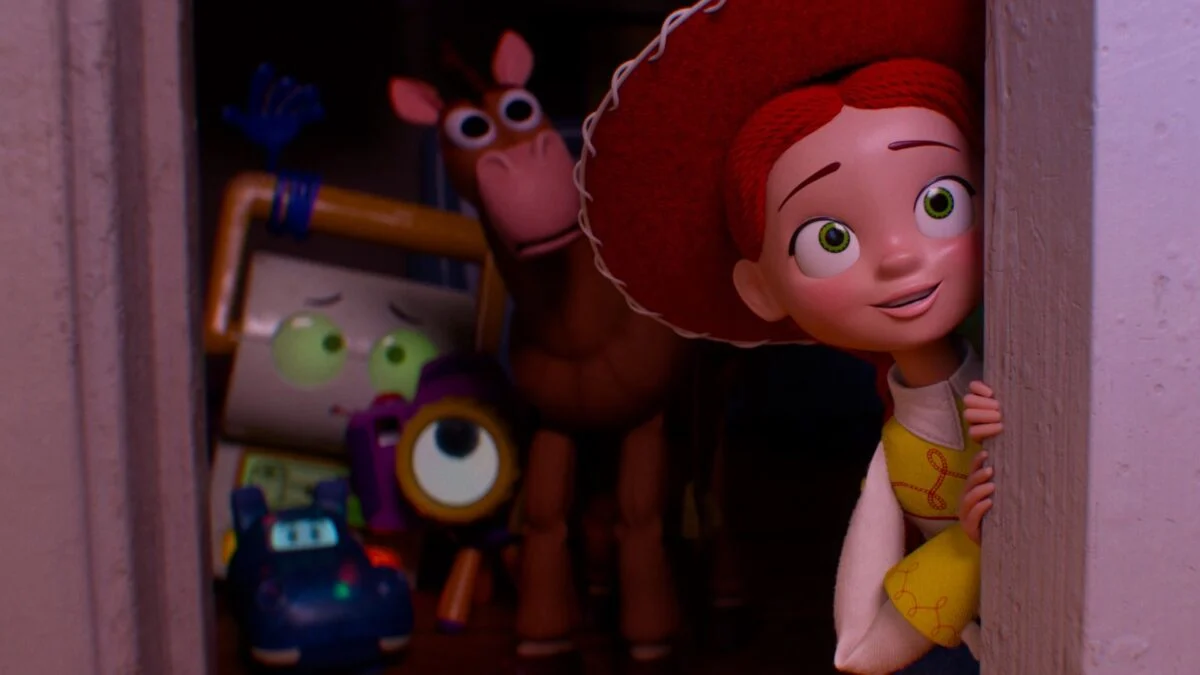
Yes. Taylor Swift wrote and performed a new track called I Knew It, I Knew You, inspired by Jessie—the cowgirl voiced by Joan Cusack. The song was announced by Disney and released on streaming services like Spotify and Apple Music the Friday before the film hit theaters and Disney+ promotional channels.
Only a handful of insiders knew Taylor Swift wrote the song after an early screening.
Andrew Stanton, the director, says Swift connected to Jessie in a way that made the song feel like it had always belonged to the franchise. The production team kept the circle intentionally tiny: Swift watched an early cut in February, wrote the song, and then the information was sealed. The song was a locked diary tucked inside a blockbuster.
Why was Taylor Swift’s song kept secret from the crew?
From a studio standpoint, secrecy is damage control. Leaks translate to spoiled marketing moments, which cost momentum and box office attention. I get it: studios run on calculated reveals. But there’s a human cost—teams that poured years into a film suddenly learn a major creative element was hidden from them until weeks before release.
The secrecy paid off: the reveal landed as a surprise weeks before release.
Disney and Pixar orchestrated a controlled rollout. The announcement triggered immediate headlines across Variety, entertainment feeds, and social platforms. For streaming platforms and outlets—YouTube clips, Spotify playlists, and Disney+ promo spots—the moment became prime content. The secrecy became a fuse that lit a global reaction.
There are two ways to read this: one, as a masterclass in marketing timing by Disney and Swift’s team; two, as a reminder that cinematic collaboration still lives in a hierarchy of trust and control. I want you to think about the people who stitch a film together—animators, VFX artists, editors—then imagine them hearing a new song they didn’t know existed until almost curtain time.
You can stream the track, compare how it lands against the film, and judge whether the secrecy improved the experience or simply rewrote who gets credit for the surprise. Which side are you on?