I was standing in line at a late May screening when someone nudged me and mouthed, “This is different.” You could feel the theater breathing with the same hush you get before a ghost on screen. I want to walk you through how two tiny films turned that hush into a roar.
The headline is simple: Backrooms and Obsession have each crossed the $200 million (≈ €186 million) mark at the box office. That milestone doesn’t just read like a victory lap — it rewrites expectations for low-budget horror and forces majors, indies and streaming platforms to take notes.
At a suburban multiplex, a second-week line grew instead of thinning out
I remember watching friend groups leave one screening and immediately buy tickets for the next — an old-school word-of-mouth loop you rarely see today. Obsession, which opened May 15, actually improved its ticket sales in week two, a rare theatrical achievement that signals enthusiastic audience referral as much as strong reviews.
Made for about $750,000 (≈ €700,000), Curry Barker’s film has become Focus Features’ highest-grossing title worldwide, according to The Hollywood Reporter. It currently stands at roughly $151 million (≈ €140 million) domestically and has now passed the $200 million (≈ €186 million) global mark. The numbers are more than surprising — they’re a concrete argument that microbudgets can multiply into studio records.
Its fourth-week performance was especially notable: a mere 7 percent drop, with a $25.6 million (≈ €24 million) take that THR says is the best fourth-weekend hold ever for a horror release. The previous benchmark was Blair Witch Project, which dropped 9 percent and earned $24.2 million (≈ €23 million) in week four back in 1999. Critics have also pointed out a rare statistical quirk: Obsession is the first movie since 1982’s E.T. the Extra-Terrestrial to increase attendance in both its second and third weekends.
How much has Obsession grossed worldwide?
Reported totals put Obsession north of $200 million (≈ €186 million) globally, with about $151 million (≈ €140 million) of that from U.S. theaters, per The Hollywood Reporter and box-office trackers like Box Office Mojo.
On opening weekend, review threads filled social feeds and ticket sales spiked
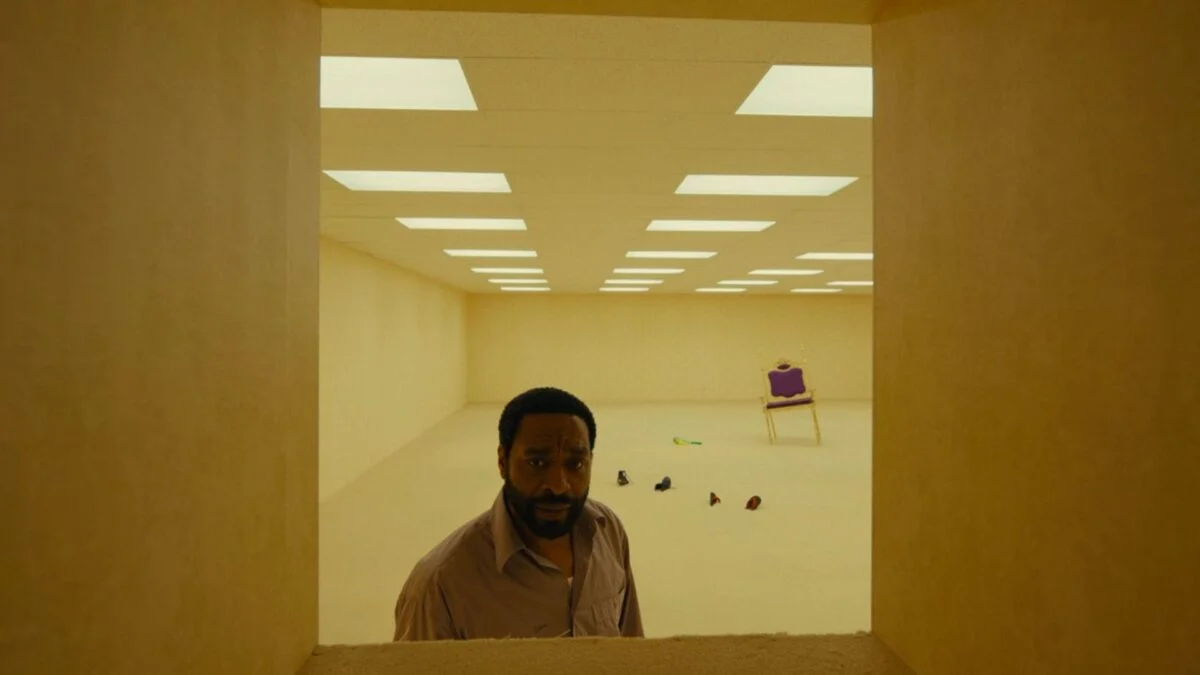
You couldn’t scroll past a feed without a friend tagging someone in a clip — social buzz amplified the box office. Backrooms, which arrived May 29, blew past expectations: A24’s biggest-ever opening and the studio’s first film to top $200 million (≈ €186 million) worldwide, according to Variety.
Made for about $10 million (≈ €9.3 million), Kane Parsons’ film scaled overseas quickly, pulling in roughly $77 million (≈ €72 million) from 57 territories and breaking A24 opening-weekend records in 41 countries. It’s now the studio’s highest-grossing title in Latin America and several other markets. The film’s momentum felt like a freight train — fast, loud and hard to stop.
How much has Backrooms grossed so far?
Variety reports Backrooms has passed $200 million (≈ €186 million) globally, with about $77 million (≈ €72 million) coming from international markets across dozens of territories.
Studio executives are updating spreadsheets at lunch
I’ve spoken with people who track returns at Focus, A24 and the major agencies — the math has their attention. Both films underline an economic fact: modest budgets with strong audience resonance offer huge returns and let distributors buy time and placement at a fraction of the usual cost.
Tools and trackers you already follow — Box Office Mojo, Comscore, The Hollywood Reporter and Variety — have been documenting not just grosses but the pattern: low marketing floors, organic social amplification and sustained weekend holds. That combination produces outsized ROI. On paper, Obsession turning $750,000 (≈ €700,000) into $200 million (≈ €186 million) is an extreme return; Backrooms turning $10 million (≈ €9.3 million) into the same threshold is equally instructive.
Where will the money go next? Expect streaming platforms and VOD windows to bid competitively for early carry rights, and for theatrical chains to re-evaluate how they program low-budget horror against franchise releases. The industry names — Focus Features, A24, Curry Barker, Kane Parsons — are suddenly boardroom references rather than niche auteurs.
Are these films profitable after marketing and distribution?
Short answer: very likely yes. While studios often keep P&A (prints and advertising) budgets private, the low production costs create a forgiving break-even point. Ancillary revenue — streaming licensing, international deals and home-video — will further inflate profits. Analysts at Comscore and Box Office Mojo treat theatrical grosses as the first, and often decisive, indicator of a film’s financial arc.
I’ve watched how a small screening can change a studio calendar, and I want you to notice the same pattern: audience enthusiasm amplified on social platforms can vault tiny films into record books. If two micro-budget horrors can reset expectations, which traditional release strategies are next to be rewritten?