I watched the lights go down at a packed 70mm screening and realized the room was a small, sacred ecosystem—until someone needed a refill. I reached for my pocket and felt that micro-inconvenience everyone ignores until it isn’t. You can celebrate a filmmaker’s name on a marquee and still argue about how people order popcorn in that same dark room.
I’m going to walk you through why Christopher Nolan’s offline life feels mildly at odds with the theater now bearing his name, and why that matters for anyone who loves cinema. You’ll get facts, the personalities involved, and the little contradictions that make this story stick.
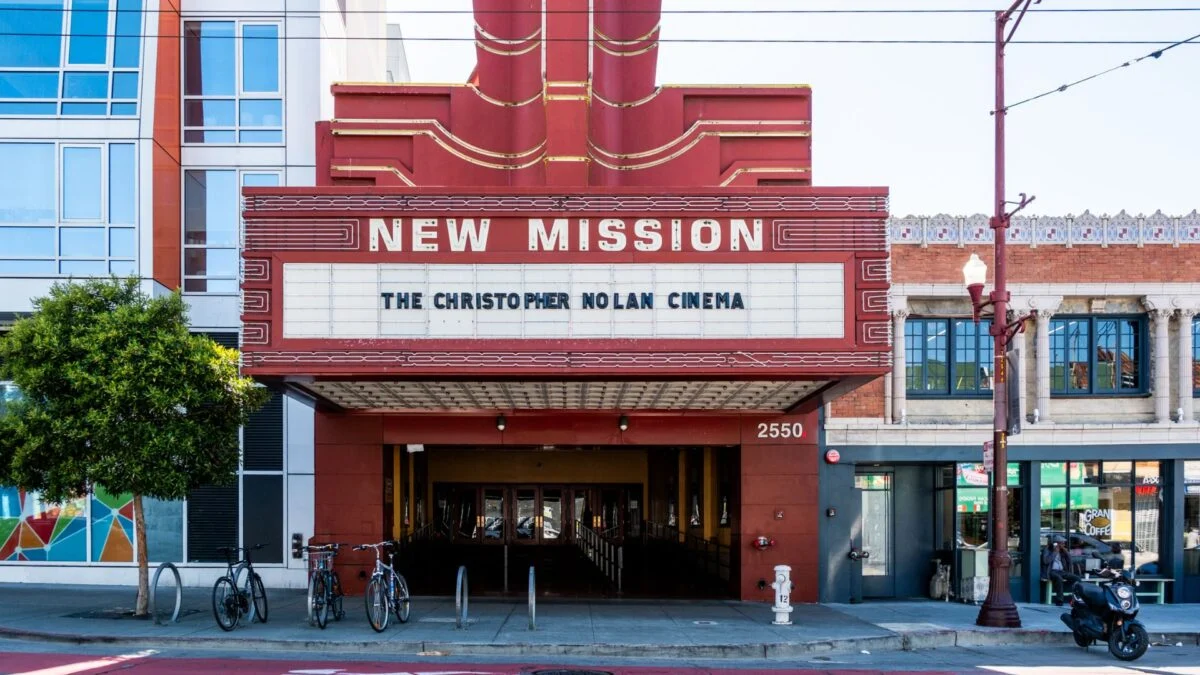
At a New Mission screening they still run 70mm prints — and Alamo just renamed the place for Nolan
Alamo Drafthouse announced the San Francisco New Mission theater will now be called The Christopher Nolan Cinema. Michael Kustermann, Alamo’s CEO, framed it as a salute to “a filmmaker whose work has consistently championed cinema not merely as entertainment, but as a cultural inheritance worth protecting.” That’s a strong authority cue: the chain leaning on Nolan’s reputation to signal serious repertory cred.
Nolan’s connection to film formats—real celluloid, 70mm events, Barco laser projection on the other side of the booth—makes the dedication an easy PR win. It also ties Nolan’s brand to a place that still programs projection formats he favors.
Why did Alamo Drafthouse rename the New Mission theater after Christopher Nolan?
Because Nolan’s films are frequently shown on 70mm and he’s an emblem for “cinema as ceremony.” Alamo positioned the move as both gratitude and positioning: tying its repertory mission and prestige screenings to Nolan’s public image. The CEO’s quote and the continued use of 70mm were the explicit signals here.
At concessions counters patrons now scan a QR code — and the rule change matters more than you think
When I asked a friend who saw a recent screening how ordering felt, he laughed and called it clumsy. That’s the real-world observation: the new QR system adds a physical pause in an otherwise smooth ritual.
Alamo replaced paper order cards with QR-activated menus. To order during a film you must unlock your phone, open the camera or an app, scan a code, and complete a checkout flow. Elijah Wood blasted the change on X, calling the experience “truly awful” and urging a return to physical order cards. That blowback is telling because it isn’t just about convenience—it’s about removing friction in a way that preserves the communal silence and ritual of the screening.
Phones, in this setup, feel like forbidden fruit; you must touch one to get snacks, even though theaters historically treated phones as the thing to keep out of view.
Does Christopher Nolan use a cell phone?
No, Nolan is famously offline. He doesn’t personally use email or a phone to manage his work, which makes naming a QR-dependent theater after him feel ironic to some patrons. The contrast between his analog preferences and the theater’s digital checkout is why this story sticks.
At a packed house the audience expects silence — and policy changes change the social contract
On any given weekend, a New Mission screening runs like clockwork: trailers, hush, film. Then someone fumbles for their phone to order a second round.
That small, repeated interruption reshapes expectations. Alamo’s move to QR ordering reduces staffing touchpoints—management says it helps efficiency and staffing costs—but it also forces phones into the darkness. Michael Kustermann framed the Nolan dedication as honoring cinema, yet the operational change nudges cinemas toward screen-mediated transactions and away from the analog rituals that once kept the room quiet.
I’ve heard colleagues say the new flow is “a speed bump on a red carpet”—it slows the moment down in a space designed to be seamless.
How does Alamo Drafthouse’s QR ordering work?
You scan a code at your seat, browse a mobile menu, and submit an order for in-seat delivery. The company’s announcement points to faster checkouts and less staff contact. Critics argue it adds steps, especially for mid-film orders, and forces every refill to be a phone interaction.
There are trade-offs worth naming. A QR system reduces the number of paper slips staff must manage and can streamline payments for busy shifts. But it can also make theaters feel more transactional and less ceremonial. If you love the idea of a full quiet auditorium-preserving ritual while still enjoying food service, that tension matters.
Want more io9 news? Check out when to expect the latest Marvel, Star Wars, and Star Trek releases, what’s next for the DC Universe on film and TV, and everything you need to know about the future of Doctor Who.
Here are the players you should know: Christopher Nolan (director), Alamo Drafthouse (exhibitor), Michael Kustermann (CEO), Elijah Wood (actor and longtime Drafthouse fan), Barco (projector maker), and platforms like X where complaints surface fast. If you care about projection formats, the theater’s continued use of 70mm prints is a win. If you care about the social norms of moviegoing, the QR shift is a loss in subtle ways.
One practical note: if you want a soda mid-show, factor in the tech step—some large theater drinks run about $6 (€5) these days—which now requires a phone-interaction to reorder rather than a slip of paper and a discreet hand signal.
I’ll leave you with this: naming a theater after a filmmaker is a powerful cultural signal, but does it matter more than the small rituals that shape how we watch films together?