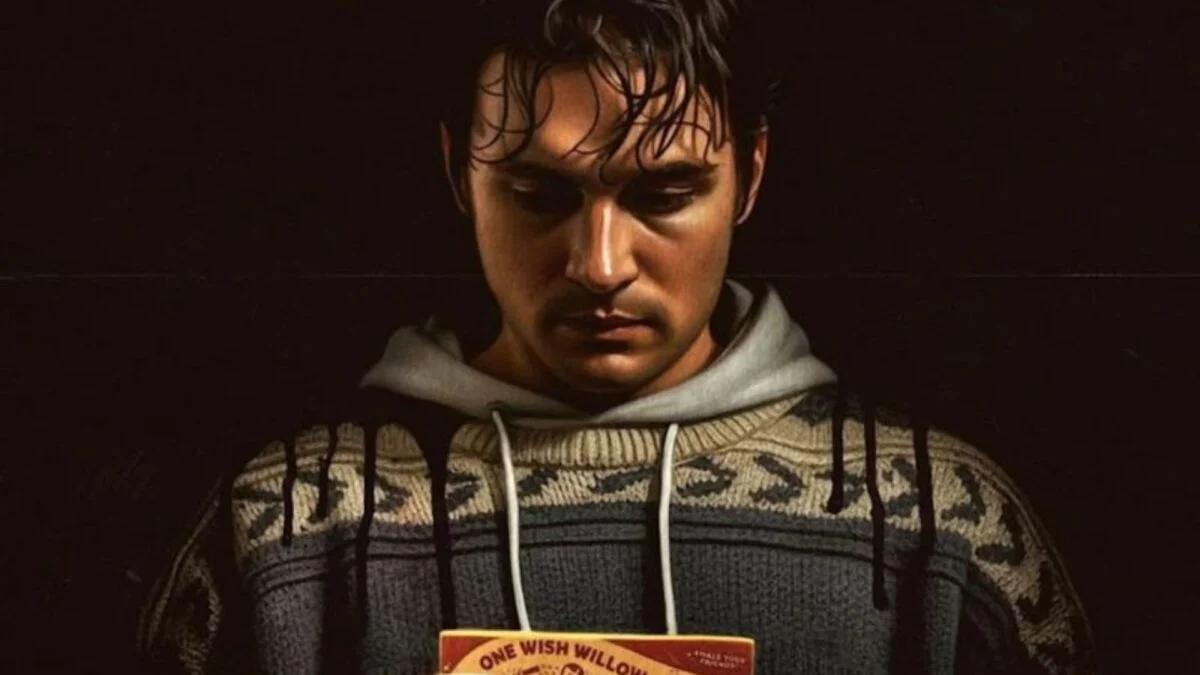
I watched the live box-office ticker at my kitchen counter while the city slept. The number skipped past the milestone and the room felt oddly louder. You could almost hear the accounting ledger exhale.
I’ve followed runaway hits long enough to know when a story is simple math and when it’s something wilder. You and I both count budget lines and distribution deals, but we also read behavior—how audiences move, what clips haunt feeds, which critics light the match. Let me walk you through how Obsession turned a shoestring budget into a historic haul and why that matters beyond raw dollars.
At a late-night TIFF screening, people started whispering — how a $750,000 indie found a global audience
At the Toronto International Film Festival, a whisper became electricity in the lobby.
The film cost roughly $750,000 (€698,000) to make. After TIFF, Focus Features snapped up distribution rights for $14 million (€13 million). Add marketing—often twice the production cost on a wide release—and the breakeven point on paper was in the neighborhood of $30 million (€28 million). That’s the arithmetic any distributor runs when deciding whether a title is a modest win or a true anomaly.
But movies aren’t only arithmetic. They’re patterns: who shares a clip, which streamer licenses ancillary rights, whether late-night hosts riff on a scene. Focus Features’ buy and an aggressive marketing push seeded a viral loop that helped the film get past that $30 million threshold in days, not months.
In the fourth day, ticket sales rose instead of fell — why Obsession’s run looks abnormal
On day four, instead of decaying, ticket sales climbed—an observation that makes box-office analysts sit up.
Most wide releases collapse after opening weekend; Obsession grew across multiple weekends. I checked Box Office Mojo and Comscore tracking: the film achieved increasing weekend tallies, an event that hasn’t been common for a wide release in decades. That momentum held against both indie peers like Backrooms and studio tentpoles such as Toy Story 5 and Supergirl.
Obsession became a late-night whisper that turned into a stadium chant—small cues amplified, repeat viewings stacked, social clips birthed curiosity loops. As an operator you watch for that compound effect; as a viewer you feel it when film chatter moves from timelines to watercoolers.
How much has Obsession made so far?
Globally, the film just crossed $400 million (€372 million). Domestically it stands at about $245 million (€228 million), with international receipts near $157 million (€146 million). That weekend gross of $5.3 million (€4.9 million) over a competitive July 4 slate pushed it past the $400 million mark.
At the holiday multiplex, Obsession still pulled big numbers — what crossing $400M means for horror
At crowded theaters over the July 4 holiday, the film kept seats filled despite major studio competition.
Horror has a special calculus: low budgets, high upside. When a film that cost under $1 million hits nine-figure grosses, profit margins blow past what even big-budget blockbusters achieve. Depending on classification, Obsession now sits inside either the top 15 or top 10 highest-grossing horror films ever—depending on whether you file titles like Beetlejuice 2 under horror or comedy-adjacent. Above it sit films that spent far more on production and marketing; that contrast makes Obsession a candidate for the most profitable horror release of all time on an unadjusted basis.
Is Obsession the most profitable horror film ever?
By raw return on investment—yes, it’s a leading candidate. Films like It, The Sixth Sense, and World War Z grossed huge sums but also carried larger budgets and marketing bills. If you compare dollars-out-to-dollars-in without inflation, Obsession‘s tiny cost and massive take put it near the top of profitability charts on sites like The Numbers and Box Office Mojo.
Can Obsession reach $500 million?
After a VOD rollout and a planned physical release on July 14, the ceiling has likely been set. Crossing $500 million ($500 million; €465 million) now looks unlikely, though every sustained weekend extends the tail. For context, older hits like Jaws cost roughly $10 million (€9.3 million) and grossed about $500 million domestically in their era—numbers that inflation complicates when we compare across decades.
At the desk where I track deals, the margin tells a story — why studios and platforms are paying attention
At my desk I flag winners not just by headline grosses but by ancillary legs.
Focus Features, streaming platforms, and home-video distributors watch two things: immediate box-office velocity and the afterlife—VOD rentals, streaming licensing, Blu‑ray sales, merchandising. The more a title circulates in conversation, the longer its tail. The recent VOD release and physical launch will add incremental revenue; those channels are where films like this multiply profit without heavy marketing outlays.
The film is a slingshot, small and taut, flinging itself past giants; now the industry is cataloguing how that force was built—festival momentum, a strategic purchase, social virality, and smart positioning in the calendar.
If you follow box-office trends, this feels like more than luck: it’s a case study in audience-driven growth and low-cost risk that will be copied, argued over, and studied in studio war rooms—do you think any studio can reproduce that magic on purpose?
Want more io9 news? Check out when to expect the latest Marvel, Star Wars, and Star Trek releases, what’s next for the DC Universe on film and TV, and everything you need to know about the future of Doctor Who.