
I remember sitting in the dark while the credits crawled, pulse still thudding from the finish. Two short scenes popped up and the room suddenly felt larger, as if the story had spilled into the hallway. I stayed—so you don’t have to trust my memory alone.

I’ll walk you through both scenes, what they imply for the Evil Dead timeline, and why the franchise feels suddenly more like a stitched series than standalone beats. I’ve watched these films, read the interviews, and scanned reactions on io9, Rotten Tomatoes, and IMDb so you can decide how scared you want to be about what’s next.
Mid‑credits: A stranger on the road
You can see it the moment the screen goes black: the mid‑credits scene is small and intimate, not loud and declarative.
Here’s what happens: Deadite Polly (Maude Davey) crawls out of the burning house and onto the street. A young woman pulls over and offers help; she thinks she’s seen an elderly one‑legged victim. Polly thinks she’s found a new vessel. The scene ends with a clear implication—Polly survives and the Price family’s curse moves on.
This sting lands like a dropped match—tiny, quick, and capable of setting something unexpectedly aflame. The director Sébastien Vaniček gives fans a short, cruel handoff: the family’s danger hasn’t been confined to the property burned to dust.
End credits: A mirror that calls
People who remained saw the funeral home again, a location we last toured during Will Price’s wake.
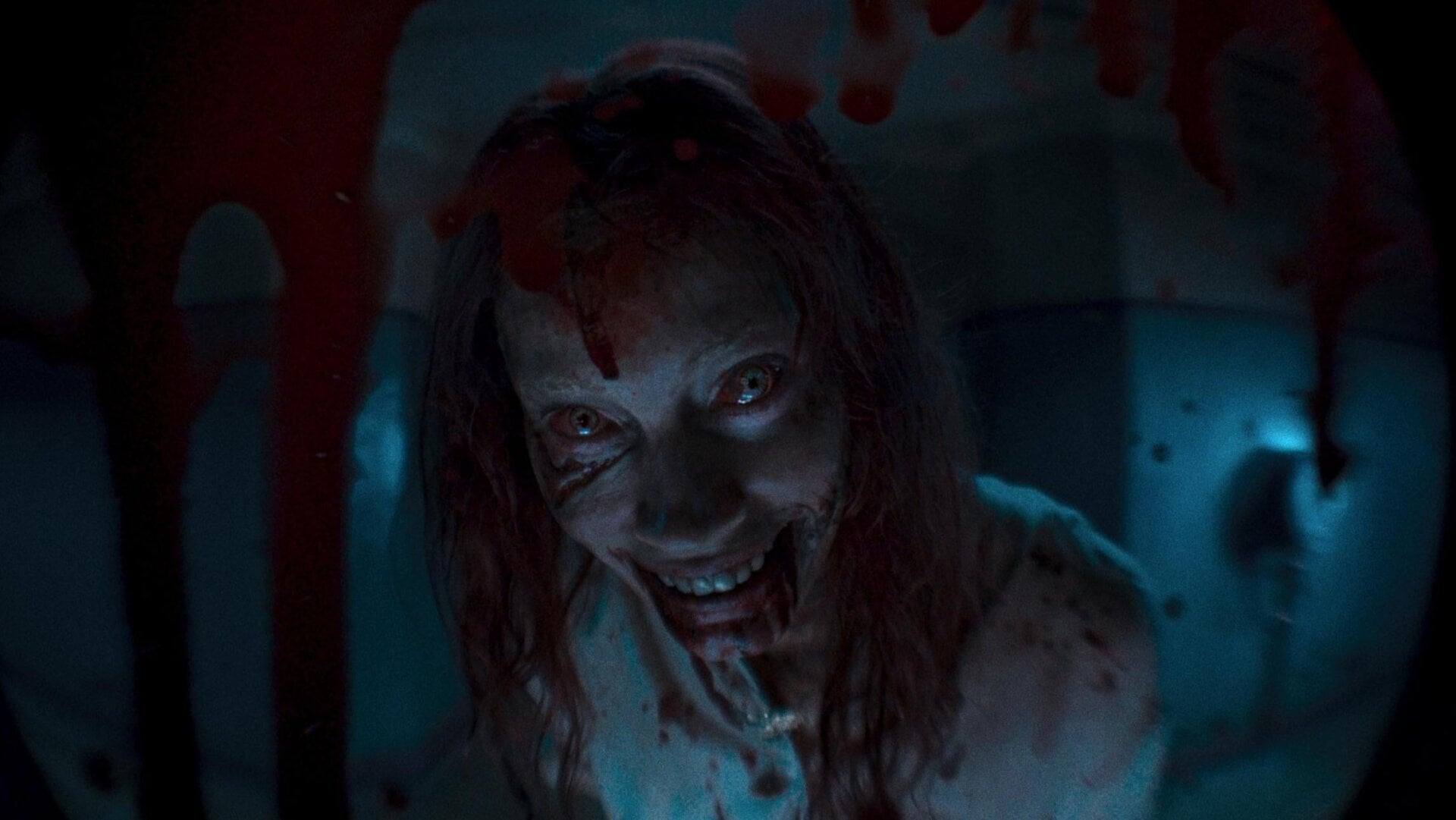
Warner Bros. left the final scene until the very last frame: a funeral home clerk and her daughter tend to unclaimed urns, and the child reads one name aloud—Ellie Bixler, Alyssa Sutherland’s villain from Evil Dead Rise. The daughter sees Ellie in a mirror, and then Ellie exits the reflective surface and kills her.
That moment landed in some screenings, but reporters noted Warner Bros. cut it from a few early showings—so when you see it, it feels like an easter egg that insists on being a headline. Ellie should have been wood‑chipper dust, but the scene implies either a preserved shard of Deadite power or an ability to reform from remnants.
What do the end credits scenes mean for the story?
You want cause and effect, not just theatrical shocks. The two scenes operate on different scales: Polly’s survival keeps the Price household vulnerable locally, while Ellie’s mirror jump suggests reach—across buildings, films, and perhaps time. Together they change a horror trick into a serialized pressure.
Is Ellie really back?
Short answer: yes, but in a way that invites questions. Alyssa Sutherland’s Ellie returns visually; the film doesn’t explain mechanics. Was a piece of her preserved in an urn at the funeral home, or did Deadite energy hitch a ride through Jessica (the killer from Rise) and find the funeral home as a nexus? You can argue either way and still be right.
How these scenes rewire franchise logic
The films share locations—most notably the same lake—and that geographic echo matters.
Start with the simple connective tissue: Evil Dead Rise introduced Jessica, who became a Deadite and lived in the same apartment block as Ellie. Evil Dead Burn begins at that same lake; Jessica appears again, kills Will Price, and draws the narrative toward the Price family’s dagger—Benjamin Price’s heirloom and the franchise’s putative MacGuffin.
The dagger behaves like a beacon, tugging Deadite attention toward the family that still keeps it. If you accept that premise—and the films nudge you to—then Polly’s survival plus Ellie’s return are strategic: the Deadites are not wandering blindly; they pursue what can restore or concentrate their influence.
Historically, most post‑Ash Evil Dead entries stood alone. But the linked locations and recurring names suggest a growing shared continuity. Sam Raimi’s original saga still looms (and Bruce Campbell’s absence as Ash is felt), yet Warner Bros. and the current creative teams are quietly threading connections that could support a larger series arc—especially with 2028’s Evil Dead Wraith slated as a prequel to Raimi’s films.
Will these scenes change what comes next?
I read reactions on io9 and saw comment threads on Reddit and Twitter; the practical effect is already visible: debates about continuity, demands for Alyssa Sutherland to return, and speculation about the dagger’s fate are trending. Studios like Warner Bros. watch those metrics—Rotten Tomatoes scores and Box Office Mojo tallies matter. If the audience stays, the studio invests; if you care, your ticket choice matters.
There are still questions the movie refuses to answer: can Deadites reform from ashes, do mirrors now act as portals broadly, and what will Alice (Souheila Yacoub) do with the dagger she walks away with? These open threads make the franchise feel restless and hungry for the next installment.
The two end credits scenes do what good horror epilogues do: they extend dread outward and make the closure temporary rather than permanent. Ellie’s reappearance tugs at the franchise like a loose thread; a sharp pull could unravel a lot—or reveal a new pattern.
So, after all that, do you think the funeral home scene is a cheap scare or the start of a connected Evil Dead saga?