I stood in front of the IMAX marquee as the sun came up, ticket clutched like contraband. You could hear the bargaining—friends trading seats, strangers plotting to swap times. Then someone in line told me: the opening of Dune: Part Three will play only on the 70mm IMAX prints of The Odyssey, and the room went tense.
I’ve chased scarce tickets before, but this feels different. You have an experience Nolan intended to be seen one way, and Villeneuve has quietly attuned his film to the same rare format. For roughly 41 venues worldwide, those two facts now collide into a tiny, dangerously desirable event.
Experience exclusive footage of #DuneMovie in front of The Odyssey, only in IMAX 70mm. Get there early to not miss it.
Dune: Part Three only in theaters and IMAX December 18. #FilmedforIMAX pic.twitter.com/FUnjtbvL9S
— DUNE (@dunemovie) July 15, 2026
At 6 a.m., a line already wrapped three blocks around the theater. Why the 70mm bottleneck feels so personal
You and I both know how scarcity works: when a format or ticket is rare, it becomes more than a screening—it becomes a social currency. The 70mm IMAX prints of The Odyssey are few; the demand is enormous. That mismatch makes every seat a small victory and every missed booking a fresh grievance.
Villeneuve’s team confirmed this week what many suspected: the extra minutes of Dune: Part Three are physically tied to those 70mm IMAX prints. That means you won’t see that opening sequence in standard theaters or even in digital IMAX—only where film projectors and the old-school 70mm element exist. For fans, it feels like a secret handshake—an invitation that only some will get.
How can I see the Dune footage attached to The Odyssey?
Buy a 70mm IMAX ticket for The Odyssey at one of the listed venues and arrive early. Check the film’s official X account, the IMAX site, and the local theater page for “70mm” notation—those are your markers. If the box office script lists a 70mm print, you’re in the right place; if it lists only “IMAX Digital,” you won’t get the extra minutes.
On set, both filmmakers insisted on shooting for large-format exhibition. What that means for what you’ll see
Directors like Christopher Nolan and Denis Villeneuve don’t choose 70mm casually; they want scale, grain, and the kind of resolution that rewards a proper projector. Villeneuve shot large-format sequences with IMAX intention, so the opening of Dune: Part Three was framed to exploit those wider, more luminous canvases.
Put simply: the footage was made with 70mm in mind. Outside of those prints you lose subtleties—wider fields of view, denser blacks, a tactile texture that defies compression. That rarity makes the 70mm screening feel like a mirage—beautiful, and not something everyone will reach.
Why is the Dune opening only in 70mm IMAX?
It’s about capture and projection. If the sequence was filmed using IMAX 70mm equipment or formatted specifically for 70mm exhibition, only those projectors reproduce the intended image. Digital and smaller formats can show promotional trailers, but they can’t replicate the exact framing, scale, and photochemical characteristics the director used.
In one full-capacity showing, you could watch the crowd react in three different ways. What the footage itself actually contains
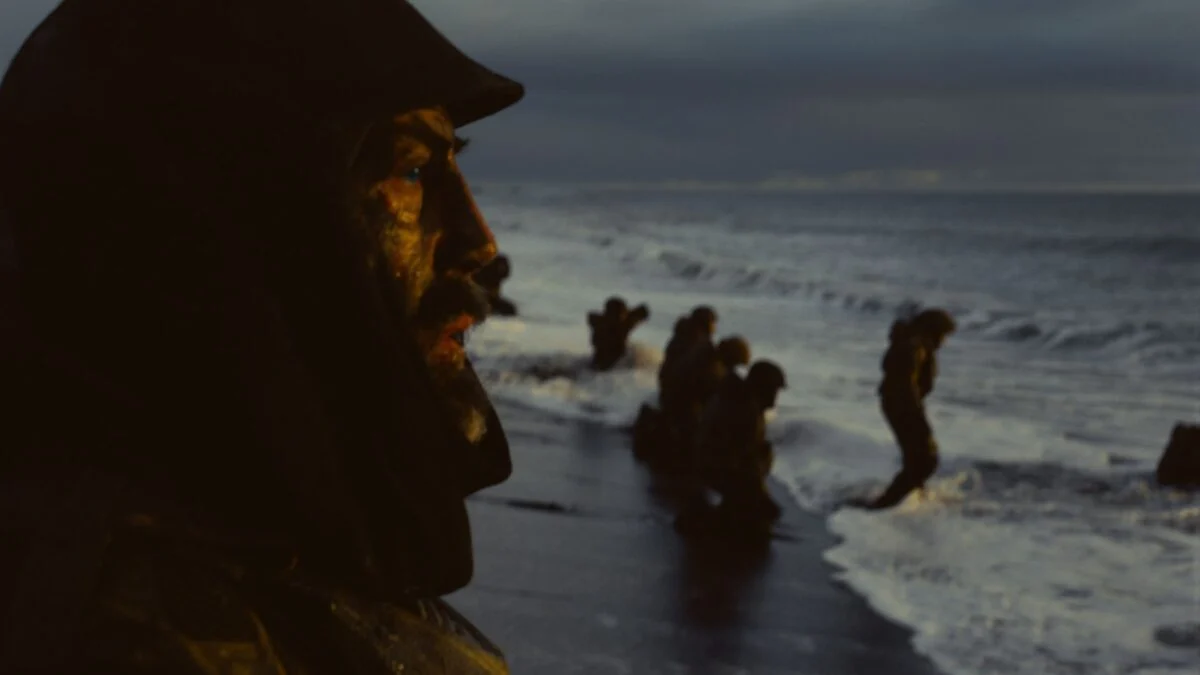
I sat through an early projection report: the minutes are not a tease but a plunge. Villeneuve delivers a massive rain-soaked battle sequence, unlike anything we’ve seen in his previous adaptations—sweeping, chaotic, intimate in turns. People around me audibly shifted; a few stood when the frame widened.
That first taste will reach only those in the 41 qualifying houses this weekend. Everywhere else will get the standard trailer you’ve likely already seen, which puts pressure on anyone on the fence about hunting an expensive or far-flung ticket.
Which theaters will show it?
The studio and IMAX have published a list of 41 locations; major IMAX sites—flagship houses in Los Angeles, London, Paris, and Berlin—are almost always included, but the specifics matter. Use IMAX.com, follow the film’s official accounts on X and Instagram, and call box offices to confirm “70mm” on the showtime entry before you buy.
You can frame this two ways: a small club of lucky attendees will leave with a memory others won’t have, or studios have engineered a conversation that sends people rushing back to theaters. Either way, if you’re trying to decide whether to hunt a ticket this weekend, what will you choose to risk for a few minutes of exclusive cinema magic?