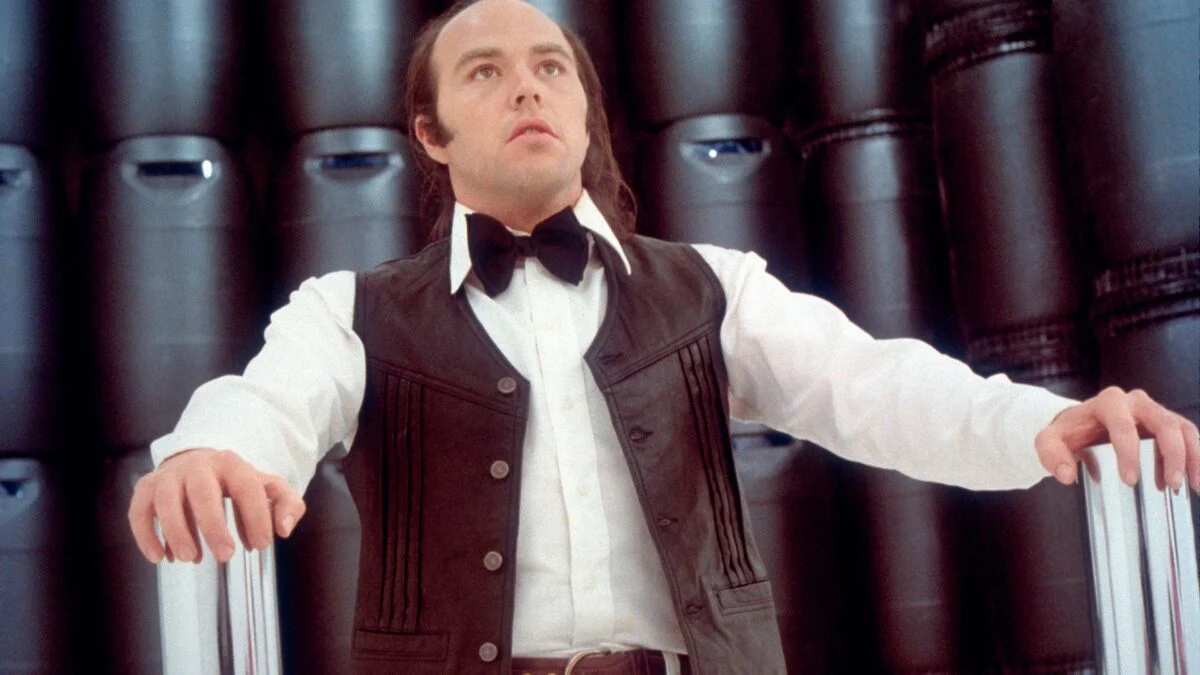
Midnight at a motel parking lot, a cell phone screen buzzing with a thin headline: Reggie Bannister is gone. I sat back, the room suddenly smaller, and felt the uncanny quiet you get when a familiar TV show cuts to black. You probably remember that hollow pause — the one that says something important has left the stage.
I write this as someone who chased cult credits, conventions, and late-night screenings for decades. You showed up to the tables. I watched the way fans bowed to his warmth. That’s why this matters now: Reggie wasn’t just a name in the credits; he was a touchstone.
At a crowded convention table, fans pressed forward for an autograph — and the simple truth of Reggie Bannister’s reach became visible
He arrived in Don Coscarelli’s 1979 shocker Phantasm as a small-town ice cream vendor and left as a durable icon. Coscarelli, who announced the news on Facebook and later in an expanded tribute, said: “In the Phantasm series, only Reggie could turn a simple role as an ice cream vendor sidekick into an unlikely action hero for the ages. He channeled himself into that role. All the fans who met him at the horror conventions could attest that in-person, Reg was cool, funny, loyal, and steadfast. Reggie the character was Reggie the friend. In real life, he embodied all the qualities of his character in Phantasm and no one questioned that Reg was that guy, the one willing to lay his body down on the fires of hell for his friends.”
That quote landed like proof. I know how directors flatter; Coscarelli did not. When a collaborator with decades of shared myth makes a claim like that, you accept it. Bannister played Reggie across all five installments, from 1979 to 2016, and showed up in cult staples like Bubba Ho-Tep — where his improvised spar with Bruce Campbell is still passed around as a comedy-horror classic — and the anthology-style Wishmaster.
Who was Reggie Bannister?
You knew him as Reggie on-screen, but off-camera he was a musician, storyteller, and friend to a scene that prizes loyalty. Born for small, honest touches, he turned a supporting role into a personality people chased across convention floors and midnight screenings. The Los Angeles Times covered his passing this week, and Coscarelli’s public notes on Facebook read like the closing lines of a long-running friendship.
In a theater lobby, people whisper about the line that made them laugh — and the broader cultural mark Reggie left becomes obvious
His performances were warm, ragged, and memorably human. I’ve watched audiences react the way you do when an old friend says something only you two would understand: loud, immediate, relieved. Reggie sold a truth in every scene. That truth kept fans coming back for sequels, midnight marathons, and the long, anecdote-rich conventions.
Think of his presence as a lighthouse in the fog: steady, guiding, and impossible to ignore. The films he worked on sometimes leaned cheap and weird, but Reggie grounded them. He made eccentric plots feel like dinner-table stories and made horror fandom less about fear and more about belonging.
What was Reggie Bannister’s role in Phantasm?
You remember the floaty spheres and the tall, silent antagonist — but Reggie was the heart that kept the story human. Across five films he matured from comic relief to the emotional center, a rare arc for a franchise character. When the series returned in 2016, it was partly because audiences still wanted to see how Reggie would answer the next absurd, terrifying twist.
His work in Bubba Ho-Tep and cameos in other indie horror titles kept him visible outside the series. He toured the convention circuit, sold stories, and treated fans like old friends — and that industry ritual amplified his legend the way a needle amplifies a record.
How did Reggie Bannister influence horror culture?
He helped turn the cult circuit into a community. You can trace a line from his convention appearances to modern horror podcasts, mid-tier streaming festivals, and the way indie creators network on platforms like IMDb and Rotten Tomatoes. Bannister showed that longevity in genre cinema depends less on stardom and more on generosity: show up, tell stories, and be human.
Tributes arrived quickly — social feeds, LA Times obits, industry friends. Coscarelli’s voice carried authority because he had been in the trenches with Bannister for decades. When creators with that history speak, collectors, critics, and casual fans listen.
There will be pieces about the films, the props, the collector markets, and the clips that go viral. But what matters to me — and maybe to you — is the human trace he left: the friend you could claim as your own when you met him at a table, the improvised joy he brought to a scene, the warmth that made a silver sphere of terror feel oddly bearable.
Don Coscarelli’s tribute and the Los Angeles Times report are the bookmarks for this moment. You can rewatch the scenes, read interviews, or argue over which film in the series best captured Reggie’s spirit. I’ll be circling back to old tapes, listening for the rough laughter that told me the role and the man were the same.
So tell me: who carries Reggie’s kind of fandom-forward generosity into the future — and will that future remember the way he made horror feel like home?