
The projector hiccuped, and a howl filled the room before a single raw image stole the air. I watched people’s faces go pale, then hold, then lean forward as if the screen had pushed them. Jarin Blaschke’s text—“Does this take place in hell? Is this hell?”—felt less like a joke and more like a report.
I saw 20 minutes of Robert Eggers’ Werwulf, and I’ll tell you what matters: the movie is mean, muddy and horrifying on purpose. You’ll meet Aaron Taylor-Johnson’s ruined man, Lily-Rose Depp’s stunned wife, and Willem Dafoe’s official who brings law and a lethal certainty. Much of the footage is spoken in Middle English; the atmosphere is uncompromising.

In a dark screening room, the opening sequence feels like an ambush
The lights go out and the film opens on a man convulsing in the cold. Close-up becomes wide shot; Aaron Taylor-Johnson is naked, foaming, and then crawling into the dim of a barn. What Eggers shows you first is physical and intimate rather than an effects spectacle.
The transformation that opens Werwulf works because it refuses showmanship. It is a bruise widening across the screen — slow, personal, and invasive. You can feel the camera’s breath; Jarin Blaschke’s lighting falls in three shadowed prongs across the actor’s back, almost claw-shaped, and the moment keeps you suspended until a cut to black and a howl lets the moon take over.
Is Werwulf scary?
If you want a short answer: yes, in a way that crawls under your skin. This isn’t buzzy jump-scare horror. It’s dread crafted from texture — mud, smell, breath, and language. Eggers asked himself to write his darkest thing, and he aimed his tools at gut friction rather than genre fireworks.
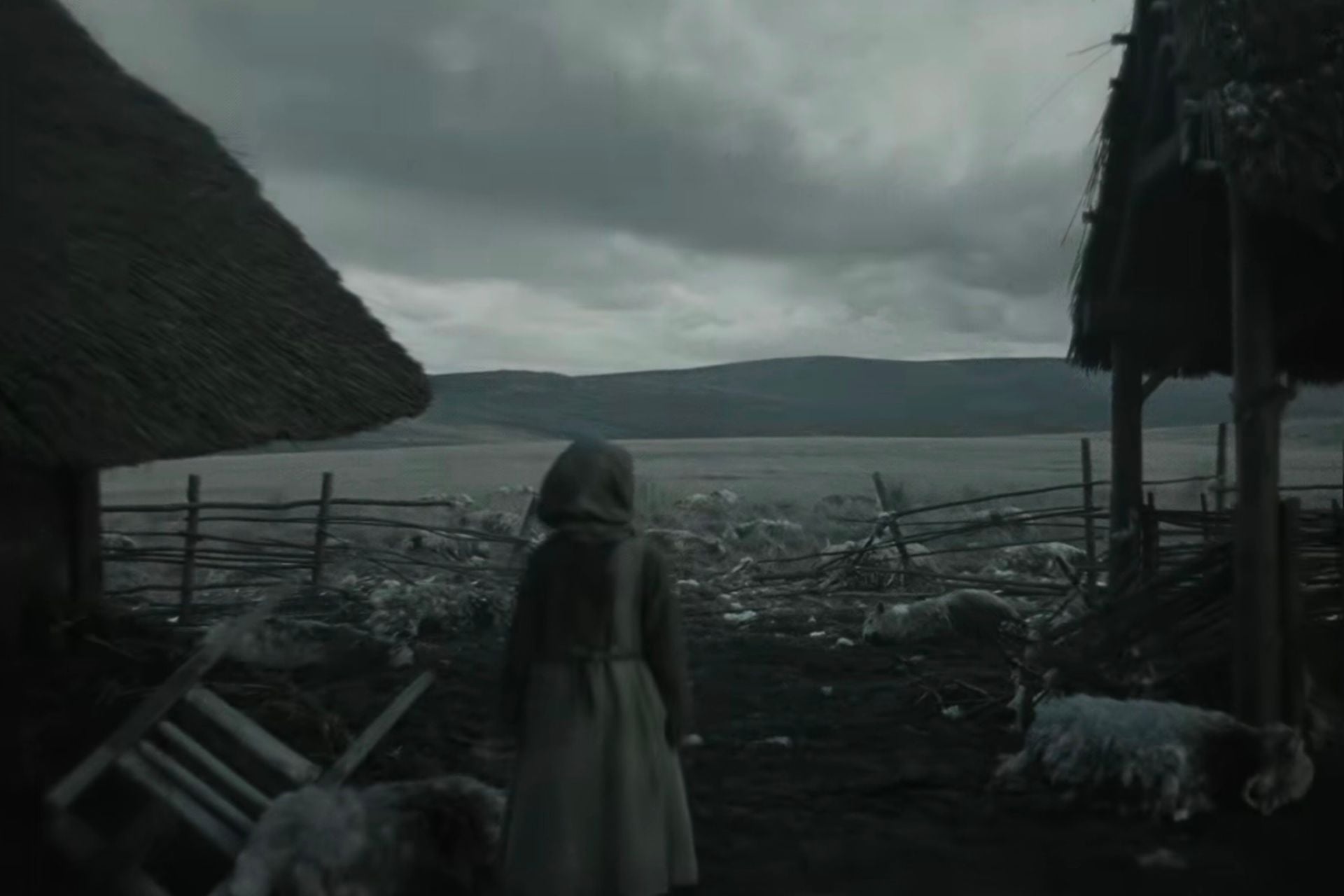
At the kitchen table, tension rests like a bruise
There’s a scene you can’t forget: strangers at the family table, the camera tight, every gesture a question. A bald, diseased man violates boundaries; Ralph Ineson’s presence in an eyepatch adds a medieval kind of menace.
Taylor-Johnson protects Lily-Rose Depp’s character and the scene erupts into a fight. Willem Dafoe then speaks, and authority — not subtle — slides across the room. His character says he’s been sent by the king to track a werewolf, and he forces the family man to join a hunt. It’s a small-world power play that flips intimacy into obligation.
Who stars in Werwulf?
The names matter: Aaron Taylor-Johnson anchors the physicality; Lily-Rose Depp gives us a fragile, grounded counterpoint; Willem Dafoe supplies cold, bureaucratic force. Supporting turns from Ralph Ineson and others give the film a heavy, weathered texture that aligns with Eggers’ recent tonal choices.
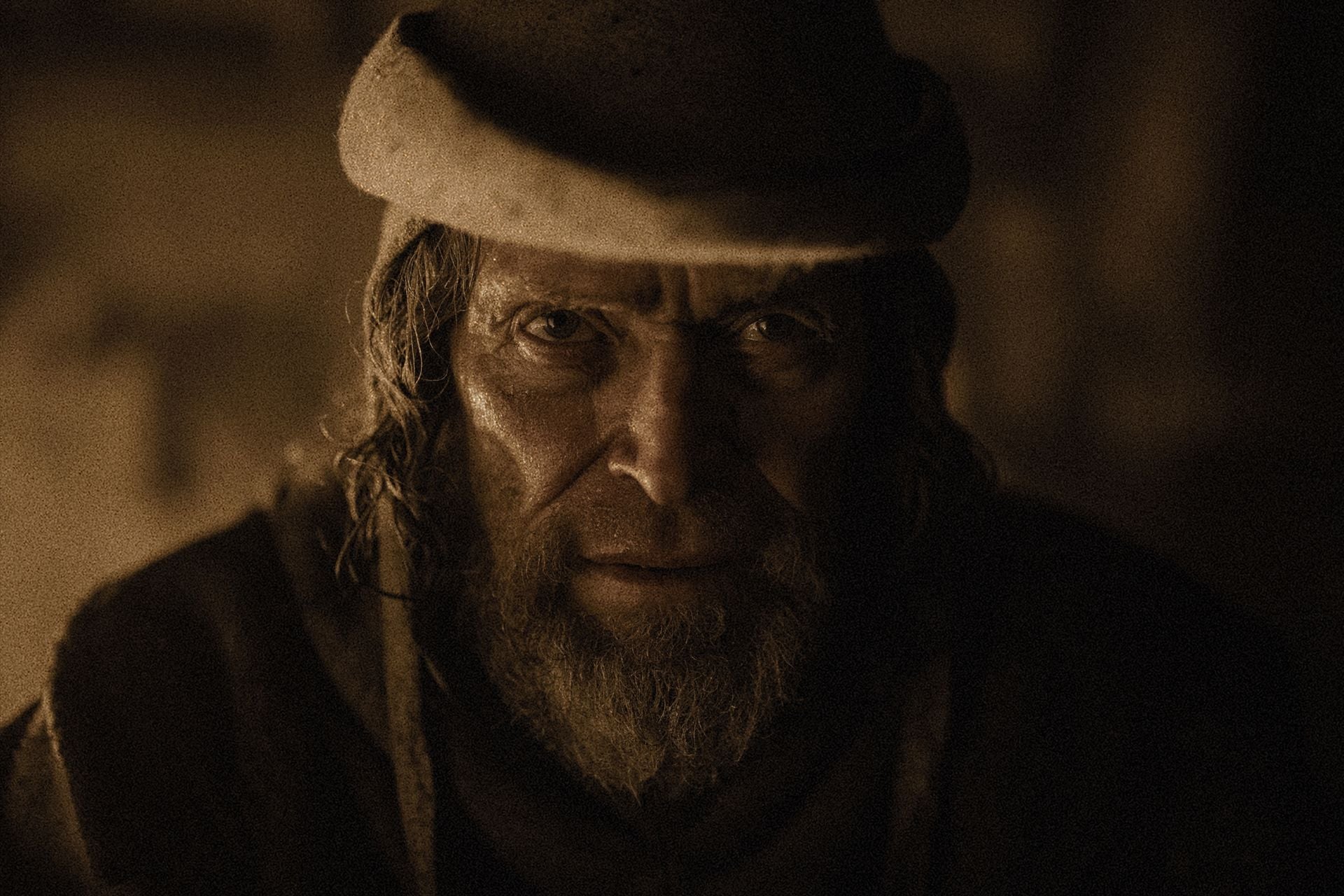
On a windswept road, Eggers’ folklore tastes of old superstition
They find bodies strung up, an old hut, and a woman who offers a slow, haunted speech about love, loss, and a husband who was a werewolf. The speech is deliberately muddled; Eggers wants you to feel confusion the characters feel.
That hut scene is where folklore stops being explanatory and becomes dangerous. Dafoe’s man tosses the old woman against the wall and warns that some knowledge must die. The moment ties the film’s cruelty to its moral logic: secrecy and violence are cousins here. If you want more layers, Focus launched an alternate reality game at devourethallmankynde.com that mirrors the film’s oblique storytelling, and it’s worth a look if you’re cataloguing clues.
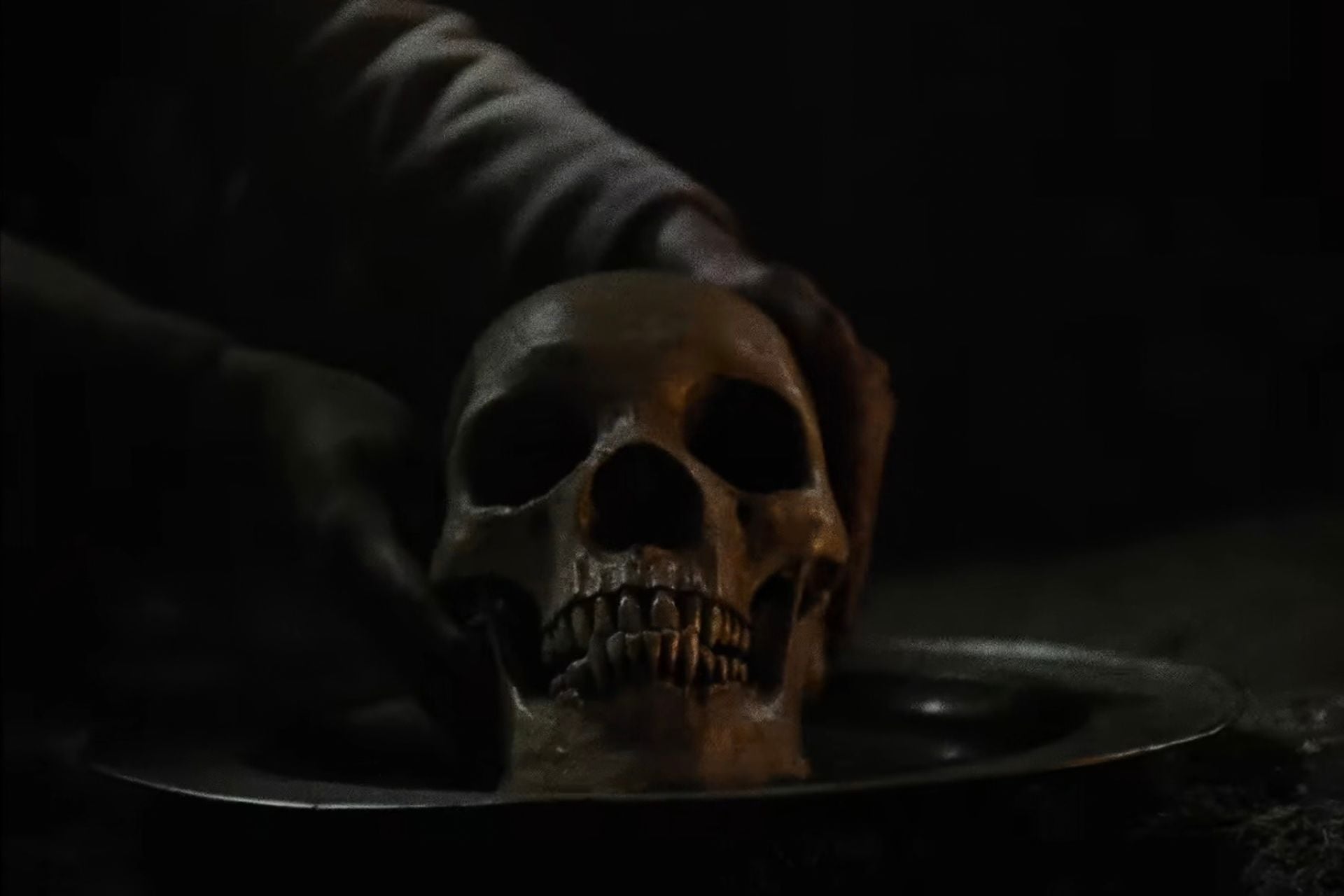
In the audience, you can feel the movie take its time arranging horror
After twenty minutes, the sense is clear: Eggers is rationing spectacle and building dread. The big, “set piece” transformation is promised later; the opener is deliberately intimate and grotesque. The initial sequence is already big and gross — enough that when the proper monster moment arrives, it should be alarming on a new register.
The sound and composition are not decorative; they are offensive. The sound design is a fist in the throat, pulling you into the film’s anatomy. That choice makes the later hunt, the bodies in the woods, and the moral violence feel inevitable rather than sensational.
When is Werwulf released?
Werwulf opens December 25. Focus is distributing, and you can expect coverage and ticketing to appear on platforms like Fandango, IMDb, and theatrical listings as release approaches.
If you want to go in cold, avoid trailers and the ARG; if you want scaffolding, read up on Eggers’ Nosferatu and his use of historical texture. I’ll say this plainly: Eggers has made something intentionally mean and tactile, and the first half promises more moral mess than clear answers. Will the rest of the movie satisfy your appetite for myth and blood, or will it leave you wanting a clearer monster to hate?