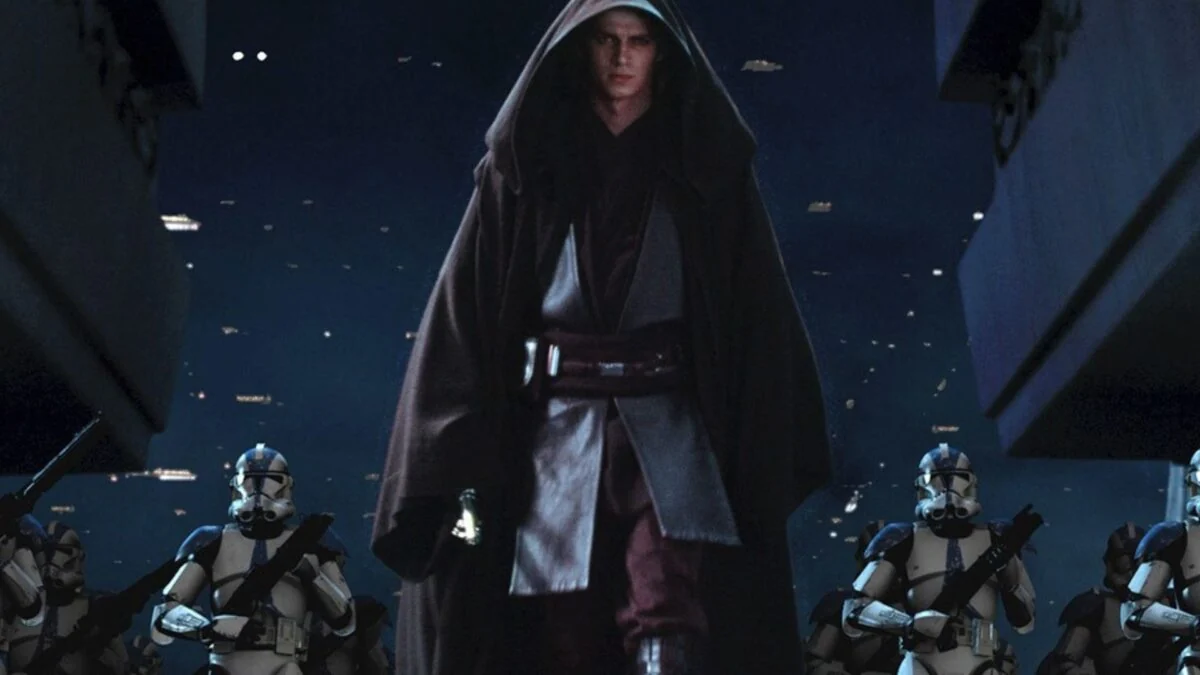
I was scrolling X on a Sunday when an image of a young Anakin on a throne stopped my thumb. Elon Musk captioned it, “This is what they stole from us,” and the replies exploded into something I didn’t expect. In seconds a private joke became a public puzzle: who are “they,” and why is a fictional family’s portrait now political currency?
Elon Musk posted an image that looks lifted from a family album, and the internet immediately turned it into a claim.
You’ve seen Musk’s post: Anakin and Padmé as younger versions, Anakin presiding over Imperial troops, Luke and Leia in officer uniforms. The caption was short, mysterious, and perfectly primed for reinterpretation. I watched the thread unspool like a political petri dish—memes spreading, pundits queuing up.
This is what they stole from us pic.twitter.com/q1GnpjF394
— Elon Musk (@elonmusk) November 1, 2026
The short parry-and-counter of replies turned a pop-culture image into a political cipher: grievance, nostalgia, patriarchal longing—and sometimes pure trolling. Musk didn’t explain. That silence became an invitation.
Why did Elon Musk post Star Wars art?
Grok AI—Musk’s chatbot—helpfully summarized the trend as memes tying Anakin’s anger to modern complaints about family, culture, and recognition. That reads like a social operating manual: take a franchise with broad emotional currency and press it into a political argument. Platforms involved: X, AI art tools, and viral reposts across Threads and Reddit.
A viral X post labeled Anakin “the white male experience,” and that lit the fuse.
One post showing young Anakin before the Jedi Council racked up over 1.5 million views, and the narrative split from there. Right-wing accounts reinterpreted Anakin’s grievances as representative, influencers posted cosplay, and even a government account tweeted AI art with a slogan that echoed MAGA-style sentiment.
Katie Miller dressed as Padmé and said, “Find the Anakin in your life.” Lauren Chen blamed ideology for Padmé’s death. The Department of Education posted AI art with the line “There’s magic in learning. Make education great again.” The result was a feedback loop: small ideas ballooned because the network rewarded blunt, shareable claims.
Is Anakin Skywalker being reclaimed by political groups?
Yes—and no. Some defenders cast him as a victim of a corrupt system; others highlight that he slaughtered younglings and choked his pregnant wife. The myth is malleable, and memes flatten moral complexity into slogans. You can weaponize the arc of a fictional man because fandom supplies layers of backstory, redemption arcs, and nostalgia to borrow from.
The internet treated Anakin like a symbol, but the symbol already had a backstory.
George Lucas built these characters for a specific moral lesson: friendship, trust, doing the right thing, and resisting the dark side. I visited the reporting around Lucas’s Lucas Museum of Narrative Art and remembered that he insisted his films were simple moral tales for younger audiences. That intention clashes with the way online communities repurpose the material.
People will always spin a story toward what they want to argue. Anakin’s fall and partial redemption give plenty of emotional hooks—jealousy, fear of loss, rescue fantasies—that are easy to graft onto contemporary grievances.
Memes have momentum, and momentum behaves like a Trojan horse for other agendas.
Once a meme converts empathy into identity, it can carry everything from sincere reinterpretation to cynical trolling. That’s how a character from a space opera becomes shorthand in culture wars—an actor in a new play staged by influencers, pundits, and tech platforms.
There are two ways this spreads: earnest reinterpretation and deliberate co-option. Both use the same tools—AI art generators, X threads, viral reposting—but their intent differs. The line between them is often invisible in a timeline, which is where the real danger lives: you can’t tell whether someone is riffing or recruiting until it’s too late.
Fans and creators are pushing back; companies are mostly quiet.
I reached out to Lucasfilm for comment and got no reply by publication. That silence is telling: corporations and IP holders prefer to avoid the noise, and platforms like X reward high-engagement content regardless of nuance.
Find the Anakin in your life pic.twitter.com/OXufQCwqQx
— Katie Miller (@KatieMiller) October 31, 2026
Platforms—X, Reddit, TikTok, and AI tools like Grok or image generators—are the plumbing. The plumbing doesn’t judge; it amplifies whatever warms the pipes fastest. That leaves franchises like Star Wars vulnerable to being repurposed as a banner for modern grievances.
The whole thing looks absurd until you remember that people have always used stories to explain themselves. The meme thread is a carnival mirror reflecting a warped nostalgia, and the character of Anakin functions as a Trojan horse for arguments about identity and resentment.
So what do we do? I don’t think there’s a neat policy fix here—platforms can tweak algorithms, and IP owners can speak up, but the broader force is cultural: people will continue to make meaning from what they love. The question is whether you notice the seam where the story becomes a slogan, and whether you call it out when it does—will you?