
I was halfway through a midnight play session when the corridor lights stuttered and my heart rearranged itself. The silence after an SCP snapped into motion felt like a small betrayal. You should be uneasy — that’s the point, and a film should make you feel that register.
I’ve followed the SCP Foundation since the forum days, and I’m telling you: the announcement that Spooky Pictures and Image Nation are slotting an SCP entry into the V/H/S franchise is exciting, but it’s also a test. Roy Lee and the team have a chance to do more than stitch together spooky moments for an anthology; they can give the world an SCP experience that matters.
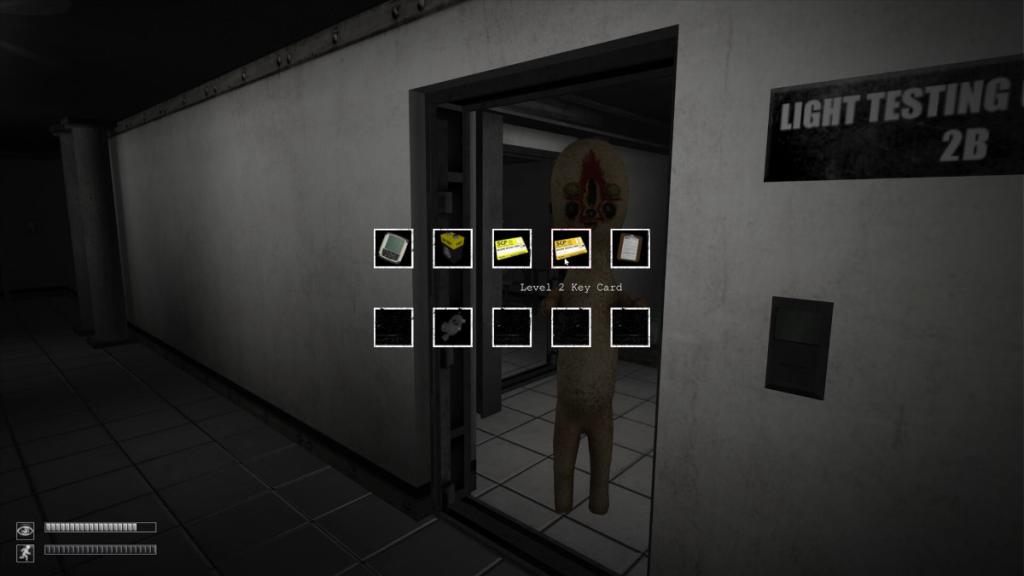
I once watched a friend push his chair back and refuse to keep playing — SCP-Containment Breach is a fantastic blueprint for an SCP Foundation movie
SCP-Containment Breach taught millions how the Foundation works: sterile corridors, cryptic logs, and the sudden, absurd violence of things that shouldn’t move. In the game you’re a D-Class: expendable, terrified, and immediately relatable. That simple POV turns abstract entries into personal threats. I want you to imagine that intimacy carried onto a screen.
The V/H/S approach — short, self-contained segments — fits SCP’s catalogue. But the most potent adaptations of indie horror games lately, from Iron Lung to Station 8 to the Backrooms (Kane Parsons’ take), have paired their weirdness with a human through-line. You can have a museum of anomalies, or you can have one person’s panic become the audience’s panic. One choice makes you remember the creatures; the other makes you care about them.
What is SCP-Containment Breach?
SCP-Containment Breach is a first-person horror game and an entry-level course in SCP lore. It places the player inside a compromised containment site and forces you to outthink or outrun classic SCPs. On Steam and in community archives, it’s still the gateway most people use to meet the Foundation’s best-known threats.
I once saw a packed theater collectively flinch at a single shot — anthologies can terrify, but they can also fragment momentum
Anthologies are like a mixtape: a string of high points that may not form a single narrative. That can be thrilling, but it also risks losing emotional weight between tracks. I’ll be blunt: V/H/S: SCP must either bind its segments with a human through-line or polish every vignette until it’s razor-sharp. No middle ground.
You’ve seen franchises mine found-footage aesthetics before. V/H/S has a signature analog grain and practical effects savvy. But without a familiar face to root for — or at least a recurring POV like a persistent D-Class — many shorts will land as curiosities rather than gut punches. The D-Class gives stakes: you don’t just watch an SCP; you watch someone you know almost become one.
How can a film capture the feel of SCP games?
Use a confined setting. Use logs and CCTV as exposition. Keep line-of-sight mechanics (think SCP-173) and resource scarcity as dramatic devices. Center the story on a character with small, relatable flaws. If you borrow design ideas from the game, the film gains a spine — a compass that guides empathy.
I once had a producer tell me, “We can scare them with images alone,” — but images without care evaporate
Producers like Roy Lee and companies such as Spooky Pictures and Image Nation bring industry muscle. Variety has covered the move, and fans on platforms like Steam and YouTube will judge fidelity as much as scares. You and I both know that fans crave authenticity: accurate mechanics, faithful iconography, and a tone that respects the source material. But fidelity without emotional architecture is spectacle without consequence.
If I were advising the film, I’d argue for a single-containment-breach sequence as the spine. Let one D-Class’ choices ripple through the anthology: their camera shows up in multiple shorts, their name appears in logs, their fate threads the film together. That turns episodic fear into a mounting dread, like a pressure-cooker of dread that never lets off steam.
This franchise entry can be a celebration of SCP’s weirdness and a lesson in cinematic restraint. You don’t need a museum of anomalies; you need one story that makes the audience carry the anxiety home. Will the makers aim for a mosaic of clever scares or for a film that makes you keep the lights on afterwards?