
It was 10pm, the house was quiet, and my kid’s headset hummed behind a shut door. I peeked in and saw a screen full of avatars, laughter leaking through the crack in the door. In that moment I realized I could count their friends but not the adults listening in.
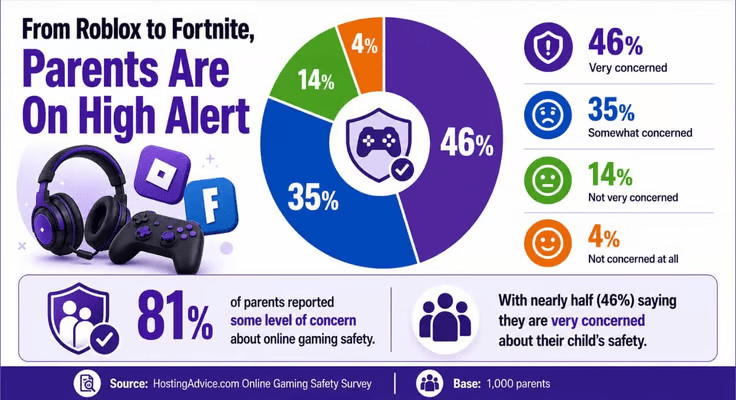
I read the HostingAdvice survey so you don’t have to — 1,000 parents, and only 81 percent said they were concerned about online gaming safety. That number should feel wrong to you. Online multiplayer is now the equivalent of a neighborhood: Roblox and Fortnite are where kids meet, trade, and sometimes get into trouble, and the stakes are higher than they used to be.
My neighbor’s child accepted a game friend request from someone claiming to be a ‘moderator’
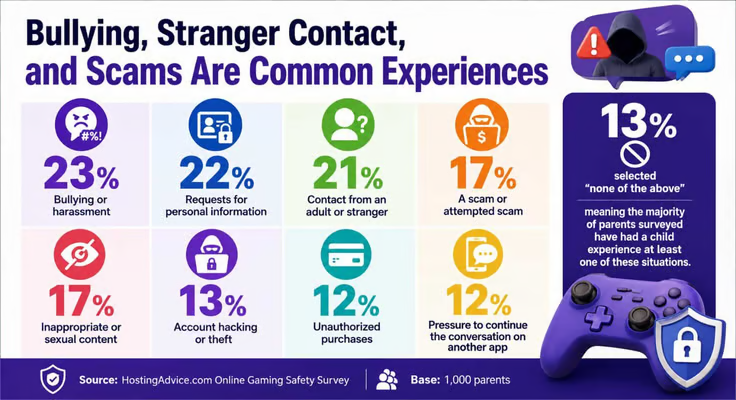
That single, small click is where problems start. The study lists the familiar hazards: bullying or harassment, scams, requests for personal information, and, worst of all, contact from an adult or stranger. Platforms like Roblox have been dragged into lawsuits and questioned by bipartisan members of the U.S. Senate because those clicks can lead to real-world danger.
How worried should parents be about online gaming?
Worried enough to act, not to panic. You and I both know kids learn social skills from playing, but the internet mixes strangers and children in ways the playground never did. The HostingAdvice data says 81 percent express concern, and 97 percent have at least one protection in place — that gap is where the risk hides.
At a PTA meeting I heard a parent say they turned off chat and felt guilty
Guilt is common, but so is relief. Blocking chat, disabling messaging, limiting friend requests — parents reported those as the most-used tools. Two-factor authentication, family accounts, and platform-specific parental controls are part of the toolbox. Services from Microsoft Family Safety to console-based controls on Xbox and PlayStation all help, but tech without talk is brittle.
What parental controls actually work?
Start with account privacy and friend-request limits on Roblox, Fortnite, and console networks. Turn off voice or text chat for younger players. Require parent approval for purchases and friend additions. Enable two-factor authentication everywhere — it stops many scams before they start. Pair those settings with periodic checks: view recent screenshots, read chat logs, and keep devices in shared spaces.
A screenshot of a scam message landed in my inbox this morning
Seeing one message makes the threat concrete. Scams often lure kids with free skins, currency, or promises of status. That’s social engineering: someone who understands what appeals to kids and uses it like a fishing lure. Treat every unexpected offer as suspect, and teach children to show you before they click.
Can strangers contact children in games?
Yes. The study explicitly names contact from adults or strangers as a major worry. Platforms label reporting tools and safety teams, but enforcement lags behind volume. Lawsuits and public pressure pushed companies to improve safety features, yet the average child’s social graph in-game can still include unknown adults.
I want you to think of parental oversight as layered: tech settings, regular conversations, and an active watchfulness that isn’t surveillance for its own sake. Use tools — family accounts on consoles, strict privacy on Roblox and Epic Games (maker of Fortnite), two-factor authentication — and keep the door to conversation open. One metaphor: treat a game account like a house key you wouldn’t hand to a stranger. Another: imagine the server as a crowded playground with blindfolded supervisors — fun can quickly tilt toward risk when attention slips.
The HostingAdvice numbers — 81 percent concerned, 97 percent using at least one safety step — prove people are aware but not unanimous. My stance is clear: you should be proactive, pragmatic, and willing to be the annoying adult who checks chat histories. Which side of the scoreboard will you be on when your child texts, ‘Someone strange asked for my phone number’?