
I opened a browser tab expecting nostalgia and found a character frozen mid-attack, eyes unreadable in low-res polygons. For a second it felt like a lost childhood tucked into a folder on my hard drive. Then I realized someone had pulled those models out into the sun.
I’m Alfred’s kind of skeptic — I read the code, I poke at the files, and I ask the awkward questions. You should want to do the same, and you’ll appreciate how the Pardall Games Library turns dusty game assets into something you can examine, pose, and screenshot in crisp detail.
Live here: library.pardallgames.com
— Alfred Reinold Baudisch (@alfredbaudisch.com) 2026-09-26T21:15:46.044Z
On my desk sits a plastic PS1 controller — Why this matters for game preservation
That controller is more than nostalgia; it’s a reminder that the earliest 3D models defined how we remember characters. Pardall Games, led by Alfred Baudisch, has extracted over 3,500 3D assets from classics like Final Fantasy VII, Resident Evil 2, Metal Gear Solid, Virtua Fighter, and King’s Field. The site presents those assets in high-definition views and preserves each animation so you can pause, rotate, and reframe scenes that were previously locked to a handful of camera angles.
Think of it like a time capsule pried open — models that were once flattened by compression and hardware limits now breathe again, telling small stories the original games couldn’t.
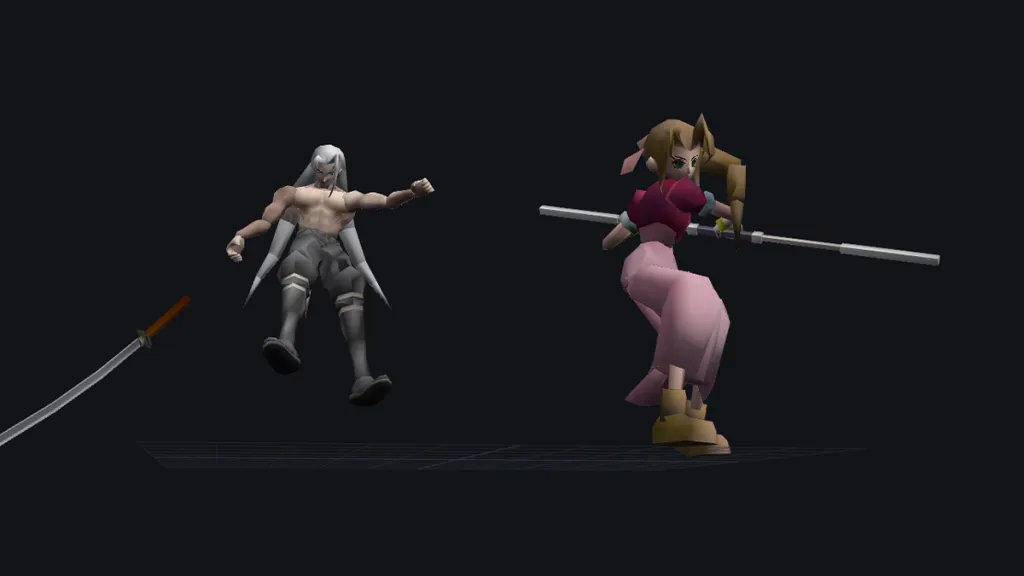
I found a screenshot of Aerith staring down Sephiroth — How the site changes what you can create
On a reddit thread someone posted an angle of Aerith that never existed in the game; it started a debate about story beats and “what if” moments. Pardall’s arena feature lets you place characters together, choose animations, and build alternate screenshots that feel cinematic. That matters if you’re a fan artist, a modder, or someone who simply wants to reframe a scene with better lighting and camera control.
What is the Pardall Games Library?
Pardall Games is a free nonprofit archive and viewer for extracted 3D assets from older consoles — PlayStation (PS1), Nintendo 64, and Sega Saturn among them. The library indexes character models and their animations, and serves them through a web interface so you can inspect geometry, textures, and poses that used to be trapped on physical discs.
How do I view PS1 models in HD?
You go to the site, search for a character or game (for example Resident Evil 2 or Final Fantasy VII), and open the model viewer. You can freeze animations, switch camera angles, and capture screenshots for personal projects. The viewer is browser-based, so it works on desktop without installing extra tools — handy for quick comparisons or building reference stacks.
At a café I overheard someone call this illegal — The practical and legal reality
That accusation is common, but the legal picture is messy. Pardall’s work sits in a grey area shared by many preservation projects: it extracts assets for archival and study rather than commercial resale. Baudisch hosts the library as a nonprofit and accepts support via Ko-fi; small donations like $5 (€5) go toward hosting and development, and you can also buy his pixel art tools, 3D utilities, or experimental games if you want to contribute directly.
This is not a polished corporate release from Sony or a remaster by Square; legal questions remain, and platform holders still control IP. But for researchers, artists, and preservationists, the library is a rare resource.
I scrolled through the models and felt a familiar goosebump — Who benefits, and how to use these assets responsibly
Archivists, historians, modders, indie developers, and fans all get something out of this. Use the models for education, analysis, and noncommercial creative work. Cite sources when you publish, respect copyright holders, and don’t redistribute the files for profit. The community around Pardall is small but active — Baudisch’s presence on BlueSky (bsky.app) and mentions on outlets like Moyens I/O help surface updates and additions.
The assets can also be a practical tool: reference meshes speed up 3D study, static poses become promotional images, and animation frames serve as teaching examples. The gallery is a workshop and a museum at once, as crisp as a restored film negative.
Is Pardall Games legal?
Short answer: complicated. Preservation projects often operate in a legal twilight. Pardall positions the library as nonprofit and archival, which reduces commercial risk, but IP holders maintain rights over characters and assets. If you plan to publish or monetize work derived from these models, consult legal guidance or seek permission from rights holders.
If you want to support the project without legal exposure, consider donating via Ko-fi ($5 (€5)), buying Alfred’s tools, or using screenshots for personal or educational work rather than commercial products.
Platforms and names to watch: PlayStation (Sony), Nintendo, Sega, Square Enix, Capcom, Konami, Alfred Baudisch, Pardall Games, BlueSky, Ko-fi, and community outlets like Moyens I/O. Each has a different tolerance for preservation activity, and each shapes how these archives evolve.
Want a practical first step? Search for a single character you loved, experiment with the arena, and save a screenshot — then ask yourself which scene you would change if you could rewrite the game’s camera. Who owns that story now?
So you can see thousands of models from classic titles — which ones do you pull into a new scene first?