
I stood over a herb node as the raid countdown hit ten—no buffs, no flask, and my guild chat lit up with blame. You can feel the panic: do you finish the grind or run back to town and pay through the nose on the Auction House? I learned then that Professions decide whether you bleed resources or bank them.
I’m going to walk you through Professions in WoW: Forever so you stop guessing and start choosing with purpose. This is not a checklist; it’s a map you can use while you level, gold-farm, or support a Camp. You’ll see how Trading addons like TradeSkillMaster and communities on Discord make the math less painful.
What’s a Profession?
On the street, everyone has a day job—your character does too.
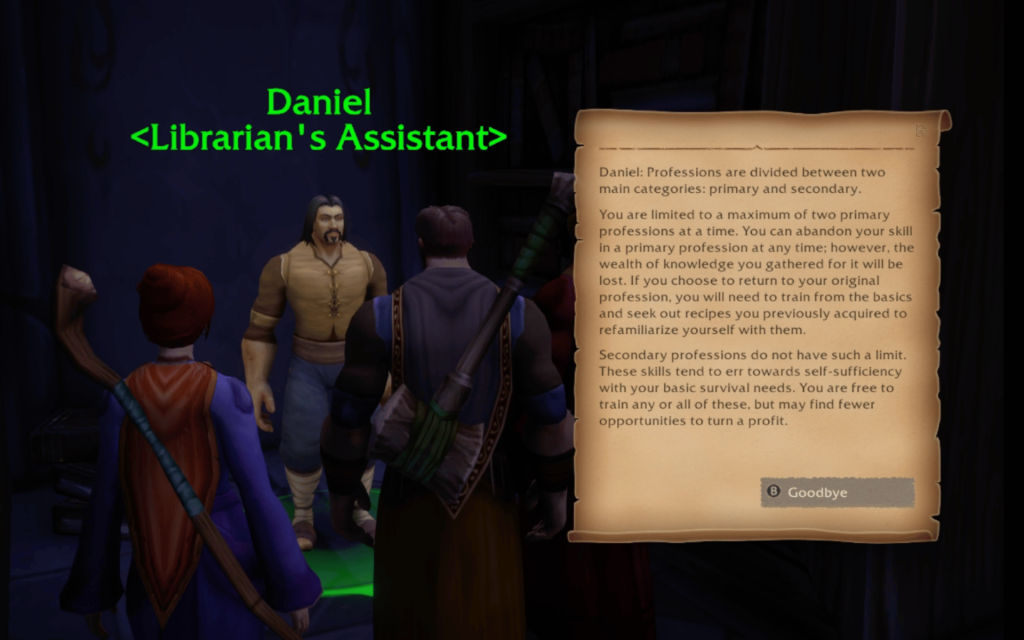
Professions are the tradeskills your avatar carries through quests and combats. They’re not locked to your Class fantasy—your Paladin could have been a smith before the Light, your Rogue a tinkerer who likes explosives. Practically, Professions let you create gear, consumables, and Camp facilities that give group-wide benefits.
Think of Professions as the wiring under a house—out of sight, but everything fails without it.
Gathering Professions
When you go grocery shopping, you choose whether you’ll cook or buy ready meals; in WoW, Gathering provides the groceries.
Gathering Professions grab raw materials that Fuel Crafting Professions. If you plan to craft or flip goods on the Auction House, gathering early is the fastest way to steady income—or at least to avoid paying steep launch prices that often crash servers.
What is a profession in WoW: Forever?
It’s a skill tree that grows as you use it. Gather herbs, mine ore, or skin beasts to gain Skill Points; at thresholds you Train to reach higher ranks. Higher ranks unlock new nodes and recipes, and the Camp mechanics in Forever tie Professions into meaningful group buffs.
Herbalism
| Pair with | Alchemy uses the herbs you gather for many consumables. Some rarer plants feed Enchanting, Engineering, and Tailoring |
| Use as this Class | Players who rely on potions and buffing benefit the most—Alchemists will love you |
Herbalism is the simplest grind: Find Herb, pick herb. It’s also one of the most valuable early sources of materials for potions and elixirs that everyone wants at launch.
Mining
| Pair with | Blacksmithing and Engineering—ore and gems power weapons, armor, and gadgets |
| Use as this Class | Warriors and Paladins for gear; Hunters and Rogues benefit from Engineering ammo and gadgets |
Mining yields ore, stone, and gems. Smelt ore into bars, craft or sell—either path levels Mining. Some veins require higher Mining skill, so pay attention to thresholds while you quest.
Skinning
| Pair with | Leatherworking, since hides and scales feed its recipes |
| Use as this Class | Druids, Rogues, Hunters who wear leather or move into mail find this especially useful |
Skinning requires you to kill beasts and skin corpses with a Skinning Knife. If you hunt beasts frequently, Skinning levels naturally; otherwise you’ll need to plan farming routes or use an alt to collect materials.
Crafting Professions
There’s a reason gear makers sit in capital cities: someone must turn raw mats into things you actually use.
Crafting Professions convert gathered resources into gear, consumables, and Camp Facilities. If you want to make bank, Enchanting and Tailoring (for bags and reagents) are powerful at both early and late game.
Enchanting
| Pair with | Tailoring—cloth can be turned into Uncommon gear for disenchanting. Blacksmithing allows runed rods for some enchants |
| Use as this Class | Mages, Priests, and Warlocks profit, but Enchants are universal sellers |
Enchanting adds permanent upgrades to items and remains a gold engine because every raider wants enchants. In Forever, permanent enchants now include Necklaces and Off-Hands, and crafters can produce Relics and Staves—meaning more demand at the Auction House and more reasons to run TradeSkillMaster to price items properly.
Engineering
| Pair with | Mining supplies most materials; Engineering is a mid- to late-game money maker |
| Use as this Class | Hunters, Rogues, Warriors, and PvP players—Engineering offers unique gadgets and explosives |
Engineering gives you gadgets, explosives, and utility items—some exclusive PvP toys live here. Forever added SAF-T explosives usable by anyone, so expect Engineer-made items to shape battleground plays.
Alchemy
| Pair with | Herbalism for recipes; Enchanting often pairs because enchanters need reagents |
| Use as this Class | Anyone who uses consumables—raiders and PvPers will pay for reliable flasks and elixirs |
Though First Aid now handles healing potions in Forever, Alchemy is still essential for Elixirs, Flasks, and new mechanics like Legionite Transmute. Alchemists are useful in every group.
Blacksmithing
| Pair with | Mining—you’ll melt ore into bars; Enchanting for runed rods |
| Use as this Class | Warriors and Paladins who want to craft and wear their own gear |
Blacksmithing builds weapons, armor, and utility items like Skeleton Keys and Sharpening Stones. Forever added a Sharpening Wheel Camp Facility that benefits anyone nearby—one small way crafting becomes community play.
Leatherworking
| Pair with | Skinning—you’ll need lots of hides and scales |
| Use as this Class | Druids, Rogues, Hunters, Shamans who rely on leather or mail gear |
Leatherworking produces armor and bags and feeds classes that wear leather through the entire game. If you like being self-sufficient, this is a clear pick.
Tailoring
| Pair with | Enchanting—cloth turns into disenchantable gear. Tailoring also makes Reagent Bags |
| Use as this Class | Mages, Priests, Warlocks—or anyone who wants more bag space |
Tailoring is low-grind and high-reward if you want bags and spellcaster gear early. Cloth drops are everywhere, so skill-up is fast without a Gathering alt.
All Secondary Professions available for your convenience
Every MMO party has someone who manages the kitchen and first aid kit; WoW Camps do the same.
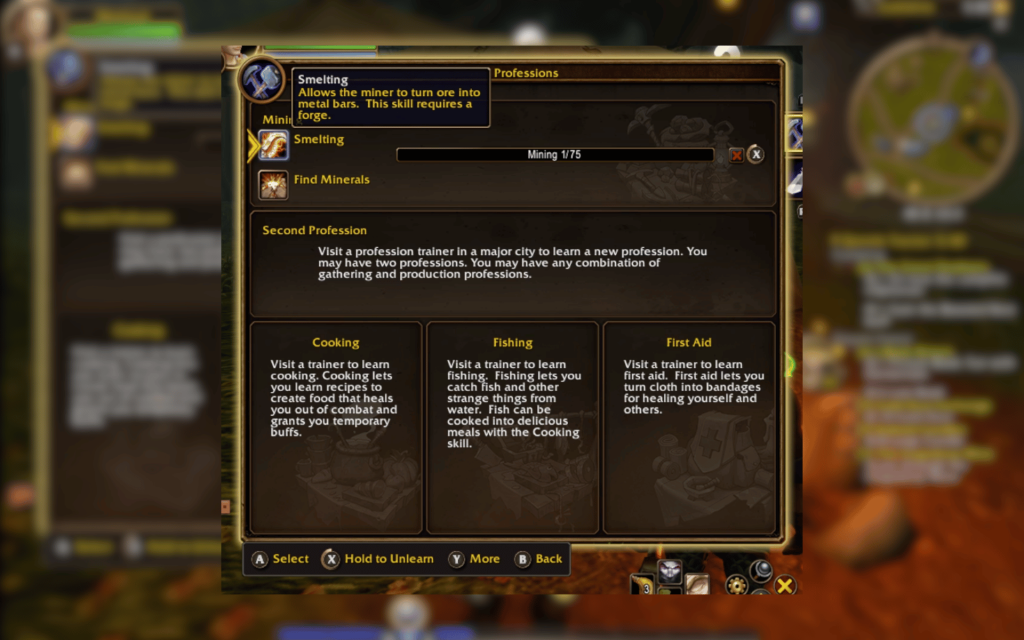
Cooking, First Aid, and Fishing give tangible Camp benefits that scale with your skill. Even if you don’t plan to craft full-time, a Secondary can be the thing your group relies on during a long grind.
| Name | Description, main output |
| Cooking | Higher Cooking feeds better Campfires and spawns advanced appliances like an Iron Oven; it boosts Stamina for everyone nearby |
| First-Aid | Creates bandages and kits useful for Rogues, Warriors, and healers who prefer consumables; supplies antivenom and poultices |
| Fishing | Supplies food and provides a Fish Bowl Camp buff that increases stats for groups lacking a Paladin’s Blessing of Kings |
No more than two Primary Professions
Think of the limit as a weight cap on your backpack.
Forever lets you learn only two Primary Professions per character. You can drop one and learn another, but unlearning costs you all recipes and progress—so plan before you burn a slot.
Which professions should I choose in WoW: Forever?
It depends on your goals. If you want fast gold and flipping, double Gathering—Herbalism + Mining—is the standard launch strat because nodes show on the minimap and routes overlap. If you want self-sufficiency, pick a Gathering + Crafting pair like Mining + Blacksmithing or Skinning + Leatherworking.
At level 60, most players drop one Gathering and swap to a Crafting Profession that consumes the mats they’ve amassed—this is where TradeSkillMaster and Auctioneer become indispensable tools for pricing and posting.
Double Gathering is the safer early-game gambit: you make the raw goods that crafters desperately need and sell them while prices spike. You can also use an alt to gather while your main crafts or runs raids.
Read what’s behind the latest news in gaming (with a bit of snark) by subscribing to the Moyens I/O Checkpoint newsletter!
Leveling Professions in WoW: Forever
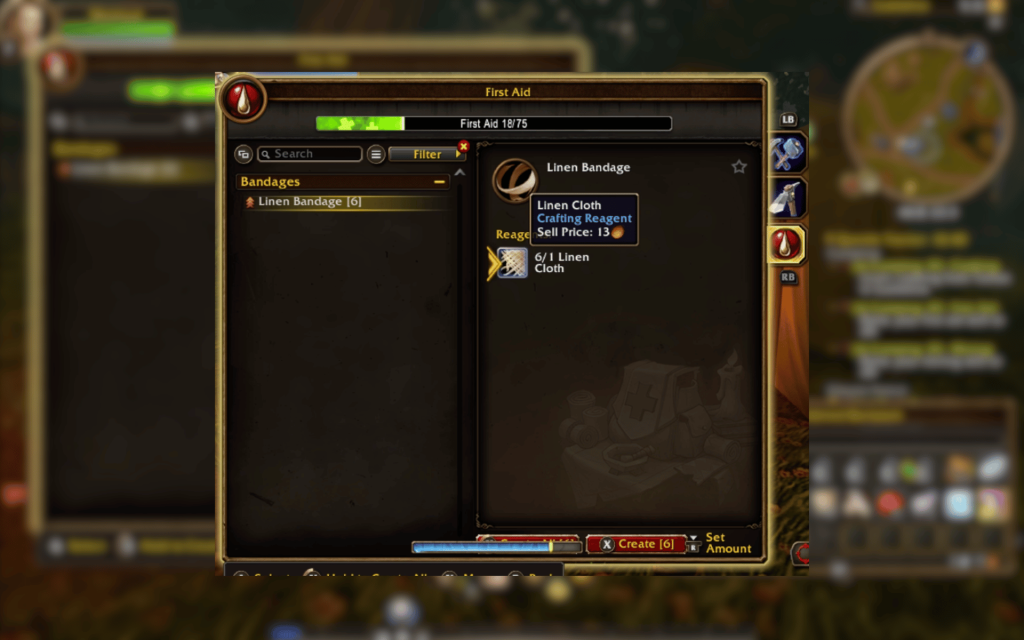
Professions gain Skill Points by using them or performing related actions. At set thresholds, you must Train to reach a new proficiency rank. Higher ranks make some recipes and nodes available—but the chance to gain a Skill Point decreases as you climb, so you’ll be repeating tasks.
- Apprentice: 1–75
- Journeyman: 75–150 (Train available at Skill 50; needs Character Level 10)
- Expert: 150–225 (Train available at Skill 125; needs Character Level 20)
- Artisan: 225–300 (Train available at Skill 200)
Enter the Campsite
Outdoor dinners with friends always reveal who brings the best gear—and in WoW Camps, the same happens with Professions.
Camps are social hubs where your Profession can spawn facilities and buffs that help everyone. Building a Camp Tent, Iron Oven, or Enchanted Lute turns single-player grind into shared advantage.
| Secondary Profession | Camp Contribution | Camp Buff |
| Cooking | Create a Campfire that supports 3 (Artisan), 5 (Journeyman), and 10 (Expert) Camp Facilities; spawn an Iron Oven | Food that boosts Stamina (Cookie’s Fest) |
| First-Aid | Create a space for Healing Potions, Antivenom, and Poultices | Stamina-boosting kit (First Aid Kit) |
| Fishing | Spawn a Fishing Rack or Fishing Hut to catch uncommon and rare fish | Fish Bowl stat boost (doesn’t stack with Blessing of Kings) |
| Primary Profession | Camp Facility | Camp Buff |
| Alchemy | Summon a Fermenter or Alchemy Laboratory | Mana regeneration via Mana Well |
| Blacksmithing | Spawn an Anvil or Master Forge | Increased Strength via Sharpening Wheel |
| Enchanting | Summon an Arcane Salvager or Arcane Forge | Enchanted Lute that buffs Armor, Resistances, and Stats |
| Engineering | Deploy a Reagent Bot or Anarchist’s Workbench | — |
| Herbalism | Spawn a Greenhouse or Seed Hybridizer | Intellect boost via Incense Candle |
| Leatherworking | Provide a Tanning Rack or Sewing Machine | Camp Tent for Rested XP |
| Mining | Create a Rock Garden or Molten Foundry | Melee Attack Power via Lodestone |
| Skinning | Offer Track Beasts or a Trapper’s Workbench | Critical Strike boost via Camp Chair |
| Tailoring | Spawn a Spinning Wheel or Loom | Spirit increase via Faction Banner |
You can visit any Camp and benefit from its facilities. That means your choice of Profession affects your broader community, not just your own inventory.
Professions go into your Legacy as well
On the ladder of account progression, Professions add up across characters.
Forever ties Profession milestones to Legacy Points for your account. Reaching 150, 225, and 300 in non-gathering Primaries rewards points you can spend on permanent perks that affect every character on your account.
| Perk | Rank | What it does |
| Dedicated Study | 1 | +1 to your lowest Primary or Secondary Profession; when all are 300, you receive random Elemental Essences on cooldown |
| Bountiful Harvest | 5 | +20% to scarce materials gathered from Herbalism, Mining, and Skinning |
| Luremaster | 5 | +25% chance to catch an additional fish when fishing with a lure |
| Master Chef | 5 | +10% chance to create an extra cooking item |
| Performance Bonus | 5 | +5% chance to receive double Merchant’s Favor when turning in supply crates |
| Working Overtime | 5 | +4% chance to gain a Skill Point in your Professions |
If you’re using external guides or watching creators on Twitch, keep an eye on their TradeSkill runs—watching someone sequence a leveling rotation is worth more than a static checklist. Tools like CurseForge and the Battle.net forums also track rare-material hotspots.
Gathering is the soil that feeds the harvest of crafted goods.
Now that you can see how Camps, Legacy, and the Auction House tie together, which Profession do you protect with your life—and which one do you sell to the highest bidder?