
I’m on the touchline, 89th minute, your Tactical Effectiveness meter is orange and the crowd is loud—your whole season balances on a decision like a dial on the dashboard. I’ve watched teams lose titles because one training priority was ignored. You don’t need miracles; you need a plan I use and you can follow.
Sports Interactive changed the match DNA in Football Manager 27 with Tactical Effectiveness. It’s the single biggest influence on match outcomes this year, so if you want trophies you have to treat the meter like part of your matchday toolbox.
On a training pitch you can tell who’s comfortable with a system before a ball’s kicked. Tactical Effectiveness in FM27 measures four things—Tactical Understanding, Player Ability, Player Buy-In, and Current-Match Info—and they all pull the same rope.
How do I improve Tactical Effectiveness in Football Manager 27?
I’ll give you an operating sequence you can use across seasons. Focus your weekly training, resist constant squad overhauls, and assign the right staff duties. These moves will push the meter into green far faster than swapping tactics every other week.
What affects Tactical Effectiveness?
The meter is a composite score. Think of it as four sliders under one glass: how well players understand the plan, how skilled they are in the required roles, how much they trust you, and how much intel you have about the opposition. If any slider is low, the whole value drops.
How quickly can players increase Tactical Familiarity?
It depends on repetition and role fit. Small, consistent training blocks focused on the same shape will move familiarity in weeks; throwing new signings into unfamiliar roles can set you back months.
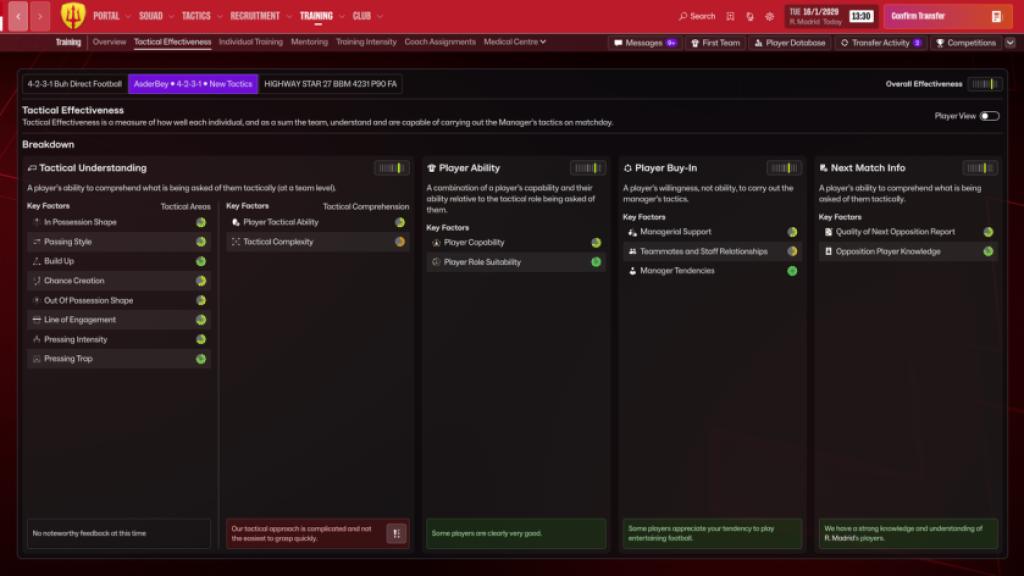
Tactical Understanding
At a club I once coached, Tuesday training told the Thursday match story. Tactical Understanding is about familiarity with shape and instructions. If your midfielders haven’t trained the pressing triggers or your wing-backs haven’t rehearsed overlaps, the meter will punish you.
How to fix it: dedicate as much of your team schedule as it will tolerate to the Tactical Understanding modules. In FM27 there are eight Tactical Understanding modules—use them relentlessly until the meter is green. When green, swap some sessions to Tactical+Match to keep sharpness. Treat those sessions with the same precision as a Swiss watch.
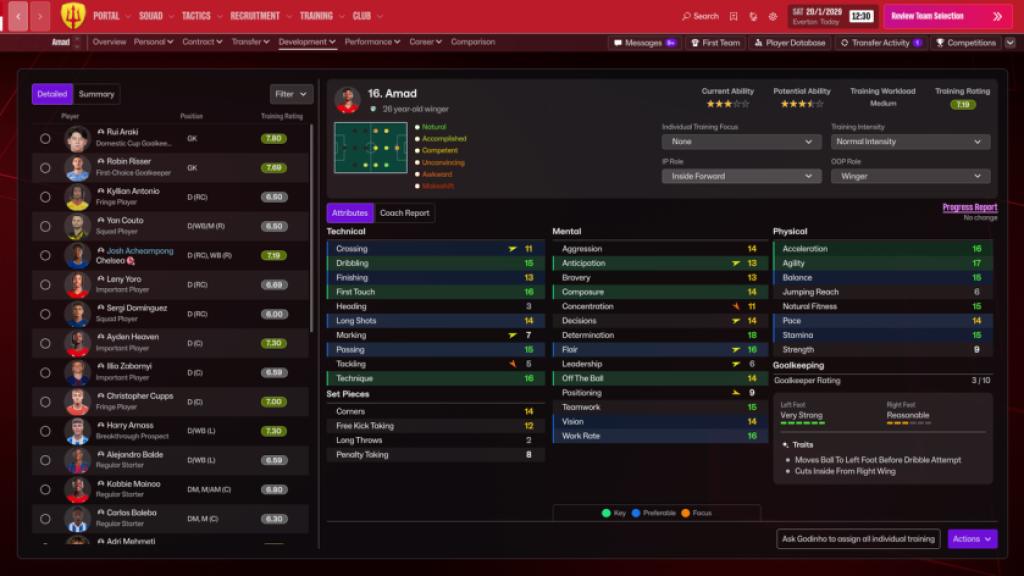
Player Ability
Watch your starting eleven warm up and you’ll see who belongs in each role. Player Ability is simple: play men where their attributes match the role. A shadow striker with low off-the-ball and finishing won’t reach the effectiveness you need.
Practical moves: use individual training to lift role familiarity, check scout suitability notes in reports (Scouting via Sports Interactive’s recruitment tools or Steam Workshop tactic presets can help you filter quickly), and keep your starting XI consistent so their collective chemistry grows.
Player Buy-In
At a small club I handled, the captain’s belief changed entire match outcomes. Player Buy-In measures whether players trust and accept your system. Coaching badges, staff relationships, and promises matter here—if your players see you as inexperienced, they will be hesitant.
How you build it: keep promises about playing time, manage expectations, and schedule at least one Team Bonding session per week. Build rapport with staff and assign coaches who improve temperament and communication. If you have a player leader, reward them with consistent minutes; they’ll drag the rest of the dressing room with them.
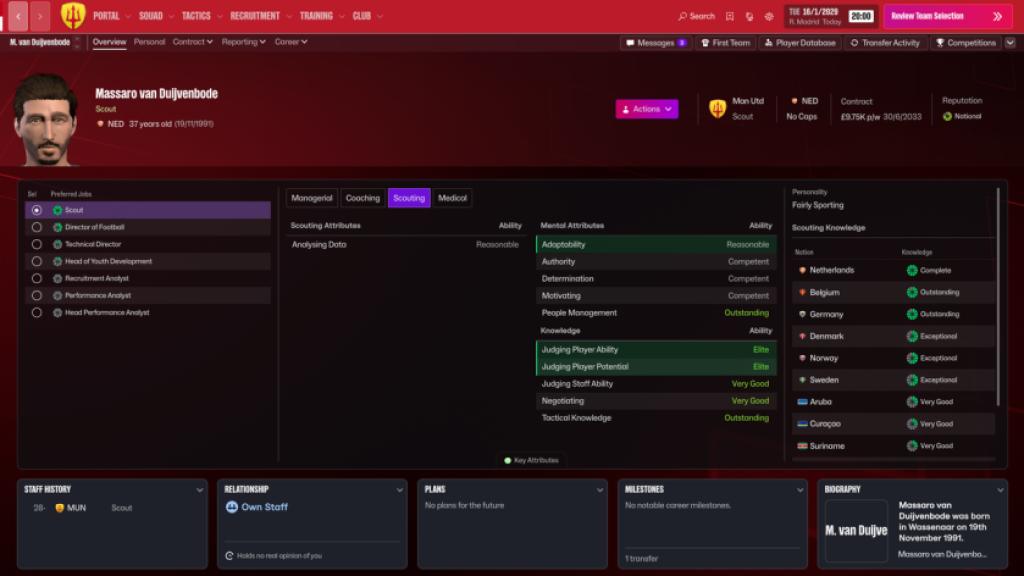
Current-Match Info
On matchday you have only what your scouting and opposition analysis give you. Current-Match Info is the one area you don’t control directly with training; you buy it with staff quality and focus.
Hire a scout with Outstanding or Elite Tactical Command and assign them solely to opposition analysis before the game. If they’re split across tasks, your intel will be shallow. Think of opposition scouting like a single high-quality lens—sharper intel improves how your team executes the plan.
Short checklist and coach-level moves
- Commit to one or two shapes and make secondary tactics share that shape.
- Keep your starting XI stable; rotations are fine, wholesale overhauls are not.
- Use scouting reports to sign players with a high tactical fit for your system.
- Put training weight on Tactical Understanding modules until the meter is green.
- Run weekly Team Bonding and protect your promises about minutes.
If you follow this sequence—train the shape, play players in fitting roles, win buy-in, and pay for high-quality opposition scouting—full Tactical Effectiveness isn’t an aspiration, it’s predictable. So which step will you change first to force the meter into green?