
I pressed the door and the interior answered with soft light and a low hum of electronics. You notice quickly that this 7 Series isn’t merely screen-rich—the windshield itself participates. I remember thinking, quietly: BMW just rewired the rules for what a cabin is allowed to do.
BMW introduced the 2027 7 Series at simultaneous events in Beijing and New York’s Grand Central Terminal, and the presentation came with a line you’ll hear again: “progressive luxury.” Sebastian Mackensen, BMW North America’s CEO, framed it as a promise of technology openness. If you follow automotive launches, names matter here—this 7 Series is the first to sit on BMW’s Neue Klasse platform and to carry the new design language across the brand’s next wave of EVs.
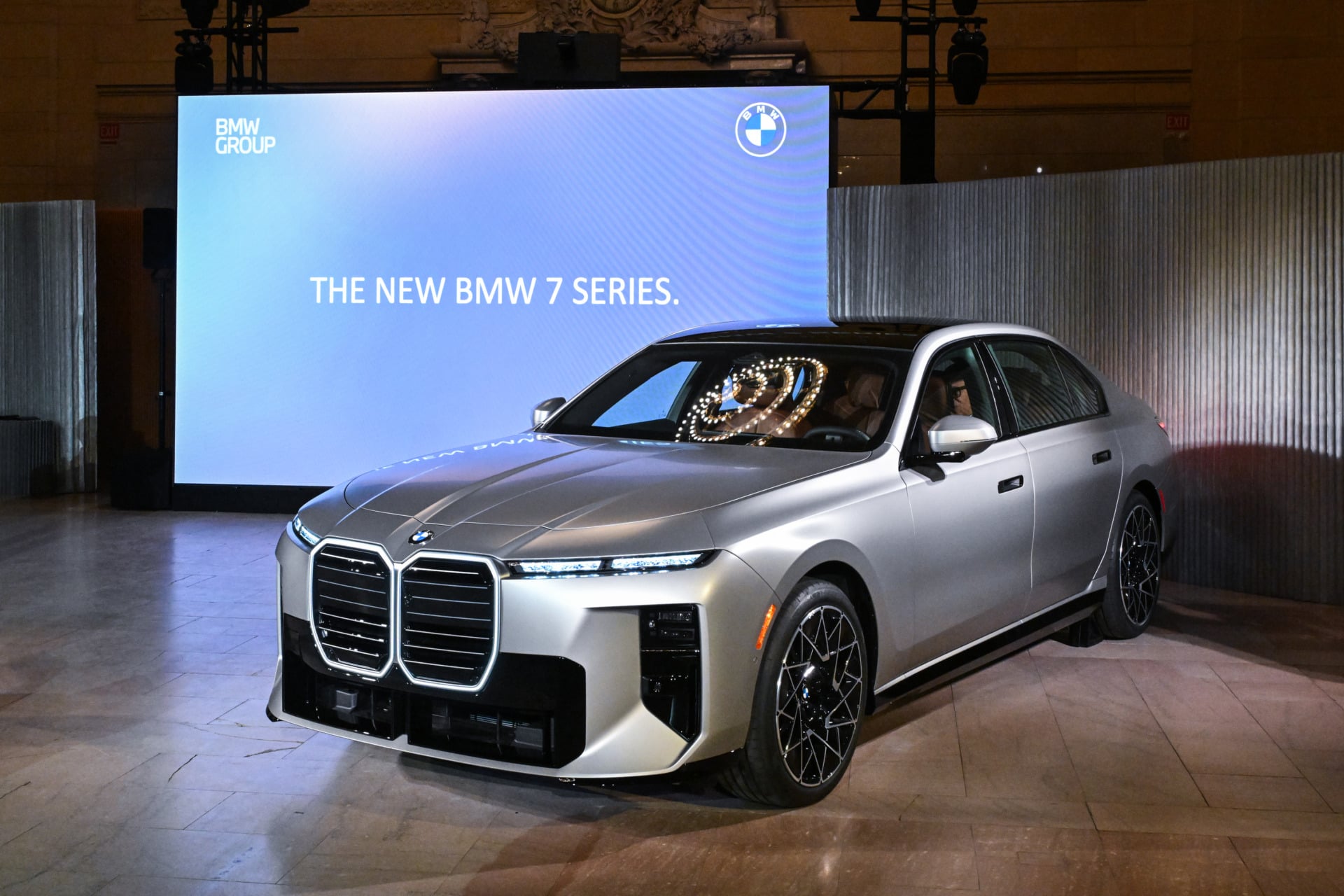
At first glance, the 7 Series reads as a familiar luxury sedan.
The exterior keeps the understated cues buyers expect: an illuminated grille, crystal-style headlights, and proportions that announce a flagship. Inside, materials—Merino leather, cashmere wool upholstery, accent-lit headrests BMW calls “halos”—are all about comfort and presence. Yet those traditional luxury signals are only the frame for something else: a cabin orchestrated around screens and software.
The windshield has become a display element in real-world use, not just a tech demo.
The headline feature is Panoramic Vision, part of BMW’s Panoramic iDrive. Instead of a single HUD flicker, BMW projects content across a darkened lower band of the windshield: driver info like speed and range on the left, lifestyle snippets—weather, time—over on the passenger side. Above that lives a 3D Head-Up Display supplying navigation cues directly in your sightline. The Panoramic Vision stretches like a smart curtain across the lower glass, and the effect is immediate: the windshield stops being passive and starts to multitask.
How many screens does the BMW 7 Series have?
If you count the major surfaces, front occupants get four distinct displays: the Panoramic Vision projection that spans the windshield band, a 17.9-inch central touchscreen, a passenger-facing display for media and apps, and the 3D HUD. Rear passengers have their own screens, and there’s an integrated camera for video calls—so the car can act as a mobile office when you need it to.
Behind the glass, BMW is attempting to balance touch, voice, and physical controls.
BMW’s design team, led in part by Maximilian Missoni, talks about a “staging” approach—placing information across layers depending on what you need in the moment. That’s paired with product-level decisions from Maximilian Huber, who says familiar physical controls remain on the first layer of the center display. You can use touch, voice (the in-car assistant includes Alexa+ capabilities), or the physical buttons BMW kept for quick access. The aim is clarity: not every action must be buried inside a menu during a critical moment.
Is the BMW 7 Series electric?
Yes and no. The 2027 7 Series will be offered as two all-electric variants—both estimated to exceed a 350-mile driving range—alongside hybrid and internal-combustion options. That mix reflects BMW’s Neue Klasse rollout strategy: an EV-first architecture with legacy powertrain options still on the menu for buyers who aren’t ready to go all-electric.
In daily life, the cabin’s tech changes how people use a premium sedan.
Practical examples: a rear passenger can stream video or join a video call via the built-in camera while someone in front checks trip data on the HUD. The center touchscreen remains your main hub—navigation, media, and vehicle settings—but the passenger screen can run independent apps, and rear occupants have native controls for comfort settings. The cabin feels like a private theater for media and work when needed, and like a silent, well-lit office when you turn on video call mode.
What is Panoramic iDrive?
Panoramic iDrive is BMW’s system architecture for distributing information across surfaces in the cabin: windshield projection, HUD, central touchscreen, passenger screen, and rear displays. It’s both a software ecosystem and a design principle—BMW’s answer to how to manage more screens without overwhelming drivers or passengers.
There are clear signals to watch: how third-party apps (streaming services, conferencing tools) integrate, how privacy is handled when a windshield becomes a potential distraction, and how BMW updates the system via over-the-air software. If you follow mobility tech, you’ll recognize parallels with smartphone ecosystems and platforms like Android Automotive and Amazon’s Alexa services—platforms that will shape what the car can do beyond its hardware.
BMW calls the interior design “progressive luxury,” and the tech choices show why: it wants to be intimate and commanding at once. You can customize what lives on each surface, keep essential physical controls, and still have a fluent voice assistant for hands-off tasks. That combination is a bet on people wanting more screen real estate without surrendering tactile familiarity.
So here’s the practical question I’d put to anyone deciding between traditional luxury and this new, screen-first approach: do you want your car to wrap you in information, with the windshield joining the chorus, or would you rather preserve a quieter cabin where fewer surfaces compete for your attention?