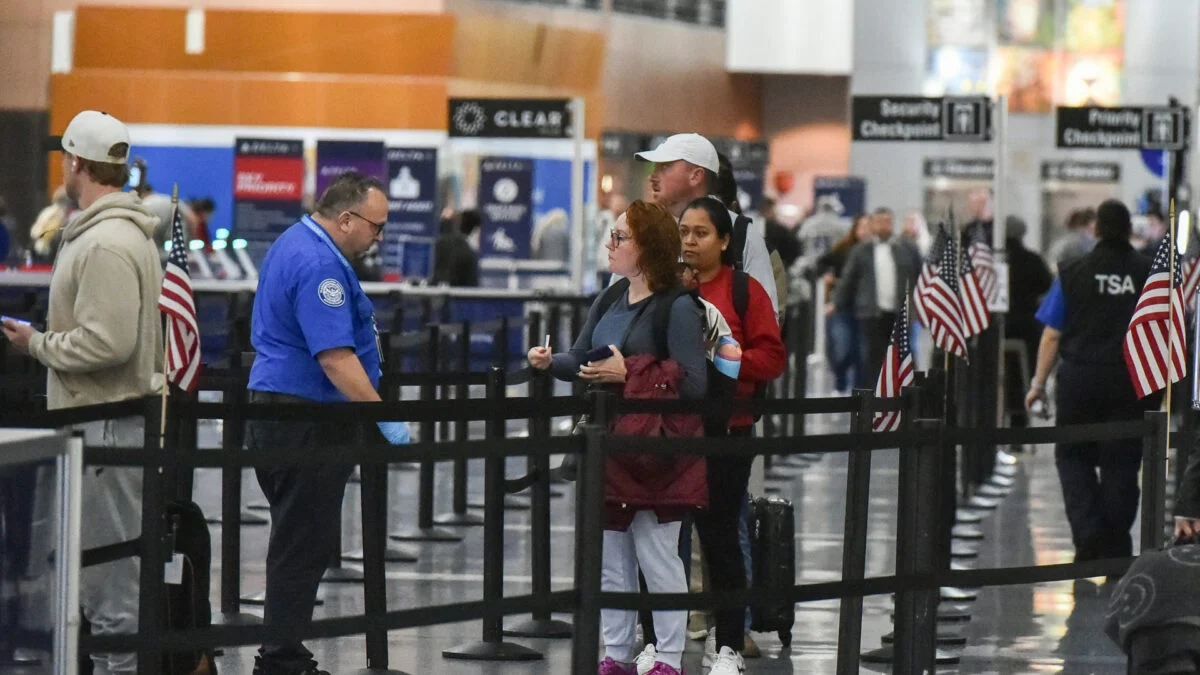
I remember standing in Logan’s security line last winter, watching a mother juggle a toddler and two carry-ons while the clock ate our boarding time. You expect airports to be chaotic; you don’t expect someone to hand you the option of skipping most of the mess entirely. Starting June 1, some fliers out of Boston will be able to check bags, clear TSA and ride a bus 25 miles to an entrance that drops them almost at the gate.
I’ll walk you through what’s real and what’s experiment, what it costs, who’s in charge, and what this could mean for Boston—and for airports everywhere. You’ll get the details you’d search for if you were planning a trip, plus the trade-offs you won’t find in the press release.
Security lines snaking past the cafes — how the Framingham remote terminal actually works
The new remote terminal sits in Framingham about 25 miles from Logan. You check in, drop checked bags, pass through a full TSA screening there, then board a bus run by Landline that takes you straight to a special Massport entrance beyond the public checkpoint.
That bus costs $9 (€8) one way; parking at the Framingham facility is $7 (€6) per day. Reservations open on Massport’s site from 90 days to as late as 90 minutes before departure. For the pilot phase the service is limited to Delta and JetBlue flights between 5:30 a.m. and 4 p.m., and only a small number of seats will be available while officials watch how it performs.
Massport CEO Rich Davey frames it plainly: “Imagine arriving at the airport having already checked in and cleared security and then being dropped off just steps from your gate,” he said. For you, that’s less time in line and less chance of a last-minute sprint through concourses.
How does remote TSA screening work?
TSA certifies a full screening operation at the remote site. Agents run the same checks you’d see at Logan: identity verification, carry-on X-rays, and any additional screening protocols. Once cleared, you board the Landline shuttle that delivers you to a secured entrance inside Logan—so you’re already past the public queue when the bus pulls up.
Streets jammed with Ubers at rush hour — why Massport thinks a bus could change commuter behavior
Boston’s traffic bleeds into the airport experience: expensive rideshare fares, crowded lots, and drivers circling terminals. Massport wants to push more people toward high-occupancy options.
Last year, about 22% of Logan passengers used a high-occupancy option like the MBTA or Logan Express, Massport says. The agency hopes the remote terminal will raise that share, easing street congestion and trimming the cost for travelers who would otherwise pay for a private ride. The Framingham site sits near an existing Logan Express stop, and officials say success there could mean remote screening at other express bus locations.
This is tactical: think of the program as like a VIP fast-pass through a festival—it changes the calculus for travelers choosing between an expensive ride and a cheaper, predictable bus option.
How much does the Logan remote terminal cost?
Expect to pay $9 (€8) each way for the shuttle plus any parking fees if you leave a car at Framingham ($7 (€6) per day). The service’s price is positioned to undercut many rideshare trips, especially during peak hours.
A notice in the Wall Street Journal last year — why the pilot matters beyond Boston
The idea has roots in wider TSA thinking: after record security waits earlier this year, TSA officials told outlets like the Wall Street Journal they were exploring off-site screening at nontraditional locations.
TSA acting deputy administrator Adam Stahl has floated possibilities as broad as cruise terminals and theme-park complexes, and the agency is watching Massport’s pilot closely. If the Framingham experiment proves safe, scalable and popular, airports across the country could borrow the model—changing where screening happens and how passengers reach terminals.
That would turn a local convenience test into a national operating playbook, with implications for staffing, liability, and how we think about airport real estate.
Will remote screening be available for all airlines?
Not right away. The pilot is limited to Delta and JetBlue during set hours. Expansion would depend on operational results, airline buy-in, and TSA approvals. If you fly another carrier, you’ll have to wait and watch—or try to time travel.
Practical risks remain: delays on the shuttle route could strand passengers, and the pilot’s limited hours won’t solve late-night crowds. You should weigh the savings against the new schedule constraints and that lingering fear—what if your bus is late?
I’ve seen pilots like this sway traveler behavior when they make the trip predictable and cheaper; they fail when complexity creeps back in. The real test will be whether Massport, Landline, Delta and JetBlue can keep the system tight and timely—because if they do, other hubs will be watching closely and learning fast. Will this remote terminal become a model or a curiosity you read about once and forget?