I was on a charging island when a stranger tapped my window and asked if my Tesla’s Full Self-Driving was enabled. I shrugged, but the question landed like a small stone in a glass bowl. You can feel a change in the air: cars are starting to ask for ID.
I keep an eye on Tesla app updates; today the code strings hidden inside an iOS build read like a preview of a new policy. Electrek and an X account called Tesla_App_iOS flagged entries such as fsdIdentityCheckFailedTitle and showFsdIdentityCheckFailedDialog, which suggest the cabin camera could verify who’s behind the wheel before Full Self-Driving (Supervised) will engage. That code is not a shipped feature yet — it could be weeks or months, and would likely require a firmware push — but the hint is unmistakable.
What I saw at a charging lot and why the app strings matter
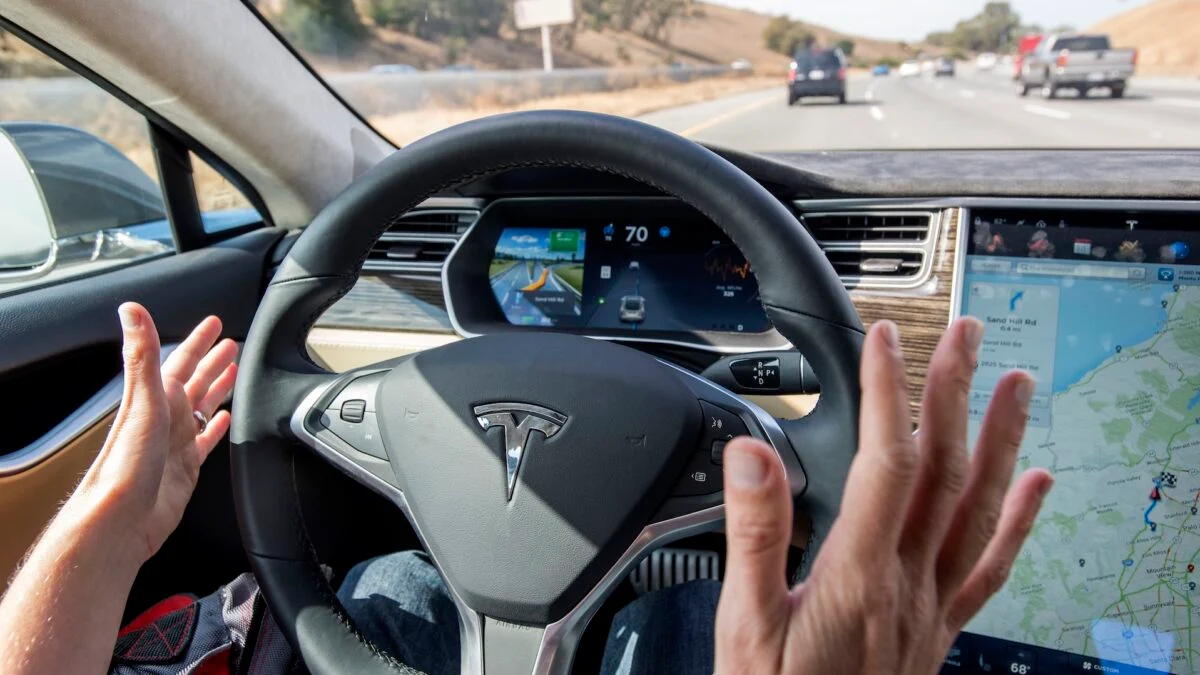
At the lot, two drivers argued about whose account paid for FSD; that small fight explains the economic logic here. Full Self-Driving is sold as a subscription and Tesla has reasons to stop unauthorized users from borrowing someone else’s feature. The cabin camera above the rearview mirror already watches for inattentive eyes and nodding heads; the new strings point to a step beyond attention monitoring.
Will Tesla require ID to use Full Self-Driving?
The code hints that the car could block FSD if the cabin camera cannot match the driver to an authorized profile. You should know this would not be a sudden hardware rollout — Tesla can repurpose the existing cabin camera and push a software update. That said, turning driver detection into identity verification raises questions about accuracy, false rejections, and the customer experience.
The cabin camera is a quiet bouncer at the car’s door. If engaged, this system would be both a product control and a loss-prevention measure: it protects subscription revenue and reduces liability if a car is used by someone the account holder did not authorize.
I watched developers and privacy advocates react in real time
Within hours of the strings surfacing, researchers and privacy-focused journalists flagged the implications — that reaction is part alarm, part curiosity. Governments have already moved toward age and ID checks online: Australia, the U.K., Brazil, and several U.S. states have pushed platforms to verify users for age-restricted content. Those precedents give regulators and companies a playbook for requiring verification in other contexts, including vehicles.
How would the cabin camera verify a driver?
Right now Tesla’s camera detects gaze and head pose to score attention; code strings point to an identity match step next. Implementation could range from profile-based face templates stored locally to more advanced biometric matching tied to an account. Platforms like Discord already contract third-party vendors in regions with legal verification requirements, and startups such as Sam Altman’s World have pitched eye-scanning hardware (the Orb) as a way to create persistent IDs — a reminder that several players want to move identity off paper and into sensors.
Full Self-Driving would act as a digital passport stamped to the driver’s face. That metaphor carries the practical trade-offs: tighter control and a smoother billing model for Tesla, but new privacy and consent problems for drivers.
Will drivers accept biometric ID checks?
Public sentiment is mixed. A recent Pew Research Center note shows Americans support some age verification online but are uneasy about handing over ID documents to platforms. A separate survey by insurance site The Zebra found most drivers resist car features that limit their control, like mandatory speed limiters. Those attitudes suggest a launch with friction: people will tolerate safety nudges more than perceived surveillance or monetized gatekeeping.
I’ll tell you what to watch for next: official notices in the Tesla app, a vehicle firmware update that references identity or profile gates, and regulatory filings mentioning biometric checks. Keep an eye on Electrek, X threads from Tesla_App_iOS, and the company’s own release notes; they often telegraph product moves before press statements.
Tesla did not respond to requests for comment, and until code becomes firmware the change remains speculative — but the direction is clear: ID verification is leaving websites and stepping into the driver’s seat. How far will you let your car look into your face before it decides whether you can drive?