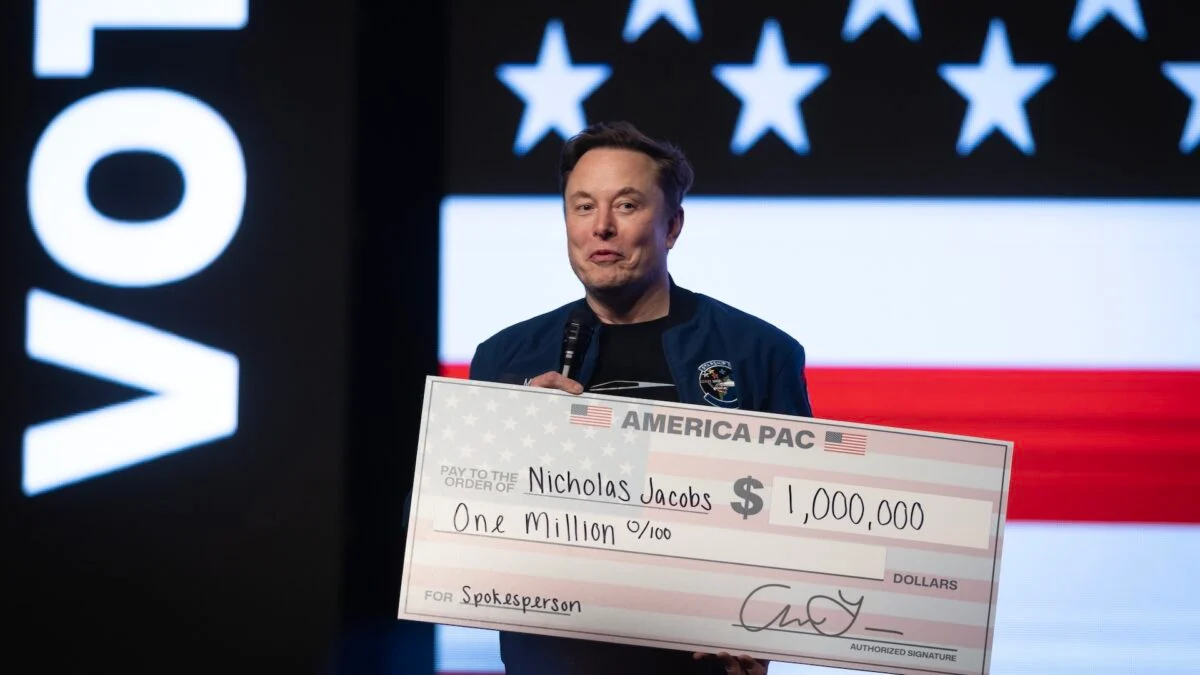
I watched a man with the planet’s largest bank account step onto a Wisconsin stage and offer two strangers life-changing checks. You could feel the room tilt—part circus, part campaign. Those two pieces of paper changed the story faster than the TV anchors could catch up.
I’ll be direct: I followed the filings, the tweets on X, and the quiet vote in the Wisconsin Elections Commission so you don’t have to. You deserve a clean line from act to consequence, and I’ll point out where the law might still bite back.
Crowds gathered in Green Bay the night Musk promised to hand out million-dollar checks
The SpaceX and Tesla founder posted on X that he would give away two $1 million (€920,000) checks to people tied to the state’s Supreme Court election. His original announcement—tying entry to voters—was deleted and revised after lawyers warned it could violate state bribery laws.
His revised message tried to recast the gifts as rewards for petition spokespeople, but the Wisconsin Elections Commission found the social-media offer close enough to trigger an investigation. The checks were more than spectacle: they were a public act that created documentary traces for prosecutors to follow.
The race for the Wisconsin Supreme Court became the most expensive state judicial contest on record
Outside spending flooded in: the contest topped $100 million (€92 million) from outside interests, with Musk personally spending at least $3 million (€2.8 million) and affiliated groups like America PAC and Rebuilding America’s Future adding roughly $19 million (€17.5 million).
That level of spending turned a judicial contest into a national proxy fight. I’ve tracked similar dollar-driven plays before: money buys reach, and reach shapes fact patterns that prosecutors and election officials must untangle.
Can Elon Musk be charged with bribery for handing out money to voters?
Short answer: yes, he could be charged. The Wisconsin Elections Commission found probable cause that Musk’s post offered $1 million (€920,000) to induce votes, and it referred two complaints to the Brown County District Attorney. Referral doesn’t equal indictment, but it hands prosecutors a path and probable-cause findings they can use.
Brown County’s DA will weigh statutes designed to prevent offering money to influence votes. The Attorney General, Josh Kaul, tried to block the event before it happened and lost in court—but loss in civil or injunction hearings is not the same as criminal immunity. The DA can still pursue charges even after courts declined preemptive relief.
One well-timed tweet was enough to set off legal alarms at the Wisconsin Elections Commission
The commission voted 5–1 in a closed session to send the complaints onward, and the Milwaukee Journal-Sentinel reported on the referrals. That procedural step is significant: election authorities are treating the episode as more than theatrics.
For you trying to read the playbook, notice how the sequence matters: public offer → revised post → public handing of checks → administrative finding → referral to the DA. Each step multiplies risk for the person making the offer.
What penalties could Musk face in Wisconsin?
Penalties vary. Bribery statutes can carry fines and jail time, and convictions can bring collateral consequences beyond punishment—restrictions on political activity, reputational damage, and civil suits. Given Musk’s influence and resources, a criminal case would be litigated in public and in the press, with high-profile legal teams and media outlets like the Associated Press and the Milwaukee Journal-Sentinel scrutinizing every move.
The complaint lands at the Brown County District Attorney’s office after the commission’s referral
That referral puts a local prosecutor in the middle of a national story. The DA’s office will review evidence, talk to witnesses, and decide whether to file charges that could lead to indictment.
I’ve seen cases like this hinge on one question: was the money offered to induce a specific vote or to reward civic participation in a way protected by speech? The difference between campaign speech and criminal inducement can be narrow—and that’s where prosecution strategy will focus.
The political fallout is already rolling—even if criminal consequences do not arrive
Susan Crawford won the seat by about 10 points, but the episode sharpened debate about whether wealthy individuals can reshape elections with cash and spectacle. Voters, advocacy groups, and other donors watched how the state responded.
There’s a second-order cost here for Musk’s brands—X, SpaceX, Tesla—and for the PACs that funneled tens of millions into the race. Brands bleed when legal stories attach to their leaders, and boardrooms and PR teams will be watching the DA’s next moves closely.
The checks were neon billboards for influence. The legal chase now plays out like a chess game with rules that bend under pressure.
I’ll leave you with this: if the Brown County DA files charges, we will see whether Wisconsin’s laws can hold a billionaire accountable in practice, not just on paper—what will you be watching for next?