I was in Detroit when the letter hit the newswire and the room went quiet. You could see reputations being measured in headlines. Suddenly Ford’s boardroom calculus had the White House’s attention.
I’ve followed corporate-government scuffles for years; you learn to read the tremors. This one matters because it folds manufacturing, national security, and trade policy into a single, visible fight. I’ll walk you through what Duffy said, how Ford answered, and why the outcome could reshape where cars are built and who gets paid.
Secretary Duffy’s note landed on a summer afternoon and accused Ford of deepening ties with Chinese state-backed companies.
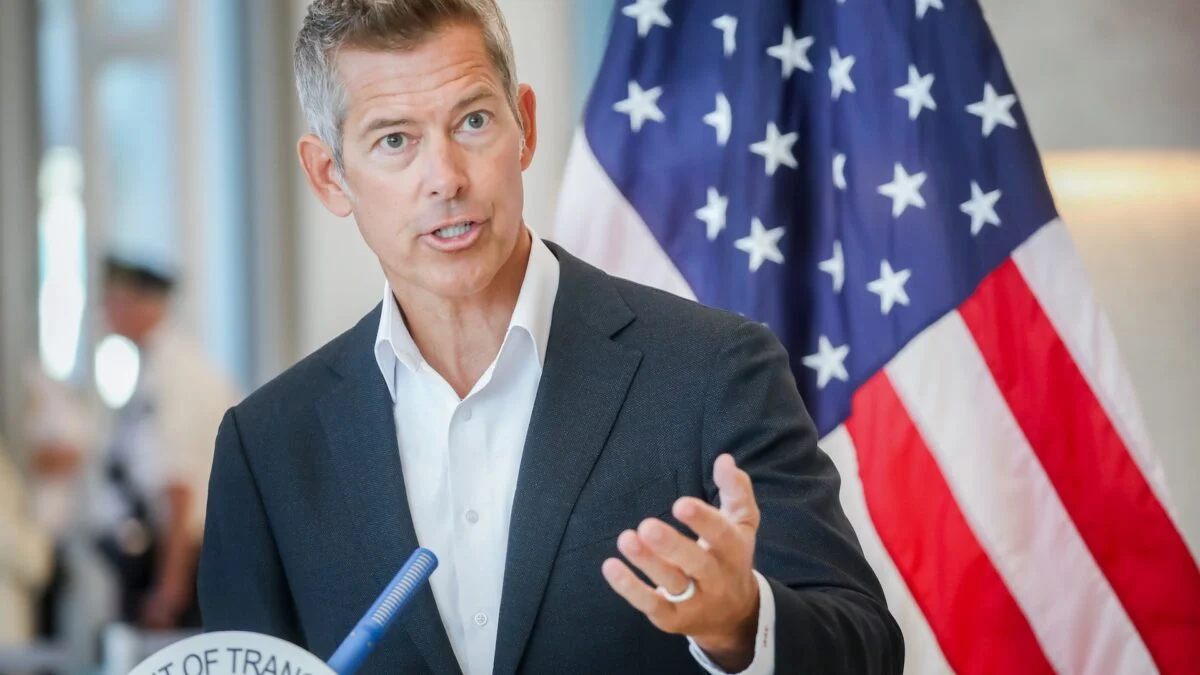
The Department of Transportation’s signed letter criticized Ford for licensing battery technology from CATL to use at BlueOval Battery Park Michigan and for partnerships tied to Geely and BYD. Secretary Sean Duffy framed those moves as a strategic dependence that could jeopardize “national and economic security,” and he singled out a proposal at the Detroit Auto Show that he said might enable joint ventures between U.S. and Chinese automakers.
Duffy’s language was blunt: he argued that an iconic American manufacturer should chart “clear paths to technological self-reliance.” The DOT made the letter public through the NHTSA docket, turning what might have been a private outreach into a public rebuke.
Why is the Department of Transportation targeting Ford over its China ties?
The DOT says the concern is not commerce for commerce’s sake but the risk of operational dependency on rivals that are backed by foreign states. You should read that as a warning: when essential technologies or supply chains are sourced from strategic competitors, regulators see national security colors.
Ford’s response landed within hours and called the move “wrongheaded” while defending jobs and investments.
Ford pushed back hard. The company described its CATL arrangement as a limited technology-licensing and services deal — not a joint venture or foreign-owned factory — and highlighted a $3,000,000,000 (€2.8 billion) investment in the Michigan battery site that the White House recently praised as part of a manufacturing renaissance.
Jim Farley has publicly argued that Chinese automakers shouldn’t be allowed into the U.S., and Ford noted that it’s bringing battery production and roughly 1,700 jobs to Michigan. The company also suggested that Duffy might have sought details before going public, which reads as a political finger wag aimed right at process and optics.
Will Ford’s CATL deal threaten U.S. manufacturing?
It depends on how you define “threat.” If the measure is lost jobs or foreign control of factories, Ford argues the opposite: U.S. jobs are being created at BlueOval. If the measure is technological dependency — particularly in battery chemistry, software, or control systems — regulators and some senators see a longer-term vulnerability that they want to close.
The public clash is not just about contracts; it tracks with a broader push in Congress to tighten rules on Chinese vehicles and tech.
Lawmakers have already advanced measures that would make it harder for Chinese-made cars or connected vehicle systems to enter the market — including a 100% tariff on Chinese cars plus existing import duties and Commerce Department restrictions on certain connected-vehicle hardware and software tied to China or Russia. Senators Elissa Slotkin and Bernie Moreno have championed the Connected Vehicle Security Act of 2026, which the Senate Commerce Committee advanced unanimously.
That push turns corporate decisions into political leverage. You’re watching policy and public relations feed one another: lawmakers use high-profile disputes to argue for legislation, and agencies use letters to push companies toward voluntary changes.
Could Chinese automakers be blocked from the U.S. market?
Short answer: yes, if lawmakers keep moving. Between tariffs, Commerce Department controls, and new statutes like the Connected Vehicle Security Act, the legal pathway for Chinese automakers to sell in the U.S. is narrowing. Companies like BYD and Geely will find it harder to scale stateside without policy shifts.
On the ground the stakes are concrete: factory plans, joint-venture templates, and a timetable for Lincoln models shifting production back to the U.S. beginning in 2030.
Ford’s plan to move some Lincoln production back from China in 2030 still leaves years of dependency, and that’s part of Duffy’s gripe. I see this as less a moral failing than a strategic one: the company is hedging between near-term cost efficiencies and longer-term supply sovereignty.
This tug-of-war plays out across boardrooms and halls of power. The White House and Commerce Department already use tools like export controls and tariffs, and the DOT’s public letter adds reputational pressure. The moment feels like a fuse burning under the hood.
Who’s got the authority and what platforms are shaping the narrative?
Regulators — DOT, NHTSA, Commerce — and lawmakers set the rules; media platforms and trade shows shape the story. Fox & Friends and Bloomberg amplified Jim Farley’s anti-import comments, while the White House promoted Ford’s Michigan investment in public releases. The Senate Commerce Committee’s unanimous advancement of security legislation shows bipartisan appetite to act.
Companies now must answer to regulators, legislators, investors, and consumers at once. You can see why a single licensing deal with CATL turns into a six-front politicized debate.
So what should you watch next as this plays out?
Watch for two things: formal rule changes and the tone of corporate disclosures. If legislation like the Connected Vehicle Security Act becomes law, it will harden the regulatory landscape. If other automakers follow Ford’s path of public pushback, you’ll see more companies publicly defending supply-chain choices.
The auto market is a chessboard; each move by regulators forces countermoves by industry and vice versa.
I’ll keep watching this as it intersects with President Trump’s meeting with Xi on Sept. 24, where trade, AI, and industrial policy will be on the table. Ford and the administration have staked public positions — now the real bargaining begins. Which side will blink, and what will that cost American manufacturing and national security alike?