I watched the markets blink before the vote, then saw the president’s Truth Social post light up my feed like a flare. You can feel the tug — the White House yelling for lower rates while the Fed quietly tightened its grip. I’ll walk you through what that fight means for your wallet and for markets that don’t respond to slogans.
Trading desks went quiet after the vote: The Fed raised rates by a quarter-point
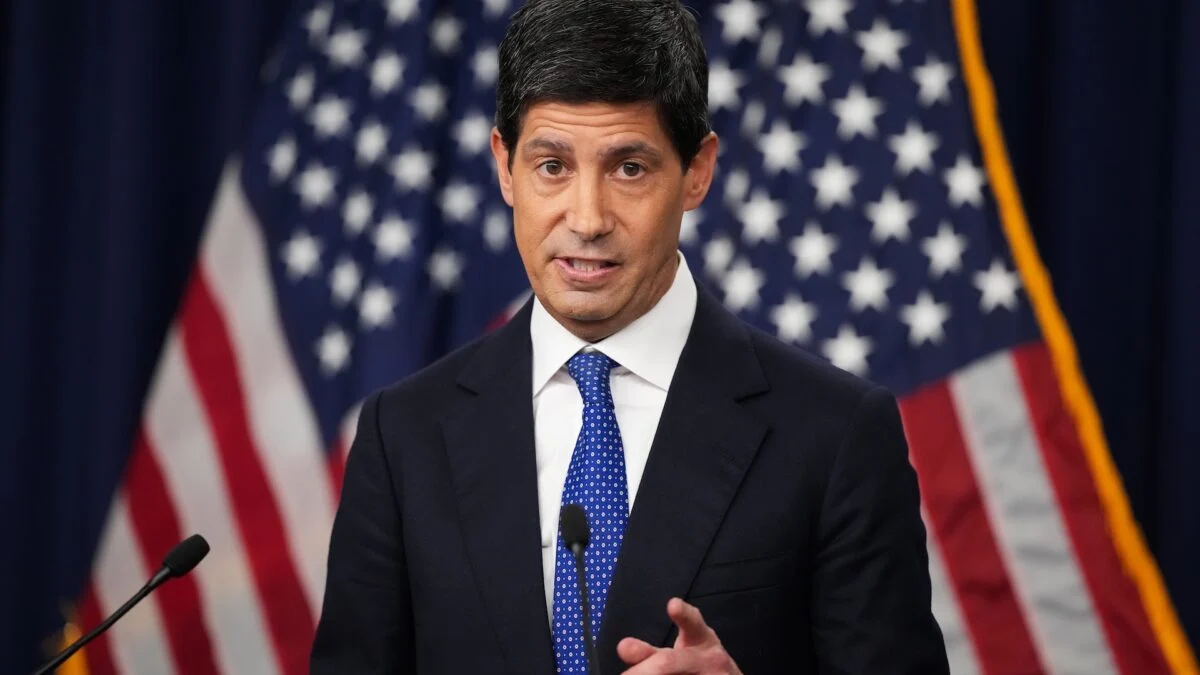
The Federal Reserve boosted its benchmark by 0.25 percentage points on Wednesday. I listened to Fed chair Kevin Warsh call inflation “too high and has been for too long,” and then watched trading floors digest the decision.
Warsh voted with the rest of the board in a unanimous decision. The Dow slid about 1.5% intraday and finished down 619 points (1.1%), a visible market hiss as risk assets recalibrated. For founders and venture firms who’d hoped for an easier money cycle — many of them quietly watching on X and Truth Social — the message was a cold one: don’t count on rate relief just because a president asks for it.
Will a 0.25% Fed hike slow inflation?
A quarter-point move is a tool, not a cure. It nudges borrowing costs, cools credit growth over months, and signals resolve. But it can feel like a bandage on a bullet wound when supply shocks are still bleeding through the system.
Reporters asked plain questions at the podium: Can rate policy solve supply shocks?
A CBS reporter opened Wednesday by pointing out what you already know: rate hikes don’t reopen the Strait of Hormuz. Warsh answered that the Fed can try to stop price changes from broadening into second- and third-order effects, but he didn’t promise miracles.
That matters because the war in Iran has been a steady inflation amplifier. About 20% of global oil transits the Strait of Hormuz. Diesel prices in the U.S. hit an average of $6.31 (€6) per gallon — up from roughly $3.70 (€3) a year ago — and those pump prices ripple into freight, groceries, and electronics. Airline fares climbed too: the average domestic ticket sits at $397 (€365), up from $288 (€265) a year earlier, according to Kayak.
CBS News’ @RichardEscobedo: “A quarter-point rate hike does not reopen the Strait of Hormuz. And so, I wonder how you think the smaller rate hikes will be effective when it can’t necessarily address the energy supply side of inflationary pressures?”
Fed Chair Kevin Warsh… pic.twitter.com/9GYaFdchBr
— CBS News (@CBSNews) September 16, 2026
Do tariffs and the Iran war drive inflation?
Yes. Tariffs raise input costs; conflict squeezes supply routes. Add higher diesel and airfare to those price shocks, and headline inflation will stay stubborn until the supply picture clears — or demand weakens enough to compensate.
There was a Truth Social flare-up Wednesday: Trump demanded lower rates and radical trade moves
President Donald Trump posted that interest rates “should be 1%, or less” because the U.S. is “the Best Credit in the World — BY FAR.” He argued lower rates would unleash investment and floated cutting off trade with countries the U.S. runs deficits with, claiming it would net “at least $1.5 trillion a year” ($1.5 trillion; €1.4 trillion).
You and I both know stopping trade with most partners would not boost net income; it would disrupt supply chains, inflate producer costs, and likely shrink growth. Several prominent tech VCs, who had banked on looser money under a second Trump term, were oddly quiet after the Fed vote — maybe waiting for a presidential cue that never came.
Can Trump force the Fed to cut rates?
Formally, no. The Fed is independent by design. The political reality is different: presidents can swap leadership. Trump ousted Jerome Powell and installed Kevin Warsh after Powell resisted calls for early easing. But replacing a chair doesn’t change macro facts — supply constraints, oil shocks, and wage-price dynamics still move the economy.
Damage and optics in the region were visible: Military setbacks and tanker attacks shape the price backdrop
CBS reported new photos showing damage to U.S. bases in the region. Fox’s Trey Yingst flagged an attack on a U.S.-contracted vessel in the Strait of Hormuz this week, with drones and at least one missile involved. Those incidents are geopolitical triggers that investors price immediately and policymakers watch nervously.
When supply is threatened, prices can build like a pressure cooker — and monetary policy must pick its moments carefully. The Fed signaled two or three potential future hikes, and some economists expect at least one more before year-end, per reporting from Heather Long and others.
So where does that leave you? Higher borrowing costs, pricier travel, and a gasoline bill that still stings. Warsh voted to raise rates; Trump demanded cuts on Truth Social; markets and consumers absorbed both messages and kept moving. Who wins when political theater meets economic reality — can rhetoric bend market mechanics or will markets force politics to follow?
Are you ready to bet your savings on a social-media decree, or will you let data and price signals decide the next move?