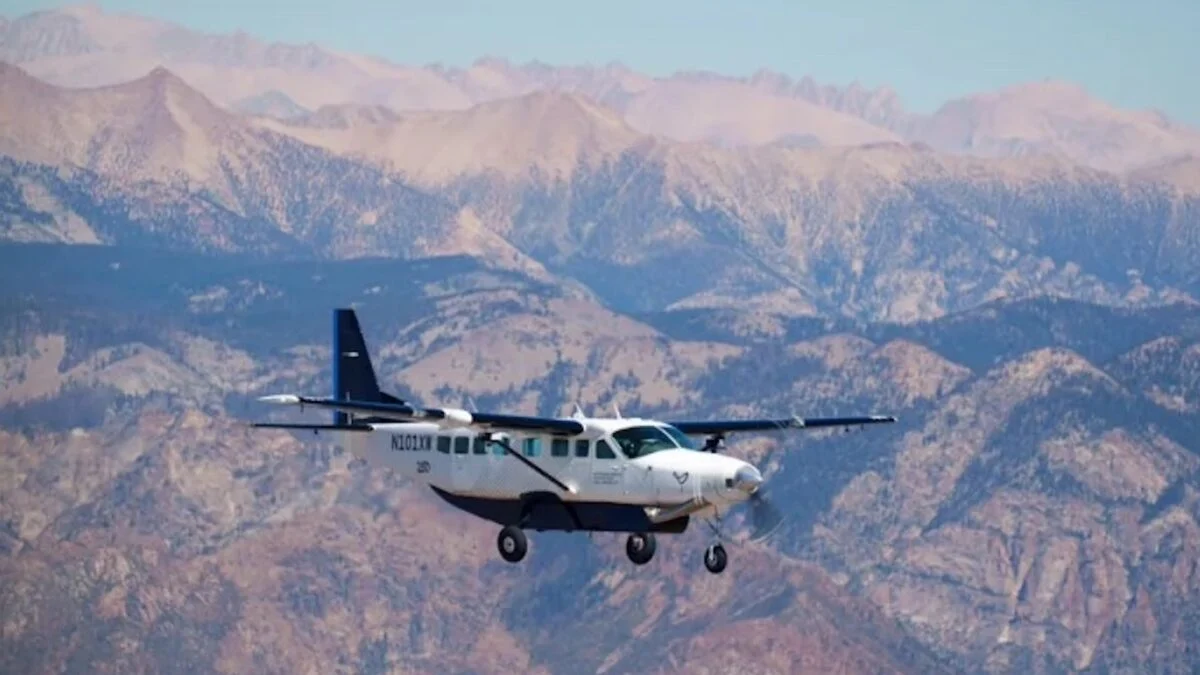
The cockpit was silent except for a soft whirr and the hum of instruments. I watched a converted Cessna lift off from Buchanan Field with a person onboard who never touched the controls. By the time it touched down in North Carolina seven days later, the plane had crossed the continental United States on its own.
I want to walk you through what happened, why it matters, and the questions you should be asking. You won’t get a lecture—just the facts and a few things I’ve learned looking closely at Joby Aviation’s playbook.
The runway at Buchanan Field was glass-calm the morning the flight began — the Cessna Caravan left California on September 7
The aircraft was a single-engine Cessna Caravan retrofitted with Joby’s J208 autonomous flight system. Over the course of a week it covered 3,199 miles (5,148 kilometers), hopping from California to Arizona, Texas, South Carolina, and finally to Dare County Regional Airport in the Outer Banks on September 14. The trip included deliberate stops in busy airspace to show the system could handle traffic density without a human stepping in.
The safety pilot remained onboard only to satisfy Federal Aviation Administration rules; Joby says the pilot never made a single control input. Remote teams provided supervision from Joby’s California headquarters and from Shaw Air Force Base, and the company says every phase — takeoff, cruise, routing, and landing — was handled autonomously.
How far did the autonomous plane fly?
The trip totaled 3,199 miles (5,148 km). That’s coast-to-coast range for this test article and a staged demonstration of long routing under autonomous control, not a single non-stop hop.
At Phoenix Deer Valley the morning was hot and the tower was busy — the flight paused to prove handling in dense airspace
Joby is best known for its electric air taxis, but this exercise shows the company is stretching its autonomy beyond short hops. The Caravan in this run became a silent courier, a metal postman threading the country’s arteries — proof that the autonomy stack can move beyond urban shuttles into freight, medevac, and military logistics.
The company is backing that pivot with deals and acquisitions. Last month Joby acquired Resonant Sciences for $500 million (€460 million) to fold radio-frequency and sensor expertise into a new defense division, TechCrunch reported. In August 2025 Joby also signed an agreement with L3Harris Technologies to explore a gas-turbine hybrid VTOL that could operate with autonomous systems.
Was there a pilot onboard during the flight?
Yes — a safety pilot was present to meet FAA requirements. According to Joby, that pilot never intervened. Remote monitoring teams in California and at Shaw AFB observed and supervised the journey.
The plane landed on the Outer Banks but its work isn’t finished — a planned return route will visit Washington, D.C., Kentucky, Kansas, Oklahoma, Utah, and Oregon
Joby’s CEO, JoeBen Bevirt, framed the trip as a preview of “a new era of aviation.” He suggested autonomy could link remote towns, speed disaster response, deliver critical supplies, and reduce risk to crews. I think of Joby’s autonomy as a second pair of eyes that can keep pilots out of harm’s way — and as a tool that military and commercial operators will test hard for reliability and safety.
Is autonomous flight safe?
Safety here is a moving target and regulator-driven. This flight shows the software can follow procedures and handle real-world traffic without human correction, but it’s one demonstrative run. The FAA presence in the loop, the onboard safety pilot, and remote supervision were all part of risk management for a mission that’s testing limits, not a finished product rolling out to consumers.
For you — whether you’re an operator, investor, or pilot — the live takeaway is twofold: the technology now passes controlled stress tests, and Joby is actively folding sensor and defense capability into its stack. That combination will attract operators like airlines, freight firms, and defense contractors who want autonomy with scalable sensor suites and redundant oversight.
We’re watching a company that started with air taxis extend into logistics and defense, and that raises practical questions about regulation, runway infrastructure, and public acceptance. If the Caravan’s coast-to-coast run reads like a proof of concept, the real test will be repeated, hardened missions in real commercial service.
You’ve seen the headline numbers. What you should be asking next is: who will write the rules for an airspace where planes can fly themselves — and who gets to decide which missions are trusted to autonomous systems?