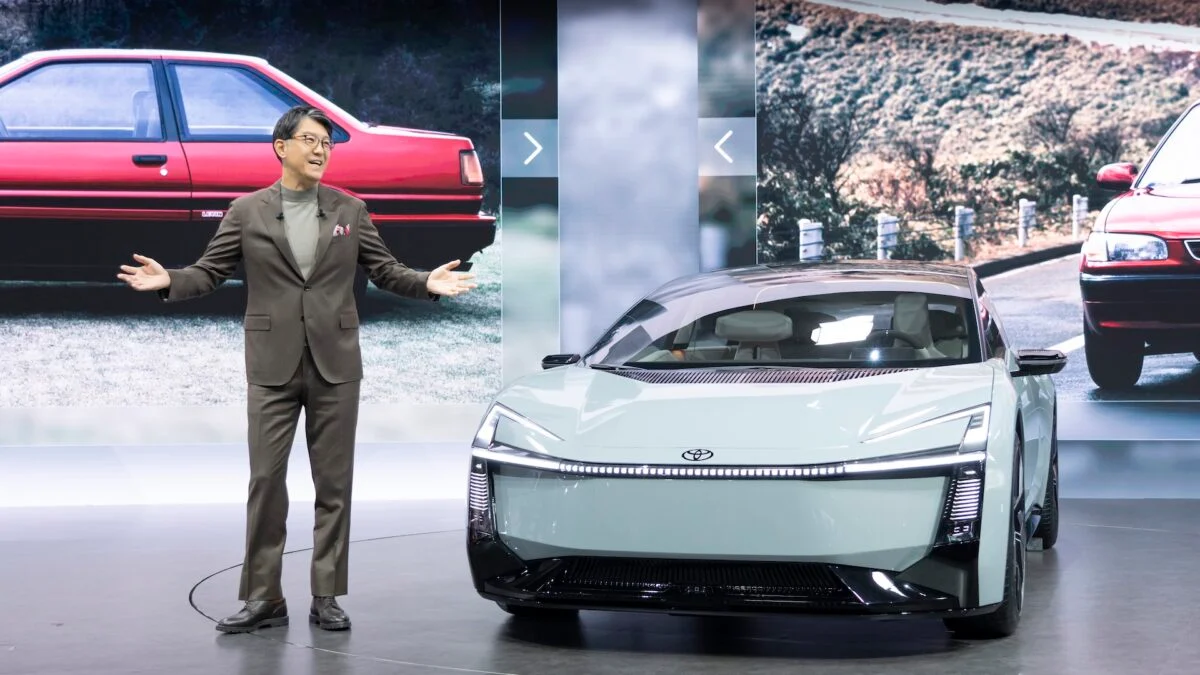
They dimmed the lights and everyone stopped. The Corolla concept sat under a single beam, drawing a small crowd of engineers, dealers, and journalists. You felt, in that quiet, that something ordinary was about to refuse ordinary anymore.
I follow this story because I care about where everyday cars go next, and you should care because the Corolla has quietly shaped how billions drive. I’ll walk you through what Toyota has said, what insiders are testing, and why a fully electric Corolla would matter to drivers, dealers, and cities. Read on and we’ll separate hype from what you can actually expect.
On the showroom floor at the 2025 Japan Mobility Show I watched people circle a sleeker silhouette.
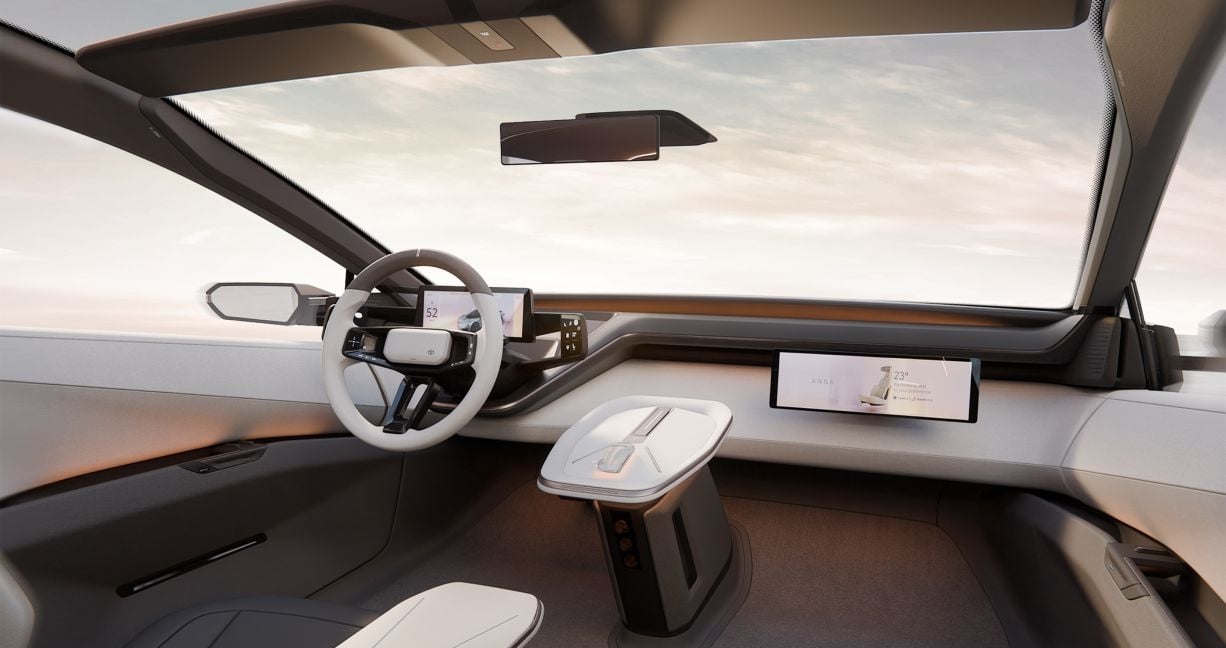
The concept Toyota showed wasn’t coy. It traded the rounded, friendly face we associate with the Corolla for sharper lines and a more futuristic cockpit, a move Toyota Newsroom documented in photos. Car and Driver reported this redesign signals a serious effort to reposition the Corolla beyond economy-car status.
That crowd reaction matters: the Corolla has sold more than 57 million units since 1966, and Toyota still sold 248,088 Corollas in the U.S. in 2025, per Kelley Blue Book rankings. Those are not numbers you move without intent.
There was a tension in the air—equal parts nostalgia and appetite for change. Think of the redesign as a veteran boxer getting a modern training regime; the face is familiar, but the way it will fight is different.
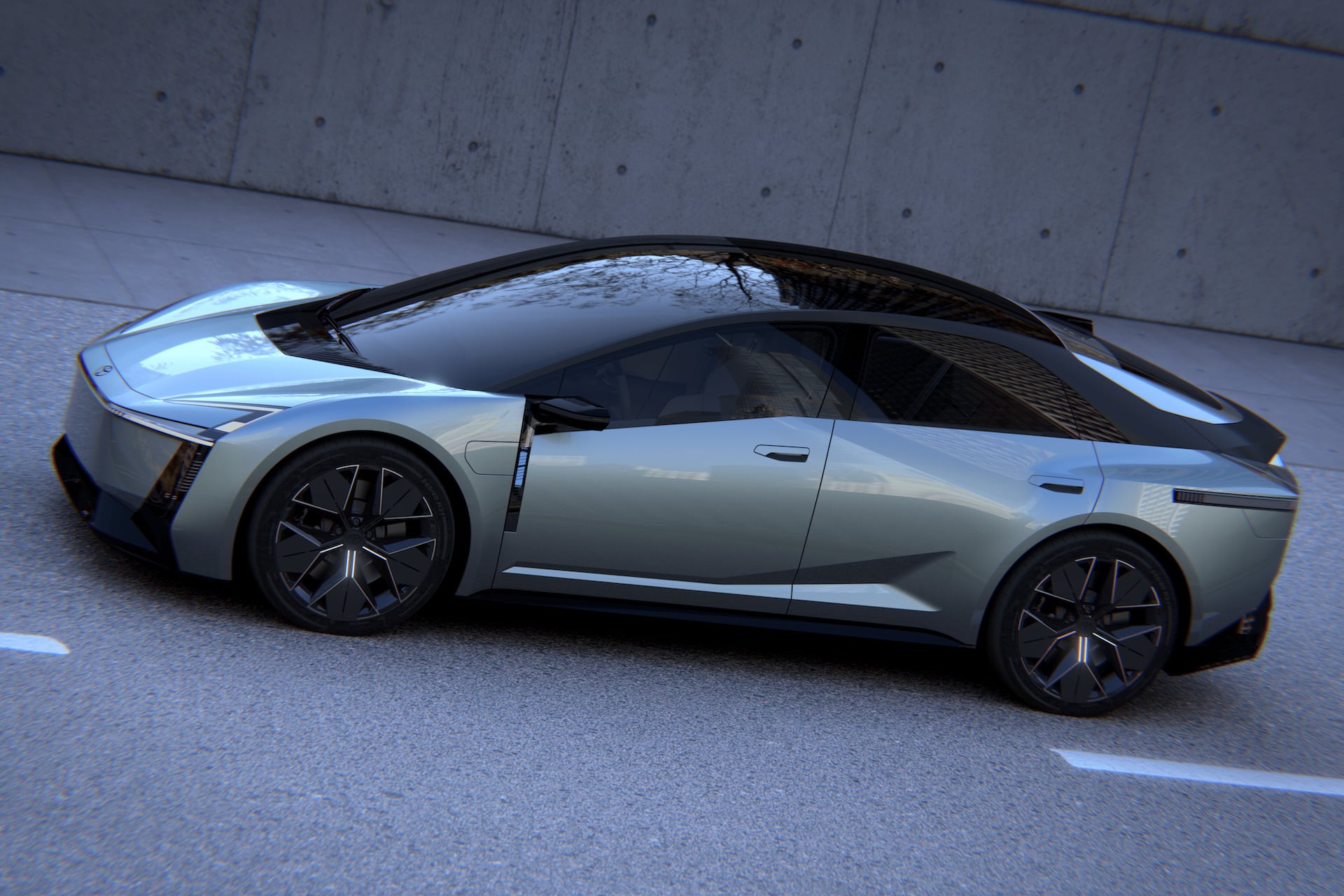
In a development facility I was told engineers were testing a flexible new platform.
Toyota engineers have been quietly reworking the Corolla’s underpinnings so a single platform can support gasoline, hybrid, plug-in hybrid, and fully electric drivetrains. NHK’s report—and Electrek’s coverage of that report—showed a secret site where prototypes are being tuned for each use case.
Car and Driver says the hybrid update will pair a 1.5-liter four-cylinder with an electric motor for roughly 134 horsepower and a fuel-efficiency improvement of about 10–20% over today’s hybrid setup. But the headline is the first-ever plug-in hybrid and a fully electric Corolla.
Engineers describe the plan as pragmatic: keep options open for markets that still prefer combustion while preparing a true EV for regions moving aggressively toward electrification.
Will the Corolla be electric?
Toyota hasn’t issued a final production reveal, but multiple outlets—Car and Driver, NHK, and Toyota Newsroom—report that a fully electric Corolla is planned for the next generation. The company is testing single- and dual-motor layouts and building the platform to host an EV variant.
At a Toyota briefing I heard the chairman warn against complacency.
Akio Toyoda told NHK that technological change and mounting competition are unavoidable, and that Toyota risks stagnation if it rests on past successes. That warning is not theatrical; it’s a direct response to Tesla, Volkswagen, and a rising number of Chinese brands racing for affordable electrics.
If Toyota intends the Corolla to remain a global volume leader, electrifying it is more than green PR—it’s a defensive play and an offensive one. This is where strategy meets market reality: sellers want familiarity; regulators want cleaner fleets; buyers increasingly want electric options without premium pricing.
When will the electric Corolla arrive?
Expect the new Corolla family to launch for the 2028 model year, with models arriving sometime in 2027 for dealers and press preview. That timeline matches reporting from Car and Driver and the cadence Toyota has used for concept-to-production cycles.
At a dealer I found price sheets that suggested careful positioning for affordability.
Reports peg the base gasoline Corolla at about $25,000 (€23,000), the hybrid near $27,000 (€25,000), and the plug-in hybrid and EV in the neighborhood of $30,000 (€27,000). Those are estimates from Car and Driver and signal Toyota may aim for mainstream competitiveness rather than premium margins.
If Toyota delivers a 250-mile (or more) electric range on a single-motor or dual-motor Corolla, as reported, the model could shift the EV price/performance bar—particularly in suburban and urban markets where brand trust matters.
The math matters for you as a buyer: priced this way, the Corolla EV would compete directly with compact EVs from established brands and new entrants, affecting resale values and dealer incentives.
How much will the electric Corolla cost?
Car and Driver’s estimates place the EV and plug-in options near $30,000 (€27,000). Final pricing will depend on battery size, powertrain choice, and how Toyota handles features that buyers now expect—driver assist, over-the-air updates, and improved infotainment.
On the factory floor you could feel the practical pressure on Toyota’s engineers.
Tension isn’t just marketing theater. Toyota needs to protect its massive Corolla franchise while answering regulatory pressure and competitors’ rapid EV moves. Executives and engineers I followed are balancing legacy production lines with new battery sourcing and software partners.
There is a cultural moment here: Toyota’s caution has been its strength in reliability, but it also risks being late to the mainstream EV contest. The company appears to be choosing breadth—offering gas, hybrid, PHEV, and EV—rather than going all-in on a single path.
Think of this shift as a wardrobe change; the Corolla may be keeping its silhouette but putting on a different outfit for tomorrow’s streets.
I’ll keep tracking official reveals from Toyota, prototype testing updates reported by NHK and Electrek, and first drives from outlets such as Car and Driver. You should watch pricing and range specs closely—those will tell you whether this is a conservative refresh or a genuine redefinition of the world’s best-selling car. Are you ready to defend the Corolla’s legacy, or is it time to demand it do more?