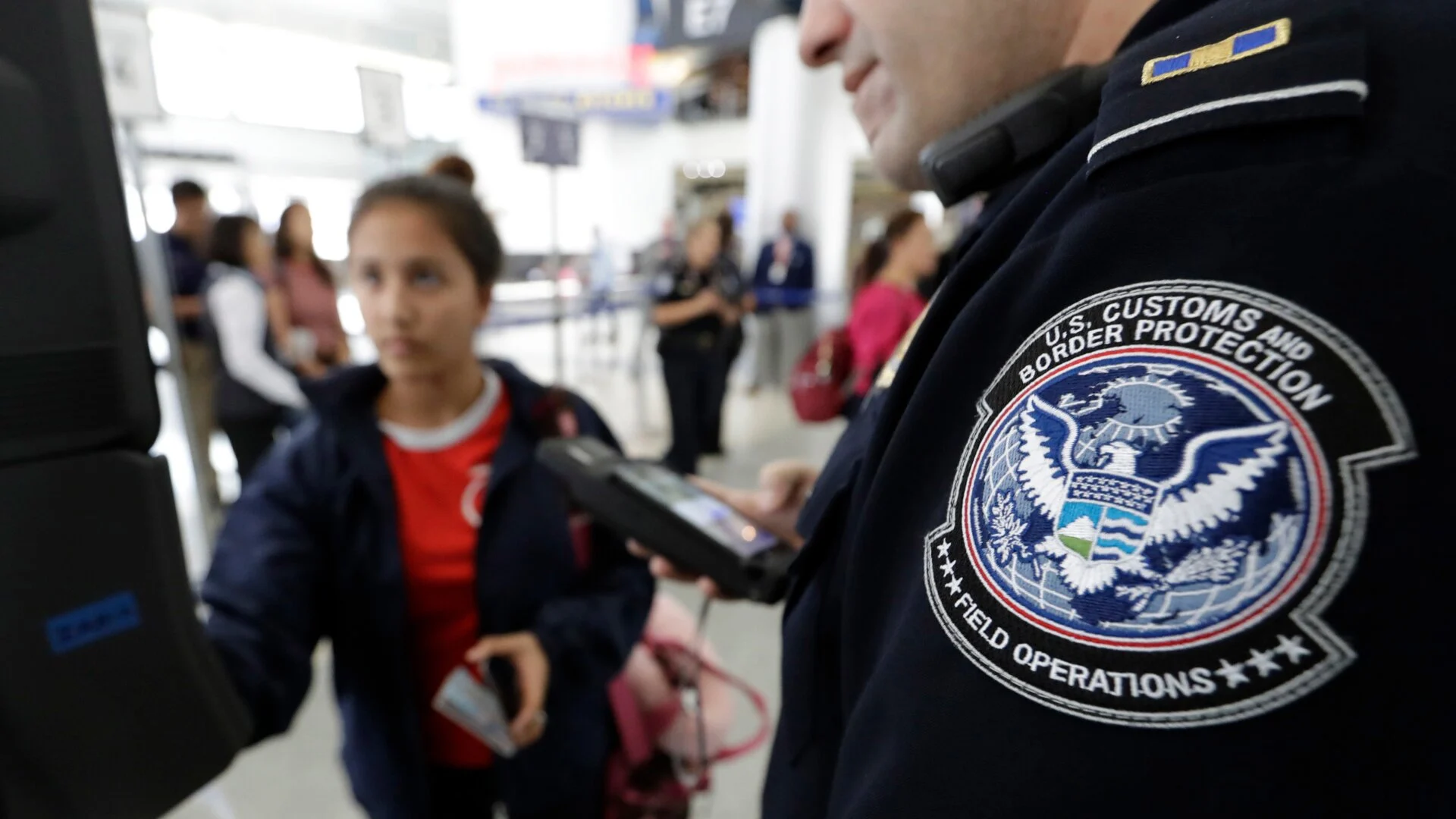
You wake up your phone in line at passport control. An officer asks for your passcode. Your stomach drops and you realize this is not routine.
I’ve watched this escalate, and I want to walk you through what the numbers say and what that moment on the tarmac can mean for you.
Think of your device like a carry-on suitcase that suddenly has no zipper—everything can spill out in a heartbeat.
At airports this year, device searches jumped 32 percent—new data shows
U.S. Customs and Border Protection data obtained by CBC News shows searches of laptops and smartphones entering the U.S. climbed 32 percent in the first three quarters of fiscal 2026 (Oct. 1, 2025–June 30, 2026). That’s the sort of spike you don’t notice until your name is called.
To put it in hard numbers: CBP initiated searches on 55,424 devices in fiscal 2025. Of those, 47,517 were labeled “basic” searches—an officer can order one without reasonable suspicion—and 4,564 were “advanced,” where agents claim reasonable suspicion and deploy forensic tools such as Cellebrite and GrayShift to extract data.
At the checkpoint, a “basic” search can turn into a multi-day detention of your device
When an officer orders a basic search, you are legally required to provide your passcode; refuse and they can seize the device for up to five days. I’m not theorizing—I’m describing the scene where your vacation photos and private messages become evidence in a process that has its own momentum.
Once an advanced search is invoked, software can copy encrypted data for later analysis. That data is then run through automated systems and human reviewers looking for any thread they can use to justify the search after the fact. It’s surveillance that moves fast and reasons slow.
Can border agents search my phone without a warrant?
Short answer: yes, often. Courts have treated international border searches as an exception to the warrant requirement. If CBP claims reasonable suspicion, they won’t need a warrant to perform an advanced forensic exam. That legal framework is what lets agents justify dozens of thousands of intrusions each year.
At the national level, watch lists and executive orders have widened the net
The government’s definitions of risk matter. An Executive Order in September 2025 that labeled “ANTIFA” as a domestic terrorist organization and a companion National Security Presidential Memorandum broadened criteria to include ideologies and beliefs—expanding who might be flagged.
If you’re on a government-vetted watch list, that status can be considered reasonable suspicion. Your entire message history could be parsed for anything that fits a retroactive narrative. That’s chilling because the terms are elastic and the review process is opaque.
What happens if I refuse to unlock my device at the border?
Refusal can lead to seizure of the device, delay, and in rare cases legal trouble. Samuel Tunick, a U.S. citizen, was indicted after using a GrapheneOS “duress PIN” while questioned at the border and now faces up to five years in prison. I’m not telling you to fight here unless you want to be the test case in front of the Roberts Court.
At home and abroad, common tools and advice have new urgency
There are practical steps you can take—some advised by groups like the Freedom of the Press Foundation, EPIC, and the ACLU—but none are foolproof. I recommend sensible hygiene: minimize what you carry, consider a travel device with clean data, and understand the trade-offs of wiping or using security-focused OSs like GrapheneOS.
Be aware: wiping a phone in front of an officer can itself raise suspicion. Use precautions before you travel and know the legal exposures you might be inviting if you try to improvise under pressure.
And remember the tools at play—Cellebrite, GrayShift, automated content scanners—turn your private life into a searchable database, like a fishing net thrown into your private pond.
How can I protect my data before traveling?
Practical moves I use and recommend: back up essential data to an encrypted cloud or a physical drive you leave at home; remove apps that store sensitive history; consider a temporary “clean” phone for travel; and review guides from Freedom of the Press Foundation and EPIC. If you choose to wipe, do it before you reach the checkpoint.
I won’t moralize—this is about risk management. The law may catch up later, but today you’re the one stepping through the metal detector.
The map of authority has been redrawn: DHS agents asking for voting records in battleground counties, ICE raids in sanctuary cities, and a White House that has signaled willingness to expand enforcement. When institutions expand their reach, your choices matter more than they did yesterday.
I’ll leave you with this: if your device is a private room, are you prepared to hand the keys to a stranger at the border and trust they’ll leave it the way they found it?