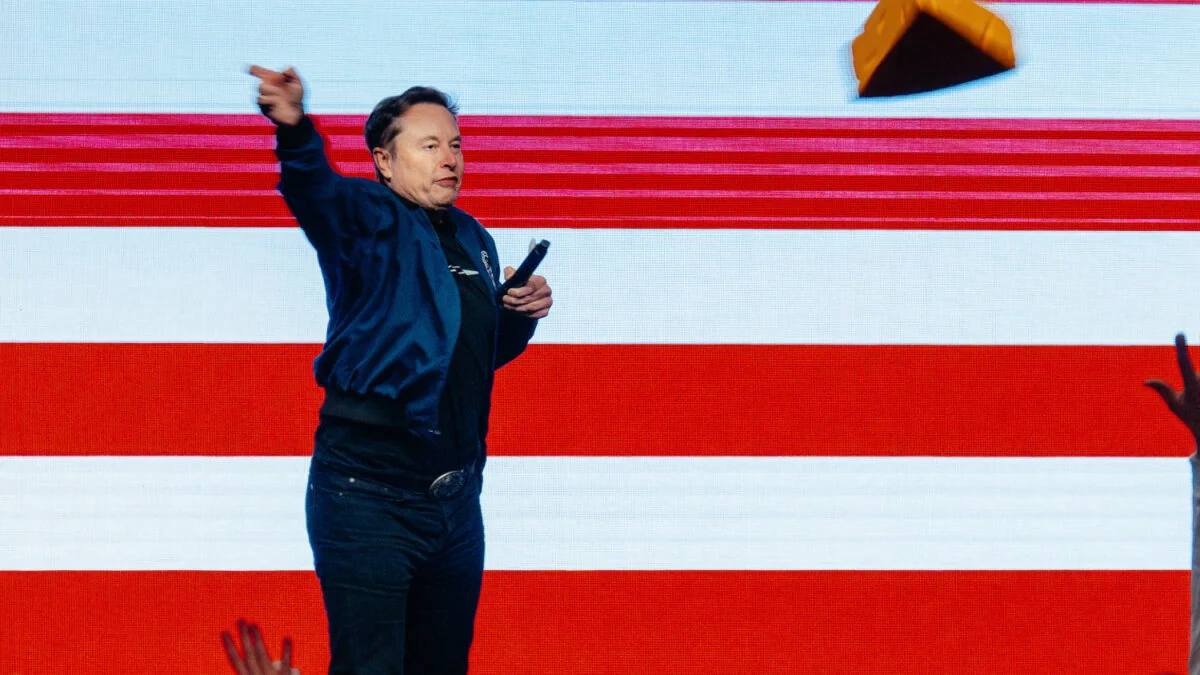
I watched election night unfold like an expense report that had caught fire; digital ads blinked, donors clicked “send,” and the returns read like a bad ledger. I felt the strangest mix of glee and disgust as millions transferred into political noise. You should feel that tension too—because this was deliberate, and you deserve to know what else that money could have done.
Election night: his PAC poured $474 million into the field and most of it lost.
CNBC reports Musk spent at least $474 million (€436 million) trying to tilt the 2026 midterms, including nearly $100 million (€92 million) through America PAC. So far the ledger reads 3 wins, 29 losses, and 12 races still unresolved—a record that reads like a cautionary tale for anyone who confuses money with predictive skill.
Wired’s tally was starker: more than 99 cents of every dollar went to a losing campaign. Bloomberg added an extra sting by noting Musk’s companies erased roughly $120 billion (€110 billion) in market value on Wednesday alone. I don’t have to sell you on the spectacle; you saw the headlines. What you might not have seen yet are better ways to spend that cash.
How much did Elon Musk spend on the 2026 midterms?
Short answer: close to half a billion dollars—$474 million (€436 million) at minimum—dispersed through direct donations, ad buys, and his America PAC. The hit to public markets measured in tens of billions on top of that.
In Texas, the math is simple: $150 million could buy down $15 billion of medical debt.
Benn Jordan and others pointed out a cold arithmetic fact: nonprofit debt buyers can cancel roughly $100 of medical debt for $1. If you’re keeping score, that means about $150 million (€138 million) would clear roughly $15 billion (€13.8 billion) of Texans’ medical obligations.
I’ve worked with debt-relief organizations and watched their spreadsheets turn suffering into a ledger that people can sleep on—literally. Imagine the PR, the legal paperwork, the phone calls gone unanswered; now imagine the other option: families freed from collections overnight. That kind of intervention is measurable in human outcomes, hospital bills, and ER usage.
Could Musk have erased medical debt in Texas?
Yes. Groups like RIP Medical Debt, and other nonprofit portfolios, operate on that arbitrage. You’d need roughly $150 million (€138 million) to clear the kind of $15 billion figure people cite for Texas. The logistics are messy but solvable: buy portfolios, trace patients, and file the cancellations. It isn’t glamour—it’s a direct fiscal cut to household vulnerability.
That $446 million he spent could’ve bought every medical debt portfolio in Texas and cleared it.
It could have given a small home or condo to every single homeless person in Austin.
Instead, it bought attack ads for a candidate who couldn’t even bother showing up to a debate. https://t.co/E2Ml91FPg4
— Benn Jordan (@bennjordan) November 4, 2026
School cafeterias don’t ask for ads, they ask for $20 million a year.
Scott Barber noted a simple, local fact: Texas recently allocated roughly $20 million (€18.4 million) to expand no-cost school meals. A single appropriation like that covered a statewide need for a year; Musk’s midterm budget could fund two decades of guaranteed lunches in that same state.
When I visited school cafeterias during reporting, the trade-offs were always real: staffing versus paper supplies, milk shortages versus holiday programs. Feeding a child is not symbolic—it’s a lever. $450 million spent strategically could have kept kids fed, reduced emergency food bank demand, and freed parents to buy medicine.
What could $500 million buy beyond politics?
Numbers: $500 million (€460 million) can buy a lot of social goods. Erase medical debt, underwrite school meals for decades, seed a national affordable housing pilot, or convert a sizable chunk into guaranteed cash grants for creators. Each option scales differently and tracks different metrics—public health, education, housing, or cultural production.
Art and attention: Musk’s film experiments bought headlines, not box office trust.
Screen Slate tossed out a sharper — and slightly mocking — thought: Musk could have shot a live-action, anti-woke Odyssey on 70mm IMAX for the same money he funneled into campaigns. The reality: Musk spent months to produce seven minutes of AI-driven footage for his AI-generated The Odyssey, which critics treated as a curiosity rather than a cultural event.
Anne Applebaum suggested giving the money to “the arts.” I agree the arts deserve cash, but you should have seen what Musk calls art—meme-level, prequel-Twitter nostalgia, and occasional Star Wars riffs. I’ve seen better artistic stewardship inside small regional theaters. If you’re betting reputation rather than influence, this was an odd hedge.
Imagine if Elon’s $500 million had been spent on education or healthcare. Or the arts. Anything.
— Anne Applebaum (@anneapplebaum) November 4, 2026
There was also talk on X—give creators $50,000 each, distribute direct checks, seed independent journalism. That pitch is seductive because it feels democratic: money drops into hands that produce content, not ads. I coach creators sometimes; cash can be transformative. But who selects the recipients? What guardrails prevent fraud? That’s where philanthropy and platform tools like X’s creator payout systems matter.
Elon musk spent $500 million and all wasted. Imagine if he had gifted it to 10,000 X creators instead. Each of them would have gotten $50,000. https://t.co/5Y97DLQO6a
— Moments (@momentmemori) November 4, 2026
The campaign chest was treated like a flashy betting table; the returns didn’t follow.
Musk treated the midterms like a high-stakes pinball game, rattling money at targets and hoping for lucky rebounds. You and I can map that to platforms: targeted Facebook/Meta ads, X amplifications, programmatic buys across DSPs—tools designed to micro-target persuasion. But persuasion requires trust, not just volume.
Here’s an operational checklist if you ever advise a billionaire: decide outcome metrics (lives changed vs. seats flipped), pick partners with distribution and execution (No Kid Hungry, RIP Medical Debt, local housing authorities), and measure monthly. Campaign-style ad buys don’t substitute for programmatic charity or patient capital in communities.
I’ll say this plainly: watching half a billion dollars evaporate into digital noise is instructive. You can laugh about the spectacle; you can catalog the media takes from CNBC, Wired, Bloomberg and Screen Slate; or you can imagine the alternatives that tangibly reduce suffering. Which would you prefer to read about next?