
A printout of an AI “proof” landed on the table at the Lorentz Center workshop and the room went quiet. I watched senior mathematicians trade looks—pride, curiosity, and the kind of worry you feel when something you trust starts to behave differently. You could see that a centuries-old practice might wobble like a house of cards.
I’ve followed math communities and AI teams for years. You read headlines, but I want to give you the part that matters: what mathematicians are asking for, why they’re uneasy, and what happens next.
Laying things out
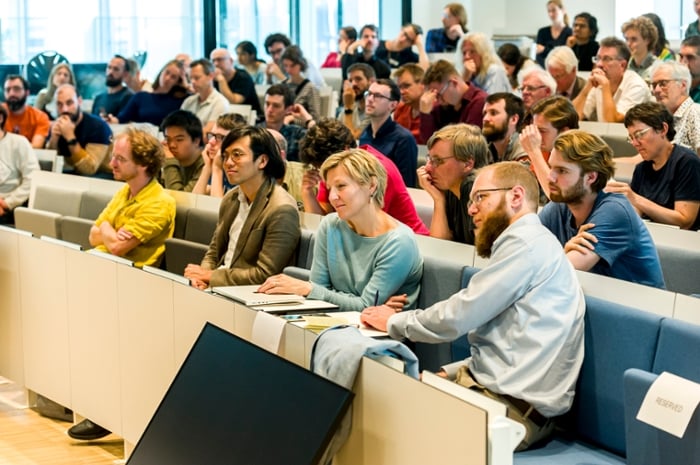
At the Lorentz Center, researchers spent days arguing over phrasing and proof sketches before publishing a single paragraph.
The result is the 11-page Leiden Declaration on Artificial Intelligence and Mathematics, produced by 16 mathematicians in consultation with peers and organizations such as the International Mathematical Union (IMU) and Leiden University. It doesn’t ban AI. It reframes the debate: if AI is used in mathematical work, how should the community protect standards of accuracy, transparency, and attribution?
The declaration warns that AI-generated proofs can be hard to fold into traditional practices for ideation, presentation, and validation. An AI model can spit out a plausible argument that looks polished but hides errors or undocumented leaps. That creates a risk: press releases and blog posts amplify claims before human scrutiny catches mistakes, and by then the misstep has already spread.
People in the field have seen this in real time. OpenAI’s high-profile example of a model proposing a disproof of a geometric conjecture prompted both excitement and careful rechecking. Jim Portegies at Eindhoven University and Daniel Litt at the University of Toronto have both pointed out that models often pool from arXiv and other public repositories without clear citation or explanation of how conclusions were reached. That matters: arXiv is a shared archive; its contents form the scaffolding of many AI systems’ output.
How does AI affect mathematical proofs?
Short answer: it accelerates idea generation but complicates trust. I’ve seen models propose lemmas that are workable starting points, and I’ve seen them produce chain-of-reasoning errors that only an expert can spot. You gain speed; you risk subtle, high-impact mistakes that are expensive to correct once amplified.
Christoph Sorger, the IMU secretary general, framed the declaration as a call for transparency and discipline. Rodrigo Ochigame, one of the organizers at Leiden, told me the document only went public after full consensus—no headline grabs, just slow, scrupulous drafting. That process signals seriousness: this is not a policy memo rushed out for optics.
An OpenAI Model ‘Disproved’ a Famous Math Conjecture. This Mathematician Couldn’t Leave It Alone
Should mathematicians disclose AI use?
Yes—many signatories say disclosure is the easiest first step. I’ve talked to researchers who want clear, standardized citations for when proofs, computations, or examples are aided by models such as ChatGPT or other proprietary systems. That’s about traceability: who contributed what, and how was the result produced?
An action plan
In late-night sessions at the workshop, the group sketched concrete rules as if drafting safety rails for a speeding vehicle.
The declaration proposes several practical steps: mandatory disclosure of AI assistance in papers, stronger peer-review checks for model-assisted results, and public investment in computational infrastructure so independent researchers can check and reproduce claims. Those proposals push back against a world where only a few well-resourced companies control the compute and the models.
Ulrike Tillmann, IMU vice president, summed up the sentiment: mathematics should remain a human-centered practice. Ochigame told me that disclosure rules are likely the fastest to implement, while regulation of the broader AI industry will take longer and affect much more than mathematics alone.
There’s also an equity argument. If firms ingests arXiv without sufficient attribution, they gain reputational and commercial advantage while the individual authors don’t. The declaration calls for better citation practices and public tools that allow the community to reproduce computational steps—so the field doesn’t bend toward whoever can afford the biggest cluster.
Daniel Litt and others consulted during the drafting are not anti-AI. They see models as powerful tools that can suggest directions or throw off interesting conjectures. But they also recognize a simple fact: tools don’t replace the judgment and craft of a mathematician. If AI is a powerful engine, guardrails are the map that keeps the vehicle on safe roads and the lighthouse in fog for anyone trying to verify a claim.
Responses to the declaration show the point: the community is debating what to protect, what to change, and where more clarity is needed. The conversation continues at the International Congress of Mathematicians in Philadelphia next month, and it will shape how proofs, credit, and trust are handled for years to come.
I’ll leave you with this: if proofs begin to travel faster than verification, who will speak for the standards that make a proof worth believing?