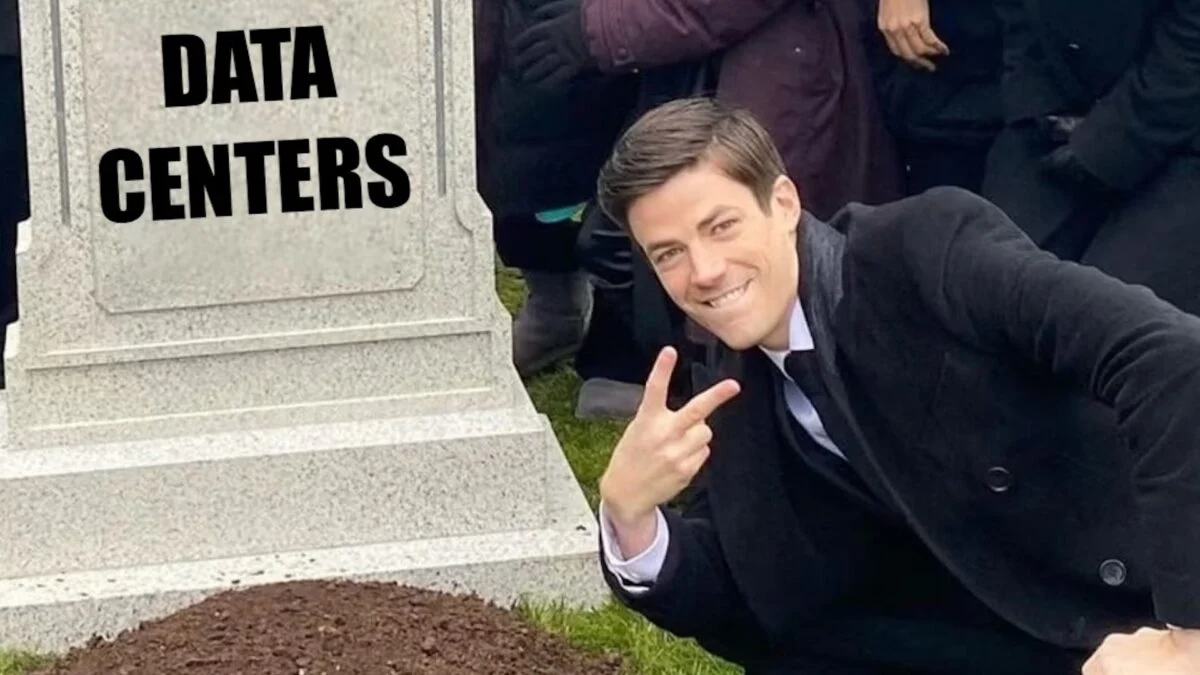
I opened a leaked PDF at 2 a.m. and found a line that made my jaw tighten: “domestic violent extremists are likely interested in targeting AI data centers.” You can sense how fast a joke becomes intelligence when a meme migrates from an anonymous thread to a law‑enforcement bulletin. I want to show you what that shift looks like—and why it matters.
I’ve chased stories where policy, profit, and public anger collide. You and I both know that protests have always made officials uncomfortable. What’s new is the rhetoric coming from fusion centers and federal agencies that treats anti‑AI complaints as a security problem rather than a civic one.
A bulletin stamped “for official use only” flagged social posts about data centers
The Delaware Valley Intelligence Center sent a December report to local agencies noting online chatter about harming AI infrastructure. The memo, obtained and published by The Intercept, cites Facebook memes and posts on anonymous image boards that move from profanity and venting to specific “how‑to” questions about disabling a facility.
I want you to hold two facts: one, the report admits it lacks concrete plans to attack Philadelphia data centers; two, it still treats the chatter as evidence of a rising threat. That’s not just caution; it’s a shift in where law enforcement draws its line between protected speech and pre‑crime. The FBI and DHS have released similar warnings, echoing a White House memorandum that broadened the list of behaviors authorities say can signal domestic threats.
Are police legally allowed to monitor protest speech online?
Short answer: yes—and with a widening toolkit. Platforms such as Facebook, X, Reddit, and fringe image boards are scraped by public‑sector tools, and private vendors like Palantir and Dataminr sell feeds into that surveillance pipeline. You should assume social posts are visible to someone, somewhere—especially if they contain tactical language or explicit threats.
That visibility doesn’t erase constitutional protections. It does mean the context of your post—platform, phrasing, replies—can change how authorities classify it. A meme venting about “tannerite and gasoline” may be shrugged off by friends but flagged by algorithms built to detect violent intent.
A thread on an image board asked how to “neutralize” a data center
Someone typed, “How can an entire data center be neutralized? EMP? Fire? Magnets? Explosives?” Replies suggested incendiaries, flour dust to foul machinery, and chlorine in air intakes. That exchange is the kind of thing a fusion center will add to a bulletin because it converts general anger into alleged operational planning.
Here’s the practical lesson I keep reminding editors about: law enforcement treats specificity as weight. Vague anti‑tech grumbling is one thing; a list of methods is another. If you post specifics—how, when, or where—you give investigators probable cause to pursue more intrusive steps, and that can cascade into surveillance or arrests.
Can casual online posts be used as evidence of terrorism?
They can be. Courts have admitted social media content as evidence when it corroborates intent or planning. Labels like “anti‑tech extremist” or “anti‑AI extremists” are bureaucratic classifications, but they carry legal and operational consequences: watchlists, resource allocation, and sustained monitoring.
A patrol car idles outside a suburban data center after community protests
Cops showing up at a facility doesn’t prove a plot—but it does change the neighborhood’s mood. Residents who opposed a water‑guzzling, noise‑heavy facility find their protests scrutinized and cataloged. That chilling effect matters: people who previously spoke in town halls or on Facebook now self‑censor because they fear being flagged as violent.
When community anger meets official alarm, public opposition becomes an intelligence product. I’ve seen this pattern before: officials take the evidence that’s easiest to collect—online posts—and elevate it into operational guidance. It’s like a neighborhood watch turned algorithmic, where every raised eyebrow is mapped and stored.
A memo cites memes and “Butlerian Jihad” references as indicators
Memes referencing the fictional “Butlerian Jihad” from Dune may be tongue‑in‑cheek, but they show cultural currents. Fusion centers use cultural signifiers to gauge sentiment and anticipate action. The problem isn’t that pop‑culture references exist—it’s that agencies are increasingly using them as probabilistic markers of intent.
That methodology favors quantity over nuance. A flood of angry posts can trigger escalated responses even when the underlying activity is harmless civic organizing. You should ask who profits from treating public dissent as a security risk: tech companies chasing scale, governments chasing control, and vendors selling monitoring tools all stand to gain.
I’ll be blunt: this is a fight over language and proximity. If you live near a data center or speak out on social platforms about AI’s costs—water use, noise, local infrastructure strain—you are now part of a new category that law enforcement is watching. A single meme can be treated as a fuse, and once lit, it reshapes how authorities allocate attention.
So what do you do? Speak with care. Keep tactical talk off public threads. Organize in person and through trusted channels. Document police interactions. Challenge vague designations that paint policy dissent as extremism, legally and in the court of public opinion. And push platforms to be transparent about how they share data with Palantir‑style analytics and government feeds.
The bulletin in Philadelphia is not an isolated blip; it’s a precedent. If memes and venting become pretexts for surveillance, who gets to protest, and who gets labeled a threat?