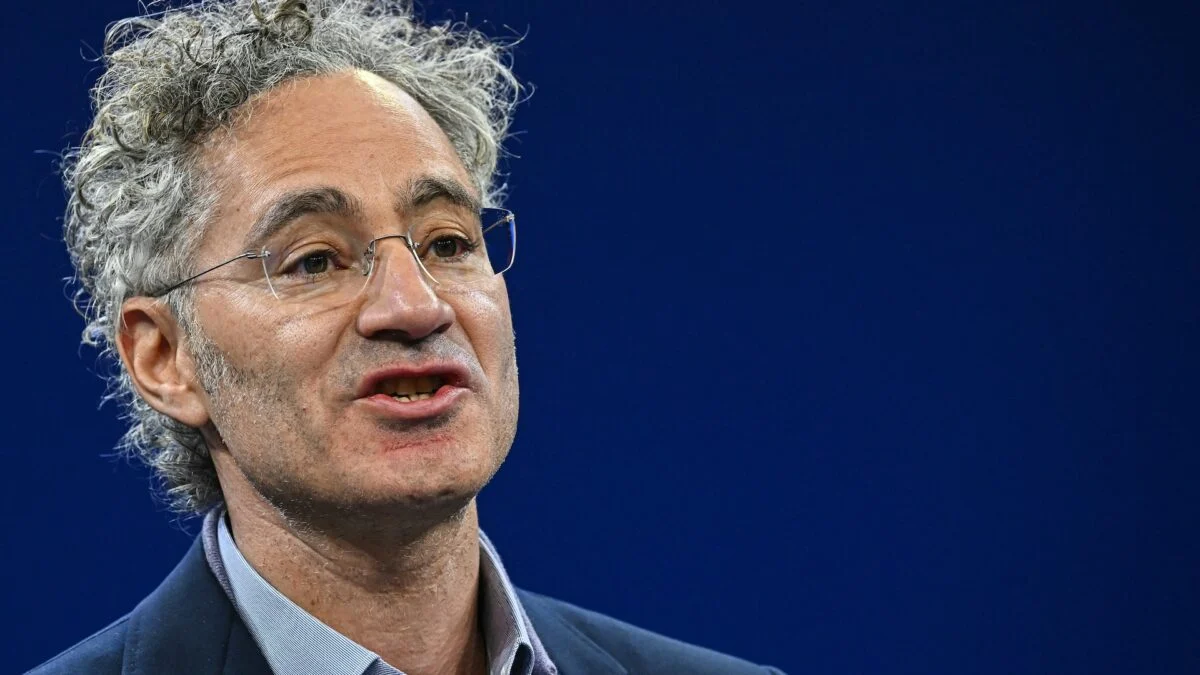
Palantir CEO Says Bernie Sanders Will Regret Only Wanting 50% Public Ownership of AI Companies
I watched the clip twice. Alex Karp, on CNBC with Sara Eisen, leaned into a claim that already smells like a political fuse: full nationalization of AI companies is coming, and Sanders’ 50% feels timid. You can feel the room split—practical fear on one side, ideological hunger on the other.
I’m going to walk you through what he said, why it matters, and how this strange coalition of left and right could rewrite how we think about ownership of models like Claude from Anthropic, the platforms that host them, and the intelligence and defense buyers that now prize them.
On the CNBC set, Karp told Sara Eisen that 50% won’t be enough
He said it plainly: in two years, people will scoff that Bernie Sanders only wanted half. Karp called himself a card-carrying progressive and even joked that “some people think I’m neurodivergent.” That line landed like a dare.
Here’s the heart of his argument: the AI shift is not a policy detail you can tweak; it’s a structural shock that will change who controls information, labor, and value. Karp predicts the left will move from demanding stakes to demanding control. He wants poor people lifted—he frames it as an extension of progressive aims—but he’s also warning that the political vocabulary will harden fast.
Will Bernie Sanders really push for public ownership of AI companies?
Sanders has publicly argued for public ownership or stakes in major AI firms. He posted on X that the question is not whether AI will change the world, but who will own it. That’s not abstract; it’s a direct argument for public leverage over models that can replace jobs, steer discourse, and influence national security.
At the White House, Trump said he’ll ask executives for “giving back something to the public”
In a recent press moment, Trump promised meetings with the “top 12 or 15” execs and suggested the public could “become very rich” if companies ceded value. The line drew applause and confusion in equal measure.
This is the oddest part: nationalization rhetoric is spanning the aisle. Trump’s motives sound transactional—political reward and growth of popular support—while Sanders frames it as democratic control. David Sacks, a former Trump AI and crypto adviser, warned conservatives that the regulatory levers they flirt with now can be turned against them later. That’s a caution you should take seriously if you care about long-term institutional power.
Could Americans get an “AI stimulus” check?
Trump floated idea of a refund-style check tied to tariffs; now he hints at an AI “refund” if companies hand something back. Timing would matter—midterms make timing political—but the mechanics are murky: what would be distributed, how would value be calculated, and who decides eligibility?
On social platforms and in the Pentagon, the debate is already getting real
Sanders’ posts on X and recruitment of similar-sounding ideas by some on the right have pushed the conversation from think tanks into procurement offices. Defense figures and agencies are not indifferent: Claude and Anthropic, for instance, are in high demand among military and intelligence buyers despite earlier pushback from officials like Pete Hegseth.
If the U.S. decides to take ownership stakes—or full control—companies such as Palantir, Anthropic, OpenAI, and others will face a new operating landscape. You can imagine procurement clauses, licensing regimes, or equity swaps tied to public benefit requirements. That’s already changing how venture investors and boards model exit scenarios and valuation.
In boardrooms and union halls, the human question is loud and simple
Workers are asking what happens to jobs. Karp says retraining and retooling are necessary, and that America is better positioned than Europe to perform this work. That’s a bet on labor mobility, education, and public investment—and it’s also where policy will either calm or amplify social pain.
Part of the argument for public stakes is straightforward: if AI tears up existing value chains, public ownership could underwrite a universal benefit or wage replacement. Opponents warn that state control risks politicizing technology and giving future administrations tools they may wield against opponents.
I want you to notice two metaphors here: the AI ownership fight is like a hairline fracture in glass—small at first, then suddenly spreading—and like a lighthouse for a fogbound ship: a point of orientation that can save or mislead depending on who controls the light.
What did Alex Karp mean by calling himself a “card-carrying progressive”?
He’s staking a claim to moral authority while rejecting some orthodoxies. Karp positions himself as someone who wants broad material uplift—higher living standards for the poor—yet he disagrees with parts of the progressive playbook on DEI and foreign policy. That contradiction makes him persuasive to technocrats and unnerving to activists.
In the short run, political posture will shape market strategy
Executives at Palantir and other companies are watching how regulators, presidents, and senators frame AI ownership. Meetings with the White House, signals from the Pentagon, and public pressure from figures like Sanders create momentum. Boards must weigh cooperation against independence; founders must weigh exit value against national priorities.
You should expect pressure campaigns, lobbying pushes, and partnership proposals that try to translate public stakes into operational commitments. Anthropic’s friction with blacklist efforts shows how geopolitics and commercial demand can pull in opposite directions.
So where does that leave you—reader, voter, or investor? If ownership of AI becomes a live public question, the stakes are not just economic. They are political, cultural, and institutional. Who gets to decide what these systems do, and who benefits when they do it?
How do you want that answer written into law and markets next time the buzzer sounds?