
I once sat in a conference room as a CEO smiled and promised AI would make our lives easier. You could hear the room shift—relief, a quiet suspicion, then applause. The old threat line had been erased, drawn over like a chalk line across a boxing ring.
I want to take you behind that applause. I’ve followed the choreography of corporate messaging for years: the initial, blunt warning that models would steal jobs, followed by a softer cadence arguing for augmentation. The movement isn’t accidental; it’s a response to a political problem, consumer distrust, and the messy reality of deployment.
“I’m delighted to be wrong about this”
At Davos and in investor briefings, executives made clear, public claims. Mustafa Suleyman told Davos that AI models “are labor-replacing tools,” and, to investors and partners, painted a timeline for dramatic change.
You’ve heard the line: “my job is to help people destroy jobs.” Sam Altman said it publicly in the past. Then, three years later, he told Reuters he was “delighted to be wrong” about the scale of replacement so far. That is not a flip without context. It’s a recalibration.
Here’s what I watch for when a CEO recalibrates: specificity and framing. Suleyman moved from predicting wholesale role extinction to distinguishing tasks from jobs—email replies and slide decks versus patient care and courtroom strategy. Jensen Huang shifted from describing a future where nobody needs to program to warning against discouraging people from software careers. That’s signaling: preserve the idea of human purpose while buying time to expand infrastructure and product adoption.
Will AI replace my job?
You’re not wrong to worry. Models can and do perform discrete tasks—drafting copy, summarizing legal filings, reading scans. But saying a task can be automated is not the same as saying an occupation disappears overnight. Expect some roles to change rapidly; expect many to be reorganized, layered with new tools, or redistributed across teams. You should also expect messy outcomes: partial automation, new coordination costs, and shifts in who holds decision authority.
When executives pivot from alarmism to reassurance, they aren’t just being generous. They’re managing expectations. That management matters if you’re choosing a career, negotiating a role, or deciding whether to unionize a workplace.

Losing popularity
Polls show people are uneasy: Reuters and Ipsos found more than half of Americans fear AI could put someone in their household out of work, and NBC reported only 26% view AI positively. That’s a political problem, not a technical one.
Companies that once shouted about the inevitability of automation now speak in softer tones—“augmentation,” “tools,” “assistants.” Why? Because public resistance is real and effective. Residents have blocked data centers. Protesters have gathered outside DeepMind, and labor groups are starting to ask questions. That resistance is slowing the rollout of the physical infrastructure these firms need to scale.
When public sentiment swings, product roadmaps change. Executives hedge their rhetoric to keep regulators calm, to keep customers from panicking, and to keep investors from demanding different answers. The story shifts from conquest to partnership.
Are tech CEOs downplaying job losses?
They are strategically reframing. Mustafa Suleyman, Jensen Huang, Sam Altman, Brad Smith, Mark Zuckerberg and Jeff Bezos are not uniformly telling the truth or lying—they are choosing narratives that protect growth and placate fear. Suleyman now stresses the difference between tasks and roles; Huang warns against discouraging software careers; Altman says the apocalypse hasn’t arrived. Those are defensive moves aimed at public opinion and the labor market.
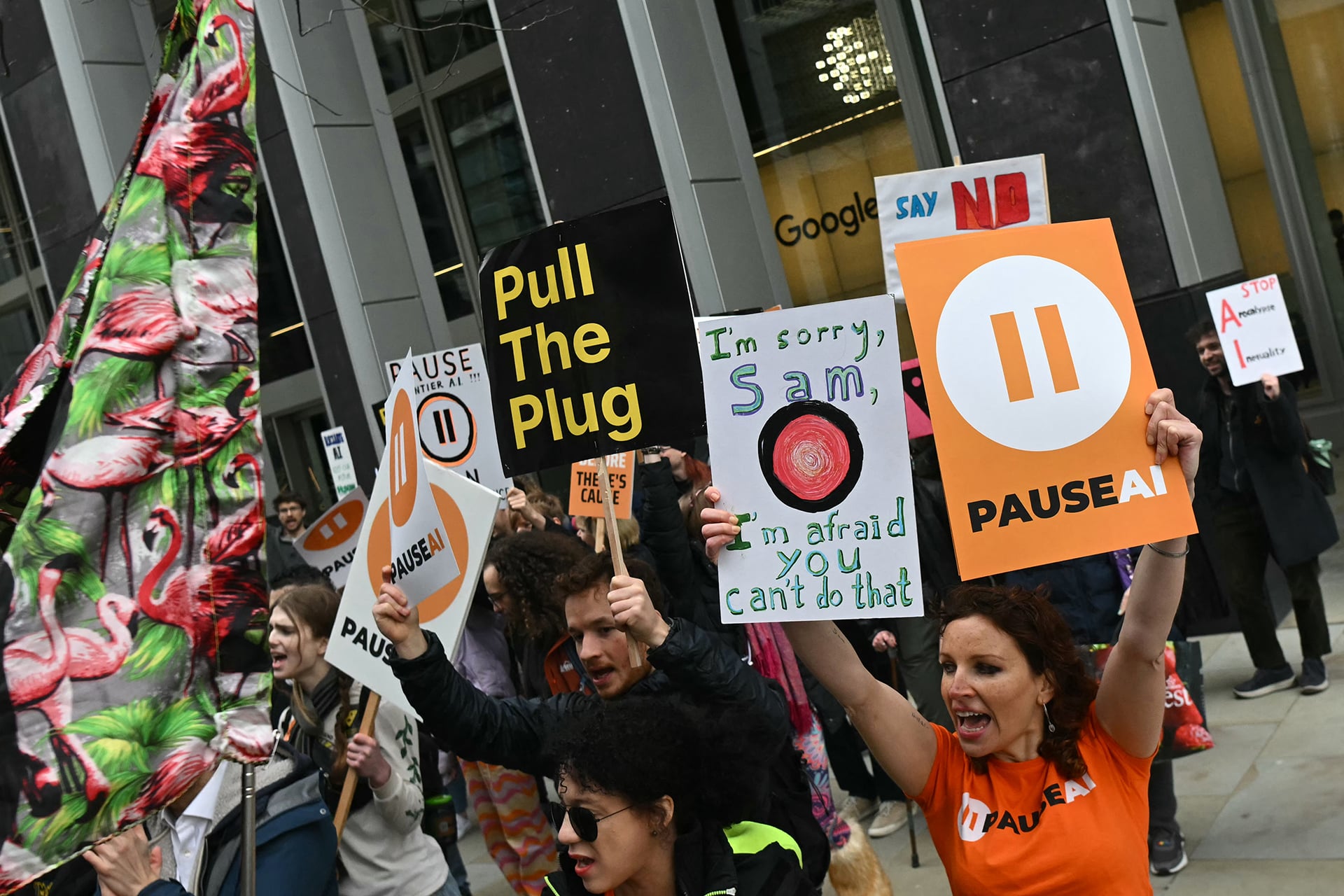
Just relax, and stop fighting
Students booed commencement speakers; executives responded with blog posts and reassurances. Brad Smith wrote about agency and dignity in work; Jeff Bezos told people to “be so happy” about AI. That messaging is meant to calm a generational storm.
The playbook is now soothing: emphasize opportunity, highlight productivity gains, and promise that workers will be “upskilled.” Meta’s leaked audio—where Mark Zuckerberg framed employees as training material for future models—was a rare, blunt admission of how companies plan to scale. That admission, more than any CEO speech, is why trust is eroding.
What you should watch for are concrete bargains, not press releases. Collective bargaining agreements, local ordinances blocking data centers, and product roadblocks driven by public pressure reveal where power actually lies. When companies pivot from threat to partner, they are often buying political breathing room.
I’ve spoken to workers who have been logged and profiled to train models; I’ve talked to engineers who say their teams are being rebuilt around AI agents. The truth is mixed, and that mixture is strategic: it keeps customers, regulators, and employees off-balance long enough for firms to grow.
If CEOs are trying to calm you, you can accept it or you can push for the terms of that calm—contracts, hearings, protections, real bargaining power. The messaging has changed, but the structural incentives that drive automation remain in place. Which side of the bargain will you join?