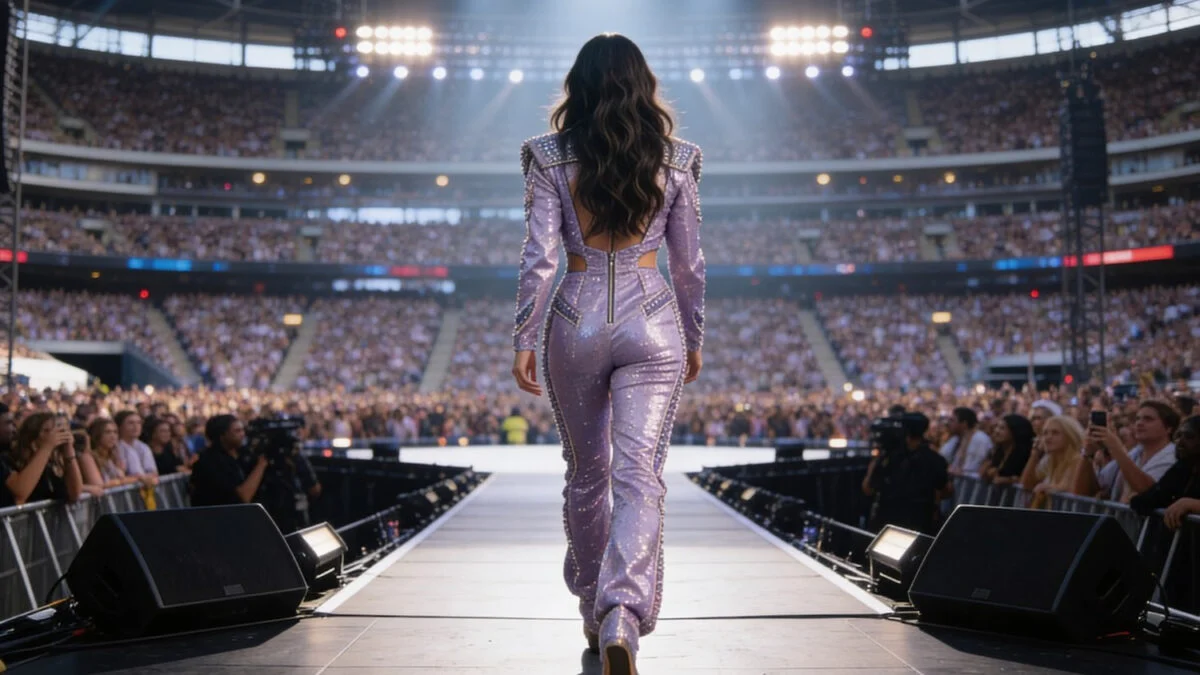
I opened a press release about a “movie starring Tilly Norwood” and felt a small, stubborn nausea. You know the story: a manufactured persona billed as a performer, more an algorithmic sketch than a person. I sat back and realized we were watching a performer’s replacement being sold as a star.
I’ll be blunt: I follow this stuff, and you should too, because what happens to performance now affects real livelihoods, writers, editors, and the cultural cues you and I trade every day. This piece walks you through the moment the stunt stopped being clever and started getting tedious — and why that matters beyond the headlines.
At a March release, Particle6 credited Tilly Norwood as the recording artist
The music video called Take The Lead dropped with a press push from Particle6. It was presented like a debut single: visuals, credits, a backstory. The result? Fewer than 400,000 views and a comments section that reads as unanimous contempt.
Is Tilly Norwood a real person?
No. Tilly is an AI-generated persona created by comedian and entrepreneur Eline van der Velden to exist on-camera without a human body behind it. The character has been packaged with songs and appearances, but there’s no flesh-and-blood performer to meet or interview — only code and curated outputs.
In NBC’s coverage, the next move is a feature film called Misaligned
NBC reports the film will be a “hybrid production” claiming to combine traditional professionals with AI-driven elements. The pitch is explicitly meta: it will dramatize “misaligned” models and “existential AI chaos” set in the cloud. That framing turns the technology into the subject rather than the tool.
When you make AI the plot, you risk making the audience feel like they’re watching a software demo. The line between storytelling and internal company narrative gets thin.
Will Tilly Norwood appear in a feature film?
Yes, according to press materials shared with outlets including NBC, Tilly is slated for Misaligned. The production is presented by Particle6, and the marketing treats the persona as an actor — credit on the roster, a press arc, PR events. That’s what sparked the union response.
SAG-AFTRA publicly denounced the Synthetic Performer concept
The actors’ union issued a statement warning that synthetic performers “create the problem of using stolen performances to put actors out of work,” and that statement landed hard in industry circles. That’s not theater hyperbole — it’s about contracts, credits, and income streams disappearing from working people.
Why are actors upset about AI performers?
Because synthetic credits can be used to replace paid labor, repurpose likenesses without consent, and cheapen the market value of skilled performers. The union’s stance is a defensive response to a pattern: software claiming creative credit, while real actors scramble to protect their rights.
At the center of this is Eline van der Velden’s improv-trained pitch
Van der Velden told the Times of London that improv taught her “no shame” — and that attitude fuels the whole project. Commit to a stunt, keep the story alive, and maybe people will follow along.
That aggressive commitment produced something that feels hollow: a persona credited with art it didn’t feel anything to make. To me, the character reads as a ventriloquist’s dummy with a Wi‑Fi signal. At the same time, the project looks like a paper-thin star pasted onto a marquee.
Here’s what matters for you: watching this play out shows how cultural value is being negotiated in real time — and which players get to decide who counts as an artist. Platforms like YouTube, studios touting hybrid production, and unions arguing for protections will shape the outcome. You can be amused, outraged, or indifferent — but these choices will ripple into hiring, credits, and what audiences accept as performance.
So what do we do? Watch the film when it arrives, scrutinize the credits, follow SAG‑AFTRA statements, and give more attention to the human work that’s suddenly at risk. And when the PR engines realign to sell the next synthetic star, ask whose paycheck is missing from the press kit?
Is this clever marketing, a culture-shaping test, or a slow erasure of human craft — and who gets to decide where the line is drawn?