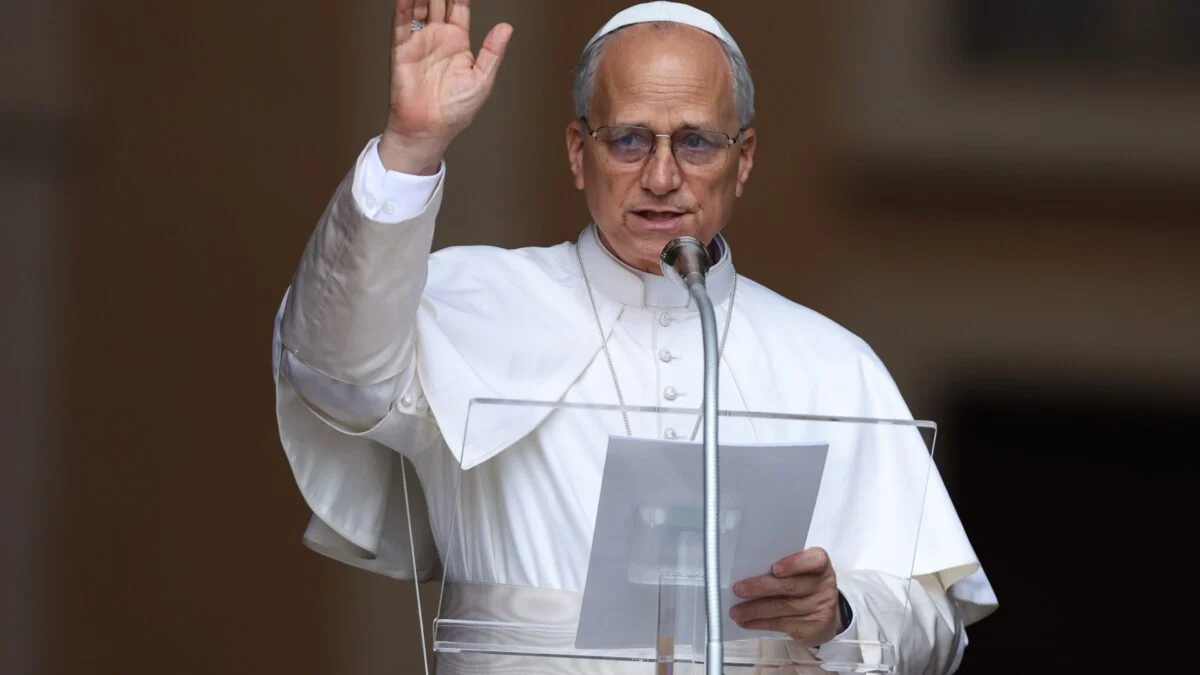
My X feed blew up: a cluster of tags, a red flag from Pangram Labs, and people asking if the Pope had outsourced his conscience. I watched replies multiply faster than clarifications. The Vatican moved, quietly and deliberately, to prove the document was human.
The word of God or the word of AI?
A flurry of notifications lit up X’s feed — AI flags on the papal account
I saw the first warning myself: Pangram Labs had tagged several posts from Pope Leo XIV’s official account as likely AI-written. That single action turned a pastoral moment into a digital witch hunt.
You already know the paper everyone’s talking about: Magnifica Humanitas, a 43,000-word encyclical arguing people should protect human dignity as AI grows more powerful. Pangram’s public signals were followed by deeper analyses—Linch Zhang, independent researchers, and others ran stylometric checks and pointed to paragraphs that looked suspiciously machine-made.
The accusation was simple and brutal: the man preaching against machine authorship had used one. If you squint, the situation starts to look like a lie detector that speaks back in the accused’s voice.
Did the Pope use AI to write the encyclical?
Short answer: the Vatican says no, and a third party has certified it. Pangram’s preliminary flags suggested parts might be machine-assisted, and independent analysts, including a post about Claude-style fingerprints, said some sentences resembled AI output. But those flags are probabilistic, not proof.
The Vatican responded by submitting the encyclical and a corpus of the Pope’s prior speeches and writings to Proudly Human, a verification firm. That company ran comparative tests, checked IDs, and required a signed declaration that no AI produced any draft sentences. The verdict announced: human-authored.
A small verification office issued an official stamp — what Proudly Human did
I got curious about the mechanics, so I read the statements and the reporting in The Guardian and what Snopes tracked. The process was surprisingly procedural.
Proudly Human’s team asked for a control set: the Pope’s past speeches and writings. Officials passed ID checks and signed declarations confirming no AI had authored the initial drafts or final paragraphs. Then Proudly Human ran stylistic comparisons—ironically using several AI-based tools to spot subtle grammar and phrasing patterns—and applied an internal averaging algorithm to decide whether the encyclical matched the Pope’s established voice.
How did Proudly Human verify the encyclical?
They combined credential checks, document provenance, and automated text-analysis tools. The church provided exemplar texts. The firm compared sentence rhythm, word-choice fingerprints, and syntactic habits against that control group. After analysis and human review, they certified the work as written by a person.
Comment threads and editorial inboxes swelled — the trust problem isn’t technical, it’s social
Every comment section feels like a jury when accusations fly: people choose who to believe. Some trust Pangram Labs, partly because the company’s @mentions on X let anyone ask for quick verdicts. Others see the Proudly Human seal and accept it as closure.
Here’s the rub: both camps use AI tools. Pangram’s detector runs models; Proudly Human uses automated checks as part of its process. We’re asking machines to judge the work of machines and humans at the same time, which folds the problem back on itself. The controversy is less about a single encyclical and more about what authority looks like in a world where detection and generation are siblings.
Can AI detectors be trusted?
They’re useful but imperfect. Detection tools return probabilities, not court-ready proof. Researchers like Linch Zhang and reporters at Wired have shown that detectors can be tripped, misled, or biased by editing choices and text length. The result is a public that often picks the verdict that matches its priors, not the one the data supports.
I don’t expect you to accept any seal uncritically, nor to treat every flag as gospel. You’ll weigh the motives—Pangram Labs wanting to be the arbiter of online truth, Proudly Human offering a paid certification—and judge whether a papal oath carries weight for you.
The Vatican argues that the risk of eternal consequence gives the Pope a stronger incentive to tell the truth than most secular actors. I don’t know if that settles the matter for everyone, but it changes the psychology of the claim.
At the end of the day, what matters is less whether a line was typed by human hands than how we choose to honor authorship and authority going forward. Are you ready to trust a software score over your own judgment?