Wind picks up on a warm July night. A billionaire types a promise into a public square and the world leans in, not because the idea is good, but because the spectacle is inevitable. Ten minutes later, the promise mutates into an AI demo that smells faintly of regret.
I write about media so you don’t have to squint at bad art and pretend it’s clever. You and I both know that money buys scale quickly; it rarely buys taste. Keep that in your pocket as we run through what happened when Elon Musk said he would turn Homer into code.
He replied “I’m down” to a $100 million Mel Gibson pitch.
The offer landed on X: someone suggested Musk bankroll a $100 million (€93 million) adaptation directed by Mel Gibson, and Musk answered in the public room. That single line started a chain: applause, alarm, and then a pivot so fast it read as avoidance.
I’m down
— Elon Musk (@elonmusk) July 22, 2026
You can fund any director if you have the balance sheet; the real question is who signs the checks, who runs notes, and who gets final cut. When a billionaire suggests a Mel Gibson-led epic, every studio bell and caution light starts to ring. You should care about that signal more than the stunt itself.
He posted a three-minute Grok clip that looks wrong at a glance.
Musk then said Grok Imagine would make a full-length, “historically accurate” film and shared a three-minute exemplar that made people do the mental equivalent of stepping back from a painting.
Before this year ends, Grok Imagine will make a full-length movie of The Odyssey that is historically accurate and true to the art of Homer https://t.co/bVHzUmY9WN
— Elon Musk (@elonmusk) July 22, 2026
The three-minute clip is a wax museum of motion—figures that look alive from afar but fall still when you step closer. There are earplugs on Odysseus and rowers whose hands ignore oars. Those errors are not incidental; they are the fingerprints of tool-first production.
Can AI make a feature film?
Short answer: it can assemble one. Grok Imagine and other generative tools stitch images, voice, and motion into sequences. What they generally cannot do is carry the invisible scaffolding that makes art feel human: intention, dramaturgy, lived-performance choices. I want you to see the difference as clearly as you see a face in a photograph versus a wax replica.
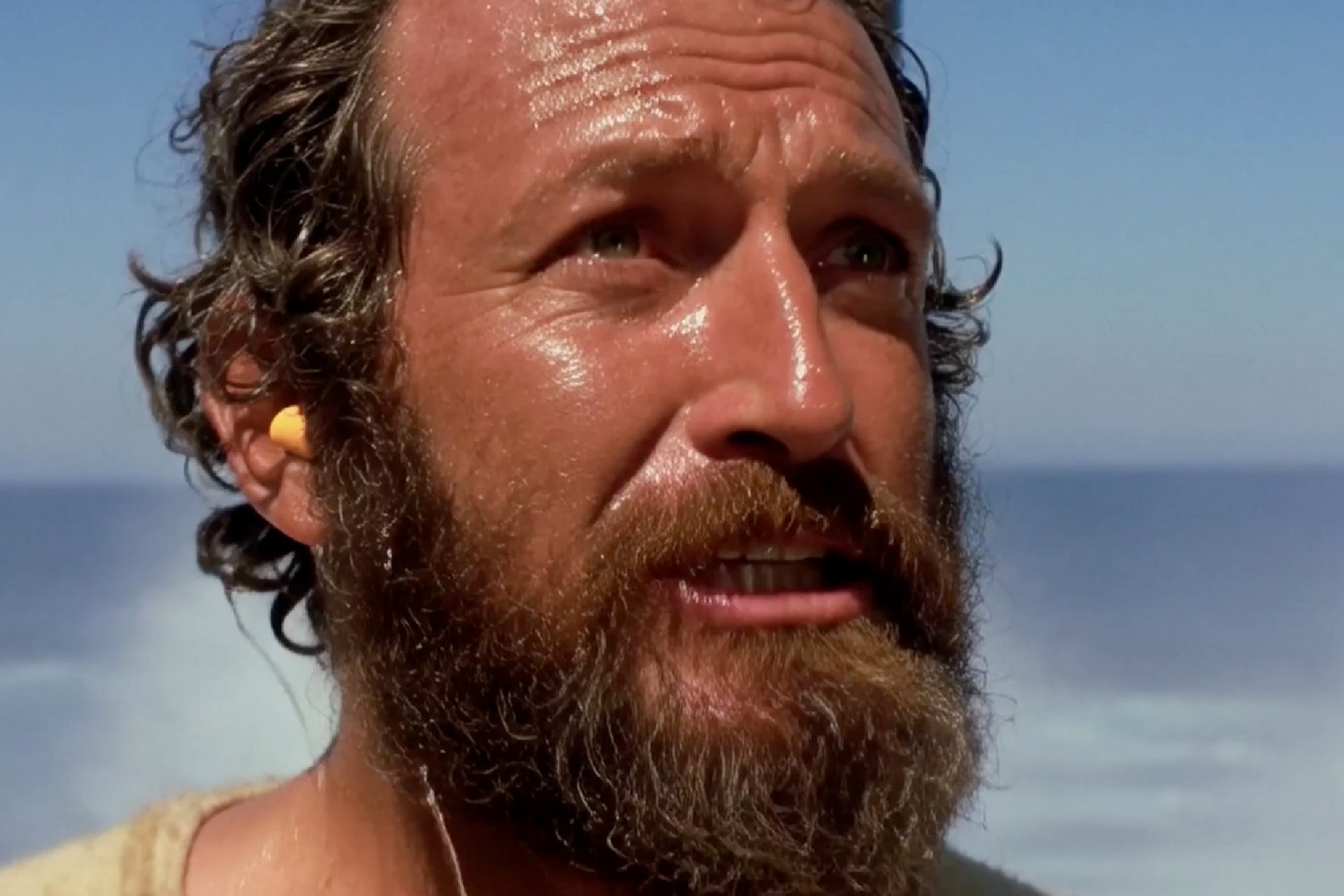
My favorite part is when you see the rowers in the back
— Matt Novak (@paleofuture.bsky.social) July 21, 2026 at 8:34 PM
I point this out because we have lived examples to compare. Christopher Nolan’s The Odyssey is practical-effects forward, and it has already earned over $300 million (€280 million) worldwide. Nolan’s work reads as human-made; it tolerates imperfection in service of truth. Grok’s clip reads as a glossy imitation that collapses under attention.
Is Grok capable of producing Hollywood-quality movies?
Grok can produce assets; it does not yet generate the artisanal judgment that turns assets into cinema. You can deploy it for mood boards, concept tests, or cheap filler. You cannot yet hand it an epic and expect the results to carry emotional weight without a team of humans shaping, pruning, and rescuing the output.
Rowers in the background weren’t rowing; the pigs looked CG but were practical effects in Nolan’s film.
Those two observations matter because they illustrate where AI stumbles: the small, truthful details that make scenes believable. You notice them unconsciously. When the brain flags something as off, the entire scene collapses in credibility.
Grok Imagine prompt:
She smiles and says “I will always love you” pic.twitter.com/cjDu3MuDCZ
— Elon Musk (@elonmusk) November 8, 2025
I’ve watched enough AI demos to say this plainly: when the background lies, the foreground loses authority. That is why audiences can sense a hollow artifice even if they can’t name which detail betrayed them.
Money buys production value; it doesn’t buy taste.
When Musk threatened to fund a Mel Gibson film, the media world hummed with a single practical point: with $100 million (€93 million) you can rent cameras, hire SFX teams, and build sets. But taste is an editorial menu chosen by creatives, not a line item on a balance sheet.
I’ve seen billionaires play producer as if throwing money at a project equals quality control. It doesn’t. If you supply the budget but remove the curatorial judgment, you end up with a lacquered souvenir of an idea—shiny, mass-produced, and empty.
Will Elon Musk fund movies?
Yes, he can. He’s made public promises, floated checks, and pivoted into AI-first production. But financing is not the same as shepherding an artistic vision. Past promises—like a flying car demo teased to Joe Rogan—haven’t always materialized on schedule. That pattern matters because it tells you whether to bet on execution or spectacle.
You should watch these moves as someone who wants better media, not as a spectator at a sideshow. Grok, X, Tesla, and the platforms carrying this story are tools and stages. They amplify choices; they don’t replace taste.
I could have closed by listing reasons why the AI clip fails. Instead I’ll leave you with one provocation: if Musk can pay for any director, why choose the fastest, cheapest route to a hollow spectacle rather than funding the messier, riskier work that might actually move you?