I watched Senator Bernie Sanders sit in a dark room across from a smartphone and ask a chatbot a string of questions. The clip landed like an A24 horror scene—awkward, eerie, impossible to ignore. That odd little moment was the first visible crack in a dam: AI went from niche policy footnote to full‑blown campaign terrain overnight.
I’m going to walk you through what that terrain looks like now, what campaigns are doing with AI messaging, and why you should be paying attention when a candidate mentions “data centers.” You’ll get names, numbers, and a sense of where the fights are headed.
Forty percent of races now list AI or data centers on campaign sites.
That’s the Washington Post’s headline finding: AI and data centers show up on candidate websites in 40% of current contests, and the issue appears in 90% of states. When I read the Post’s breakdown, the partisan split leapt off the page—Democrats and Republicans are talking about the same topic, but in almost entirely different languages.
Democratic campaign pages emphasize broad harms, data center impacts, police and military use, child safety, jobs, and the benefits of AI. The Post’s coding showed Democrats mentioning “broad AI harms” 90% of the time (Republicans 10%), data centers 84% (Republicans 16%), police and military 77% (Republicans 23%), child safety 76% (Republicans 24%), and jobs 72% (Republicans 28%).
One campaign site reads like a policy white paper; another treats AI as a national security line-item.
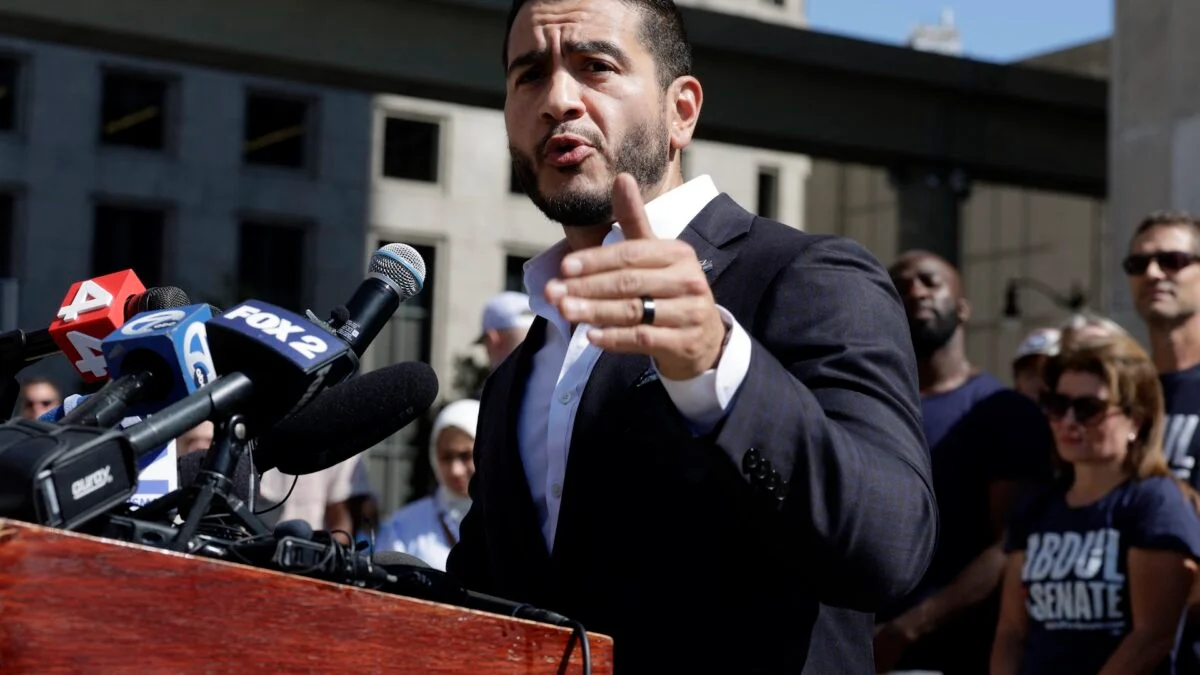
On the ground, that split plays out clearly. Michigan Senate hopeful Abdul El‑Sayed posts detailed policy documents—“First, Do No Harm: AI Under Democracy” and a separate plan on data centers—calling for democratic oversight and specific protections for communities. By contrast, many Republican campaigns frame AI through China and national security; the Post found Republicans referenced China and security 76% of the time versus 24% for Democrats.
How many candidates mention AI on their campaign pages?
Roughly 40% of campaigns, per the Washington Post review. That’s not a fringe talking point anymore; it’s a recurring line item in campaign agendas from state legislature bids to U.S. Senate races.
Local fights over server farms are blowing up campaigns in real time.
You can see the political fallout in small towns as much as in polling charts. Local opposition to data centers has torched reputations and sunk candidates—J. Stuart Adams’s sudden loss during the primaries is a recent example of a statewide leader who couldn’t manage the backlash.
I watched Heatmap Pro’s polling numbers: in nine months, public opinion on data centers shifted by 49 points. That’s rapid movement for a single issue, and it helps explain why candidates scramble to adopt positions—some sincere, some performative—on where to build servers and who pays the environmental and social cost.
Why are data centers controversial in local politics?
Because they intersect utility companies, corporate actors, land use, and community trust. Names like DTE, Oracle, OpenAI, and local officials get dragged into fights that are noisy and emotionally charged. Some communities fear higher taxes, environmental strain, or being treated like the tech industry’s dumping ground; others see jobs and investment. The result: data centers function as Catalysts for conflict.
Campaign messaging now mixes fear, promise, and policy—and that mix matters.
On one side you get warnings about AI’s broad harms, child safety, and job displacement; on the other you see security framings focused on China, espionage, and defense. Candidates brandish both the dangers and the benefits, depending on their audience. You should read those choices as a map of where voters’ anxieties live.
Tools and platforms are part of the storyline—the Claude demo that Sanders staged, OpenAI’s name in countless debates, X/Twitter as the place where clips spread, and analytics firms like Heatmap Pro that measure opinion shifts. Those players are not neutral: they shape what voters see and what politicians react to.
Is AI more talked-about than racism or Israel on campaign sites?
According to the Post’s tally, yes. AI and data centers appeared more often than mentions of cryptocurrencies, Israel, manufacturing, or race and racism; only guns edged ahead. That’s an uncomfortable truth: new technology worries have forced their way into spaces long occupied by older political cleavages.
One example: a candidate who said “no more data centers” and paid a political price.
Abdul El‑Sayed’s public push—standing with local officials to block new approvals until federal guardrails exist—illustrates a broader strategy: pair local complaint with national policy demands, and you can both mobilize base voters and appear to offer solutions. But that tactic can backfire when opponents paint it as anti‑growth or alarmist.
I stood with local and state elected officials to say that we cannot approve any more AI data centers until we have federal guardrails to protect local communities like Saline Township from being run over by the likes of DTE, Oracle, and OpenAI. pic.twitter.com/2PgTJ4m7WJ
— Dr. Abdul El-Sayed (@AbdulElSayed) August 1, 2026
There are two things to watch next: who controls the narrative and who writes the rules. If you want to predict winners, start by tracking messaging on candidate sites, party talking points, and where local activists are concentrating anger. Campaigns that misread the data‑center backlash can lose fast—the public mood has hardened and the issue behaves like a live grenade in local politics.
So what does this mean for you as a voter, reporter, or strategist? It means the AI conversation is no longer abstract; it’s a battleground filled with corporate names, policy proposals, and local lives. Watch the language candidates use—are they promising guardrails, invoking national security, or offering investment? The words they choose will tell you which voters they’re courting, and which communities they’re willing to sacrifice for short‑term gain.
And if you’re a candidate reading this, remember that a single misstep on data centers or AI messaging can derail a campaign as surely as a bad debate moment—are you ready for that heat?