I found the memo at dawn and read the lede twice before I believed it: the U.S. is asking friends to choose between American AI and China’s. You felt the squeeze—an ultimatum dressed up as diplomacy. I want to show you what that squeeze looks like when family ventures follow the policy papers.
At a State Department briefing, a diplomat slid a one-page notice across the table — and the word was: choose.
The Trump administration is preparing to tell 35 partners that working with China on AI could cost them access to the United States’ own AI networks and supply chains. The document, reported by Reuters, invites signatories to join Pax Silica, an American framework to secure AI supply chains, if they decline China’s World Artificial Intelligence Cooperation Organization (WAICO).
This is raw geopolitics in the technology era. Kazakhstan—heavy in the minerals that feed AI infrastructure—sits on both lists. Losing it would be painful; the administration seems ready to accept that pain as collateral for a broader containment strategy. Axios and Politico have flagged internal debates: some U.S. business leaders want open-weight Chinese models because they’re cheaper; the administration is weighing bans anyway.
The administration’s firewall is a paper dam—visible, politically satisfying, and fragile where commerce and ingenuity put pressure on it.
Can the US ban Chinese AI models?
You can answer that in two ways: legally, the government has levers—export controls, procurement rules, and restrictions on weights and models; practically, enforcement is messy. Open-source distributions live on mirrors, cloud compute can be routed, and startups can invent payment rails. If the State Department sends the letter, it becomes a political tool more than a technological seal.
On social feeds, two tweets made what was once a policy lede into a family story — and the posts weren’t subtle.
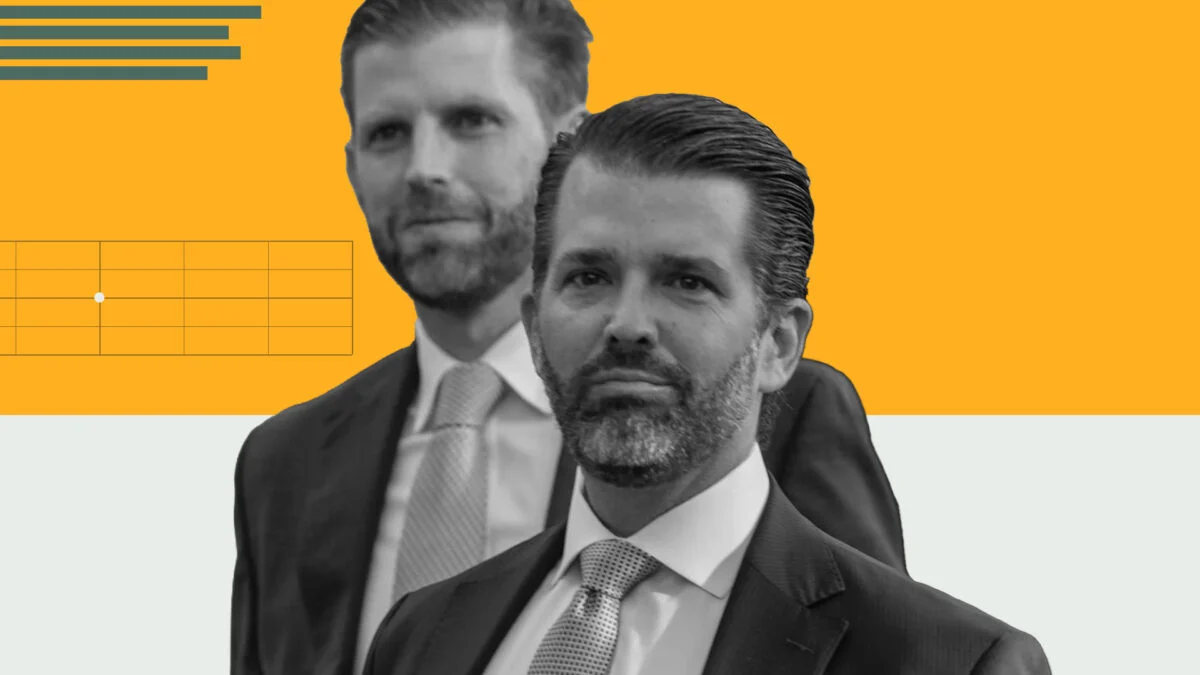
Don Jr. and Eric Trump both amplified a Hong Kong startup called WorldClaw after Reuters reported it was offering access to Chinese models via payment in USD1 (€1). That stablecoin is issued by World Liberty Financial, a crypto firm with reported ties to the Trump sons.
World Liberty Financial may not formally own WorldClaw, and that distance matters in law and optics. But profit flows whenever USD1 is used as the payment rail. The family’s social push turned a geopolitical maneuver into a commercial opening.
WorldClaw operates like a Trojan key, slipping through a gate that others are trying to bolt shut.
Do the Trump children profit from crypto ventures tied to AI?
Short answer: the structure allows profit. World Liberty earns fees on transactions in USD1 (€1). Even without equity, a payments-dependent model can funnel revenue to a platform’s operators. You don’t need majority ownership to benefit when your coin becomes the accepted tender for a contentious market.
A Hong Kong startup quietly routing payments is the small, visible example of a larger market reaction.
WorldClaw’s pitch—access to restricted Chinese models in exchange for USD1 (€1) payments—meets a real commercial demand: smaller firms and researchers want cheaper weights and permissive licenses. Platforms like GitHub and cloud providers have become the plumbing of this industry, and open-model communities keep copies circulating.
That creates pressure from multiple directions: venture money chasing demand, entrepreneurs building workarounds, and governments trying to erect policy fences. Reuters, Axios, and industry voices have all chronicled the tension: regulators pushing a national line while private actors build cross-border bridges.
For you—whether you’re advising a government, running a startup, or watching markets—the practical question is how policy signals ripple into economic choices. Firms will weigh access, cost, reputation, and enforcement risk. Governments will watch those calculations and try to outmaneuver them.
If an administration writes a rule on paper, how fast will commerce write the next draft?